


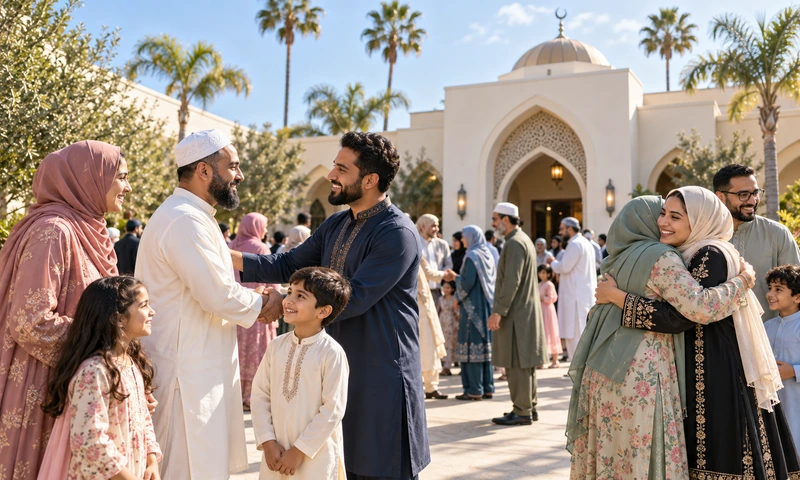
California has recognised Eid ul Fitr and Eid ul Adha as state holidays, giving Muslim communities greater visibility on its calendar. The law supports leave arrangements and local school closures, but does not create an automatic statewide day off.
Governor Gavin Newsom approved Assembly Bill 2017 on September 27, according to the official legislative record. Assemblymember Matt Haney authored the measure.
California becomes the second US state to recognise both festivals, following Washington in 2025. They join a calendar that also recognises Lunar New Year and Diwali.
What the Eid holiday law allows
California has more than one million Muslim residents. State employees can observe Eid using existing vacation, annual leave, compensating time off or personal holiday credit.
The designation does not automatically close courts, government offices or private businesses. Public schools and community colleges can arrange closures through local decisions and agreements with represented employees.
For K-12 pupils, the law does not mandate statewide school holidays. It supplements existing protections for excused absences.
Oussama Mokeddem, legislative and government affairs director at CAIR’s California chapter, encouraged communities to raise holiday needs with school districts.
He described the signing as “an exciting day for the California Muslim community and a big day for the American Muslim community at large.”
Students seek recognition in school calendars
Adam Khaja, an 11th grader in Palos Verdes Peninsula Unified School District, plans to advocate for a district-wide holiday.
He said recognition signals that “you don’t have to give up an important part of your identity to fully participate in Californian society.”
“For a long time, immigrant and minority communities have sometimes felt pressure to leave parts of their identity at home in order to fit into American educational or industrial institutions,” he said.
Khaja hopes district policies will better accommodate religious observance.
“Eid has always been a huge part of our lives, but I think that the school calendar and district policies haven’t always reflected that,” he said.
He wants students to avoid having “to choose between going to school or fully participating in one of the most important days of their faith.”
Recognition amid concerns over hostility
Mokeddem said Muslim communities face “unwarranted and unjustified criticism”. He linked that climate to the May 2026 attack at the Islamic Center of San Diego.
A September Pew Research Center report found that 42% of Americans believe Muslim Americans negatively affect the country.
Eid ul Fitr marks Ramadan’s end. Eid ul Adha honours Ibrahim’s willingness to sacrifice his son in devotion to God.
Both follow the Islamic lunar calendar, so their Gregorian dates shift annually. Expected 2027 dates fall around March 10 for Eid ul Fitr and May 17 for Eid ul Adha, subject to observance practices.
Muslim Women Professionals, a nonprofit, offers templates for requesting time off for both festivals. Families seeking district-wide closures can also approach local school boards about future calendars.

























