


Pakistan International Airlines has signed an agreement with Norse Atlantic for two Boeing 787-9 Dreamliners to expand UK services. PIA expects the aircraft to join its operations in November 2026. The partnership will support direct long-haul flights between Pakistan and multiple destinations in the United Kingdom. Moreover, PIA described the addition as the beginning of its expansion to meet rising demand and strengthen global connectivity. Dreamliners to expand Pakistan–UK flights PIA’s statement carries an October 8 date. Meanwhile, Norse announced the agreement on October 9, anticipating operations from early November. However, neither announcement specified airports, flight frequencies or financial terms. Under the ACMI arrangement, Norse will provide aircraft, crew, maintenance and insurance. As a result, PIA can increase operating capacity through the leasing partnership. At the same time, Norse can redeploy aircraft returning from its previous ACMI operation. Read More: Saudi Airport Attacks Disrupt Travel: PIA Temporarily Halts Riyadh Flights PIA Chief Executive Officer Air Vice Marshal Amir Hayat highlighted the importance of the British market. “UK is an important market for PIA, and this agreement will allow us to expand the much-needed capacity and provide greater choice and connectivity for passengers travelling on these routes.” PIA targets growing demand for direct travel Hayat also linked the agreement to demand for direct flights. “We are pleased to partner with Norse Atlantic as we continue to strengthen our international network and respond to strong demand for direct travel between the two countries.” Furthermore, he described the aircraft as a first for the Pakistani market. “This is first set of Dreamliners that is being adopted by Pakistani market and we hope it will provide dream journey to our valued guests who been expecting premium services from PIA”. Meanwhile, Norse Atlantic CEO Eivind Roald said the agreement advanced the airline’s capacity redeployment strategy. “As previously communicated, we have been working to redeploy capacity into new ACMI( Aircraft, Crew, Maintenance and Insurance) opportunities, and we are now delivering that strategy.” He also highlighted the Pakistani community in Britain. “We are pleased to support PIA’s long-haul capacity expansion and to strengthen connectivity between the UK and Pakistan by providing the large Pakistani community in the UK with more options for travel between the two countries.We see this as the start for a strategic partnership between the two companies.” Norse redeploys aircraft after IndiGo agreement The deal follows Norse’s July announcement that its ACMI cooperation with India’s IndiGo would end on November 1. That decision involved the return of five remaining aircraft. Consequently, Norse identified opportunities for new leasing agreements and expansion of its own network. Read More: PIA Sought 800 Braid Sets for Female Cabin Crew: Inside the Tender Norse operates 12 Boeing 787-9 Dreamliners. In addition to scheduled flights, it provides charter and ACMI services. According to Norse, ACMI agreements reduce its exposure to fluctuating passenger demand and fuel prices. The airline is also discussing potential contracts with other international carriers. For PIA, however, the immediate focus remains additional capacity on Pakistan–UK routes.
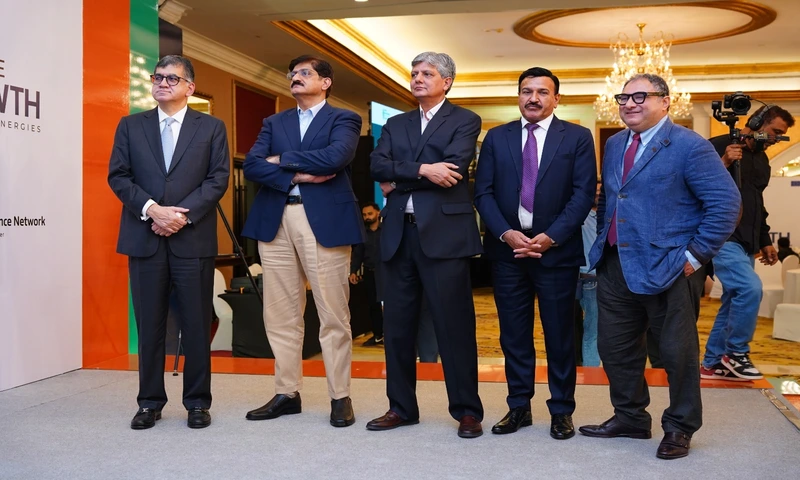
Pakistan Microfinance Expansion: Rs4.2bn for Rural Sindh
Pakistan’s 10th Annual Microfinance Conference concluded with a Rs4.2 billion rural financing expansion and calls to measure inclusion through economic progress. Pakistan Microfinance Network (PMN) organised AMC-X with UNIDO under the EU-funded Poverty Alleviation and Inclusive Development Across Rural Sindh (PAIDAR) programme. The October 7–8 gathering marked a decade of AMC under “Pathways for Inclusive Growth: Unlocking Synergies.” It brought together policymakers, regulators, lenders, development partners and experts. A major outcome involved PAIDAR’s guarantee-based facility with National Credit Guarantee Company Limited (NCGCL). Phase II will increase financing from Rs200 million to Rs4.2 billion and participating institutions from three to eight. Read More: Pakistan’s Microfinance Customers Could Soon Get PayPak Credit Cards The programme covers Larkana, Badin, Thatta, Sujawal and Tharparkar and women will receive at least 50% of allocated financing. NCGCL will share risks on direct microenterprise lending and guarantee commercial-bank and development-finance-institution credit lines to microfinance institutions. A €2 million EU-funded PAIDAR grant supports beneficiary identification, technical assistance and mark-up support. Pakistan Microfinance Investment Company and National Rural Support Programme (NRSP) also signed a Rs1 billion financing facility. It falls under the PMIC–KfW Renewable Energy Initiative through Microfinance (PRIME). Addressing delegates virtually, Finance Minister Senator Muhammad Aurangzeb linked inclusion with Pakistan’s transition from stabilisation to sustainable growth. He advocated cash-flow-based lending over collateral, alongside digital credit tools and alternative data for agriculture and SMEs. “It’s not just how much you lend, how many borrowers, but also start measuring outcomes,” he said. He identified borrower graduation, employment and women’s economic participation as success measures. PMN Chairman and HBL Microfinance Bank President and CEO Amir Khan urged integration with mainstream finance. “The principle behind everything to follow is to mainstream microfinance into the financial ecosystem, not a parallel track,” he said. Khan urged stronger businesses, asset-building and financial independence. Sindh Chief Minister Syed Murad Ali Shah called for relevant, quality products reflecting incomes, seasons and risks. He urged early government-lender-partner coordination and welcomed PAIDAR Innovation Labs, where financial institutions and rural enterprises will jointly design and test products. EU Pakistan’s Head of Cooperation Jeroen Willems addressed delegates virtually, welcoming Shah and reaffirming development cooperation. Read More: How Satellites Will Help HBL Microfinance Bank Assess Farm Loans UNIDO says PAIDAR runs from 2022 to 2027 through a €49.55 million partnership supporting Sindh’s poverty-reduction strategy. State Bank Deputy Governor Saleem Ullah stressed customer-centred innovation, commercial sustainability and meaningful usage beyond account numbers. Kashf Foundation Managing Director Roshaneh Zafar highlighted mission drift and climate vulnerability. Sessions covered regulation, artificial intelligence, Islamic microfinance, digital platforms, liquidity and the sector’s outlook to 2035. Priorities included women’s agency, control, customer graduation, productive finance, savings, insurance and climate resilience. At the Pakistan Microfinance Awards 2026, HBL Microfinance Bank won best microfinance bank; NRSP won the non-banking microfinance company category. Organisers honoured Dr Muhammad Amjad Saqib for scaling Akhuwat’s dignity-based, interest-free model. They recognised Naved A. Khan for connecting banking leadership and governance with innovative financing for microfinance institutions and underserved communities. PMN reaffirmed its commitment to partnerships, policy dialogue and collective action.
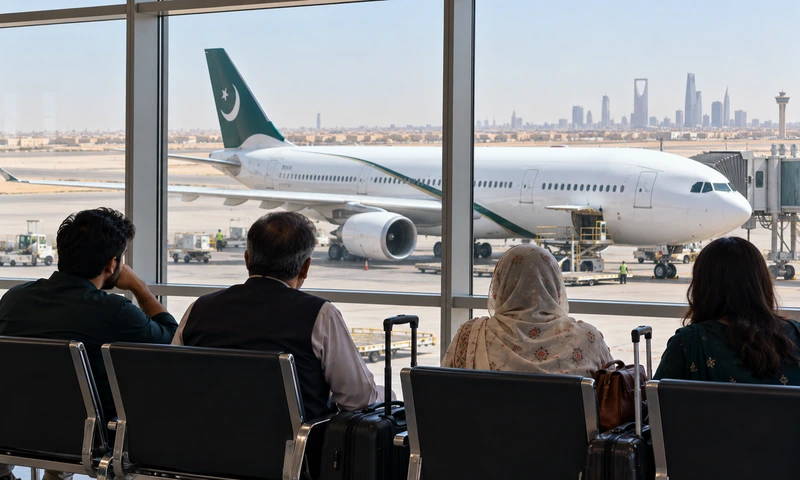
Saudi Airport Attacks Disrupt Travel: PIA Temporarily Halts Riyadh Flights
Pakistan International Airlines (PIA) suspended flights to Riyadh on Friday, October 9, as escalating Saudi-Houthi fighting disrupted air travel to the kingdom’s capital. An airline spokesperson announced the temporary suspension “in view of the situation in the Middle East”. PIA advised passengers to check their flight status through its call centre at 111-786-786 before leaving for the airport. The airline apologised for the disruption but provided no date for resuming operations. The decision follows consecutive days of attacks and widespread cancellations at Riyadh’s King Khalid International Airport. Other international carriers have also halted services as concerns over aviation safety deepen. Flightradar24 figures cited by Dawn showed 104 cancelled arrivals and departures on Friday, along with 154 delayed flights. The tracking service recorded 335 cancellations on Thursday. These figures cover the airport’s wider operations, including multiple airlines. They represent a snapshot of disruption and may change as carriers revise their schedules. Wednesday’s attacks on King Khalid and Abha international airports killed three people. Yemen’s Houthis claimed responsibility for strikes against both transport hubs. A Pakistani national suffered injuries in the Riyadh attack, alongside five Saudi citizens and two Egyptians. Abha airport, the other target, lies in southwestern Saudi Arabia. Another attack targeted Riyadh airport on Thursday, with reports describing severe damage to a commercial aircraft. Reuters reported that fire heavily damaged a Saudia plane parked at a terminal. Sources attributed the damage to shrapnel or a direct projectile hit. They believed the aircraft carried no passengers at the time. Their account did not establish whether anyone suffered injuries in that incident. The disruption has prompted several airlines to announce temporary Riyadh suspensions. Lufthansa Group halted flights until October 16, according to Reuters. IndiGo cancelled services until October 9. Air India and Akasa Air announced cancellations through October 10. An Air India flight from Delhi turned back to the Indian capital on Thursday as the security situation deteriorated. Prime Minister Shehbaz Sharif condemned the recent Houthi attacks on Friday. He reaffirmed Pakistan’s commitment to Saudi Arabia’s “sovereignty, territorial integrity and security” under the Makkah Defence Alliance. Radio Pakistan reported that Shehbaz also supported the kingdom’s right to defend its people, cities and vital infrastructure. Pakistan, Saudi Arabia and Turkiye signed the defence pact on August 7. The agreement seeks collective deterrence through a commitment to treat an attack against one member as an attack against all. On October 5, Pakistan and Turkiye agreed to deploy military forces and capabilities rapidly in Saudi Arabia. PIA had previously suspended flights to the United Arab Emirates, Bahrain, Qatar and Kuwait on March 1, following the US-Iran war’s outbreak. It continued Saudi services at that stage, using longer alternative routes. Friday’s suspension specifically covers Riyadh. PIA’s immediate advice remains for passengers to confirm their individual flight arrangements before travelling to the airport.

Four Markhor Hunting Permits Fetch Rs335.7 Million in KP Auction
Khyber Pakhtunkhwa has auctioned four markhor trophy hunting permits for $1,211,800, approximately Rs335.7 million, with most proceeds earmarked for communities and conservation. The highest individual bid reached $335,600, surpassing last year’s top offer of $272,000. The increase amounts to $63,600, or about 23.4 percent. KP Chief Conservator Wildlife Dr Mohsin Farooqi chaired the auction. The four exportable permits covered areas under village conservation committees in Chitral and Kohistan. Chitral’s Toshi-II permit attracted the highest offer, equivalent to approximately Rs92.97 million. Last year’s leading bid stood at around Rs75.35 million. Toshi-I followed with a bid of $320,600, approximately Rs88.8 million. Kaigah Khwar secured the third-highest offer at $295,600, or around Rs81.8 million. Gehrait Gol fetched $260,000, equivalent to approximately Rs72 million. Together, the two Toshi permits accounted for $656,200, more than half the auction’s total dollar value. Under the revenue-sharing arrangement, 80 percent of proceeds will support local community welfare and wildlife conservation. The provincial government will receive the remaining 20 percent in its treasury. Applied to the announced total, those shares amount to $969,440 for community welfare and conservation, and $242,360 for the treasury. The arrangement directs most income back towards communities in the hunting areas and activities intended to protect wildlife. It therefore gives village conservation committees a financial stake in the programme. The auction figures represent the sale of hunting permits, rather than confirmation that any hunts have already taken place. The published account does not identify the successful bidders or provide individual hunting dates. Pakistan’s trophy hunting programme operates within a wider system of quotas and wildlife population assessments. The federal climate ministry has emphasised scientific evidence when explaining how authorities allocate permits. In its December 2025 announcement for the 2025–26 season, the ministry said verified population surveys informed quota decisions. Pakistan’s CITES Management Authority reviewed data submitted by provincial wildlife departments before making allocations. That earlier allocation covered markhor alongside Himalayan ibex, Sindh ibex, Blandford’s urial, Punjab urial, blue sheep and Kennion gazelle. The ministry also said it was working to standardise wildlife surveys nationwide. It linked stronger population data to better conservation decisions and benefits for communities living alongside wildlife. Markhor, Pakistan’s national animal, is a mountain goat known for its distinctive spiralling horns and climbing ability. Gilgit-Baltistan’s Forest, Wildlife and Environment Department identifies hunting pressure, competition with domestic livestock and disease transmission as threats to markhor. Its species information page lists the Astore markhor as Near Threatened. For the latest KP auction, the immediate financial commitment is the 80 percent community and conservation allocation. The announced split identifies how authorities intend to distribute the income, but does not detail individual welfare or conservation projects.
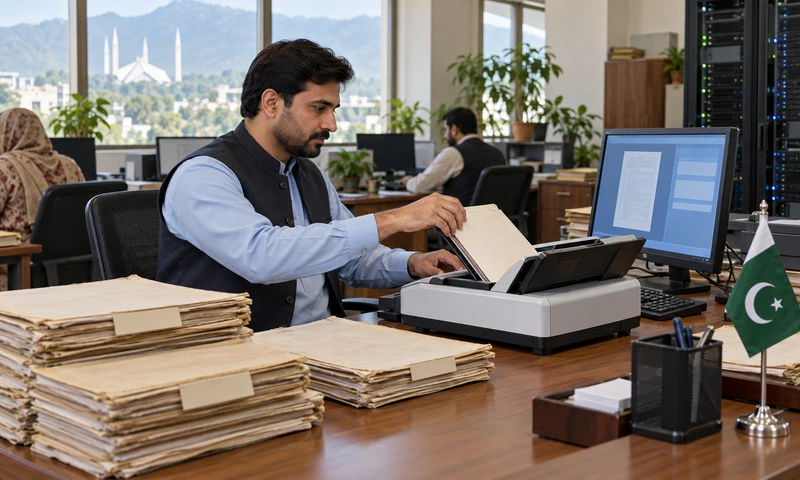
Shehbaz Orders Faster Data Sharing to Improve Public Services
Prime Minister Shehbaz Sharif has ordered federal ministries to complete data digitisation within prescribed deadlines under the Digital Nation Pakistan programme. He also directed them to provide their relevant records to a central national digital platform. Shehbaz issued the instructions on Thursday, October 8, while reviewing the programme’s implementation across federal ministries. He asked ministries to coordinate with provincial governments and other institutions to meet their deadlines. The prime minister said a national central data centre would strengthen government services and improve facilities for citizens. Bringing useful information from different sectors together could also support economic development, he added. “The purpose of Digital Nation Pakistan is, in fact, to ensure effective and convenient services for citizens at the national level,” he said. Shehbaz linked the digitisation of ministry performance and related records to efforts against corruption and institutional disorder. Clear ministerial responsibilities and timely data submission would help modernise government operations, he said. He cited the fuel subsidy scheme for deserving sections of society as an example of effective coordination. Data sharing between institutions had helped implement the scheme successfully, he told the meeting. Officials said the Ministry of Information Technology was working with relevant ministries on sector-specific digitisation. Health and agriculture remained priorities because of their direct importance to public services. Shehbaz praised the Ministry of National Health Services for working with provincial governments to compile universal medical records. He also welcomed the introduction of QR codes to help ensure the supply of quality medicines nationwide. The health ministry separately briefed participants on submitting health-related information to the central data centre. Its presentation also covered the use of digitisation to verify medicine quality. The IT ministry is also collaborating with the Ministry of Law to bring relevant national laws onto one platform. Officials said the initiative would provide better guidance for future legislation. They outlined three objectives guiding work across priority sectors: digital government services, a digital economy and digital public facilitation. Federal ministries presented updates on their services, performance and progress in supplying data to the centre. The published account referred to prescribed deadlines but did not specify a single completion date. The latest instructions follow an earlier push to connect federal institutions with national digital infrastructure. In July, Shehbaz directed authorities to make the government-operated Sky 47 data centre available to federal institutions. At that meeting, he said shared infrastructure could reduce the need for separate departmental data centres and save public resources. The National Digital Commission provides an institutional framework for this agenda under the Digital Nation Pakistan Act 2025. The prime minister chairs the commission, while provincial chief ministers serve as members. Thursday’s participants included Law Minister Azam Tarar, Finance Minister Muhammad Aurangzeb and Economic Affairs Minister Ahad Cheema. Commerce Minister Jam Kamal and Information Minister Attaullah Tarar also attended. Health Minister Mustafa Kamal, IT Minister Shaza Fatima and officials from relevant government institutions joined the meeting.
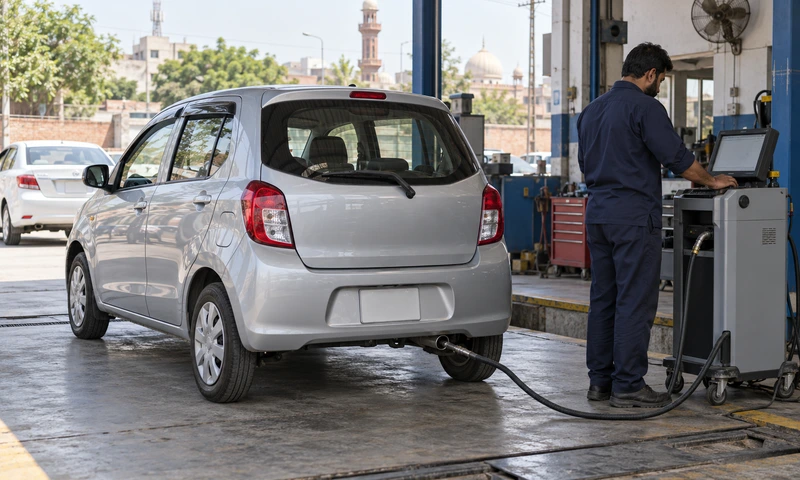
Punjab Car Fitness Rules: Exemptions, Age Limits and Fees
Punjab’s Provincial Transport Authority has clarified which private cars qualify for temporary exemptions from fitness certification, linking eligibility to engine capacity and age. The clarification means newer cars do not need certificates immediately. Owners must arrange testing once their vehicles reach the relevant threshold, which ranges from five to seven years after manufacture. Each certificate remains valid for one year after testing. Which cars qualify for an exemption? The notice sets the following schedule: Engine capacity Certification becomes mandatory Certificate validity Up to 1,000cc Five years after manufacture One year 1,001cc to 2,000cc Six years after manufacture One year Above 2,000cc Seven years after manufacture One year For example, a three-year-old 1,000cc car remains within its initial exemption period. Once it reaches the five-year threshold, its owner must obtain certification. The same principle applies to larger engines, with longer initial exemption periods. None of the three categories receives a permanent exemption. Owners must renew certification annually after their cars enter the mandatory testing cycle. The one-year validity applies to the certificate, separately from the initial age-based exemption. Manufacturing date determines eligibility The notice calculates vehicle age from manufacture, rather than purchase. This distinction matters particularly for people buying used cars. Buying an older vehicle does not restart its exemption period. A recently purchased car may already need certification if its manufacturing date places it beyond the relevant threshold. Owners should therefore check both engine capacity and manufacturing details before arranging an inspection. Those whose cars meet the age requirement should visit an authorised Provincial Vehicle Inspection and Certification System centre. Published reports place the start of enforcement on October 15, 2026. The authority announced a 30-day compliance period in September before action against vehicles lacking required certificates. Testing fees and booking arrangements Private-car testing is done within Punjab’s wider effort to reduce vehicle emissions ahead of winter smog. Testing fees range from Rs500 to Rs2,000, depending on engine capacity. Cars up to 1,000cc attract a Rs500 fee. The charge rises to Rs800 for engines above 1,000cc and up to 1,500cc. Engines above 1,500cc and up to 2,500cc carry a Rs1,000 fee, according to the guide. Higher-capacity categories attract charges of Rs1,500 or Rs2,000. The guide describes exhaust-emissions testing at authorised centres and annual certification for vehicles that pass. Owners should confirm their centre’s current arrangements before travelling. Booking availability may also affect planning. During checks for this report, inspection operator Auto Aeon’s website said it was fully booked and temporarily unavailable for online appointments. The operator said online booking would reopen soon, without specifying a date. Its notice concerns appointment availability and does not announce any change to the reported enforcement timetable.

Karachi Europe Shipping Restored: MSC Resumes Weekly Service
Mediterranean Shipping Company (MSC) has restored its dedicated Karachi-Europe shipping service, offering Pakistani exporters more options amid freight disruptions. Federal Maritime Affairs Minister Muhammad Junaid Anwar Chaudhry announced the development on Thursday, October 8. The minister said MSC had “reinstated its PREMIUM IPAK service” following exporters’ requests for a dedicated, direct European connection. The service will make weekly calls at Karachi Gateway Terminal International (KGTI). Its destinations include Felixstowe, Rotterdam, Hamburg, Bremerhaven, Antwerp, Le Havre and London Gateway, with the route running via Colombo. “Previously we had no transshipment service from Karachi Port. However, now we have a full-swing service as Pakistan has emerged as the transshipment hub of the region,” the minister said. Chaudhry described the restoration as an important development for export-oriented industries, particularly textiles. Exporters have faced longer transit times and rising logistics costs as disruptions alter international shipping routes. The minister recently met textile exporters who highlighted difficulties linked to the situation in the Red Sea. Their concerns covered shipments to both European and US markets. “Exporters had earlier expressed concern that longer vessel journeys were increasing transportation costs and delivery times for shipments to European and US markets. These additional costs and delays have affected the competitiveness of Pakistani exporters,” he said. “The restored service will improve connectivity with major European ports and provide exporters with greater options for planning and moving their shipments,” he said. Chaudhry cautioned that restoring the service would not resolve the wider problems affecting international shipping. The announcement offered no quantified estimate of freight savings or shorter delivery times. “Disruptions to established shipping routes continue to have implications for global trade. We will continue working with the shipping industry and exporters to address connectivity and logistics issues and to strengthen Pakistan’s position in international trade,” he said. Beyond ocean freight, exporters must also account for local handling and documentation costs. MSC’s Pakistan information page lists terminal charges, storage, demurrage and documentation services among its local tariff information. These expenses form another part of the logistics bill facing businesses moving goods through Pakistani ports. Separately, Karachi Port Trust’s chairman proposed changes to accelerate cargo clearance at a meeting at KPT’s head office. He chaired the Working Group on Shipping Connectivity and Optimisation, which examined physical and regulatory bottlenecks. The discussions focused on making cargo clearance faster and more predictable. His proposals included standardised electronic delivery orders available around the clock, risk-based inspections and non-intrusive scanning. He also proposed joint inspections and common sampling. Terminal operators expressed readiness to conduct night inspections. Participants asked Pakistan Customs to facilitate round-the-clock operations. The clearance proposals accompany the renewed shipping connection as port authorities seek to address delays on land. Both developments focus on difficulties exporters face when arranging and moving overseas shipments.
