


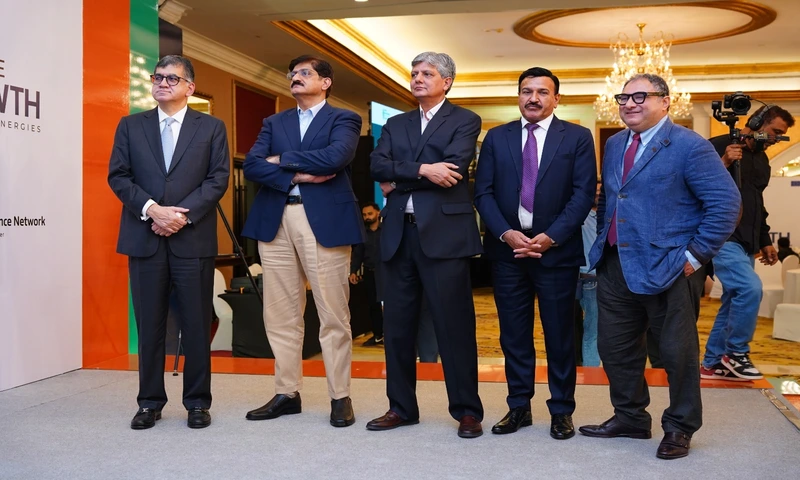
Pakistan’s 10th Annual Microfinance Conference concluded with a Rs4.2 billion rural financing expansion and calls to measure inclusion through economic progress.
Pakistan Microfinance Network (PMN) organised AMC-X with UNIDO under the EU-funded Poverty Alleviation and Inclusive Development Across Rural Sindh (PAIDAR) programme. The October 7–8 gathering marked a decade of AMC under “Pathways for Inclusive Growth: Unlocking Synergies.” It brought together policymakers, regulators, lenders, development partners and experts.
A major outcome involved PAIDAR’s guarantee-based facility with National Credit Guarantee Company Limited (NCGCL). Phase II will increase financing from Rs200 million to Rs4.2 billion and participating institutions from three to eight.
Read More: Pakistan’s Microfinance Customers Could Soon Get PayPak Credit Cards
The programme covers Larkana, Badin, Thatta, Sujawal and Tharparkar and women will receive at least 50% of allocated financing.
NCGCL will share risks on direct microenterprise lending and guarantee commercial-bank and development-finance-institution credit lines to microfinance institutions. A €2 million EU-funded PAIDAR grant supports beneficiary identification, technical assistance and mark-up support.
Pakistan Microfinance Investment Company and National Rural Support Programme (NRSP) also signed a Rs1 billion financing facility. It falls under the PMIC–KfW Renewable Energy Initiative through Microfinance (PRIME).
Addressing delegates virtually, Finance Minister Senator Muhammad Aurangzeb linked inclusion with Pakistan’s transition from stabilisation to sustainable growth. He advocated cash-flow-based lending over collateral, alongside digital credit tools and alternative data for agriculture and SMEs.
“It’s not just how much you lend, how many borrowers, but also start measuring outcomes,” he said.
He identified borrower graduation, employment and women’s economic participation as success measures.
PMN Chairman and HBL Microfinance Bank President and CEO Amir Khan urged integration with mainstream finance.
“The principle behind everything to follow is to mainstream microfinance into the financial ecosystem, not a parallel track,” he said.
Khan urged stronger businesses, asset-building and financial independence.
Sindh Chief Minister Syed Murad Ali Shah called for relevant, quality products reflecting incomes, seasons and risks. He urged early government-lender-partner coordination and welcomed PAIDAR Innovation Labs, where financial institutions and rural enterprises will jointly design and test products.
EU Pakistan’s Head of Cooperation Jeroen Willems addressed delegates virtually, welcoming Shah and reaffirming development cooperation.
Read More: How Satellites Will Help HBL Microfinance Bank Assess Farm Loans
UNIDO says PAIDAR runs from 2022 to 2027 through a €49.55 million partnership supporting Sindh’s poverty-reduction strategy.
State Bank Deputy Governor Saleem Ullah stressed customer-centred innovation, commercial sustainability and meaningful usage beyond account numbers. Kashf Foundation Managing Director Roshaneh Zafar highlighted mission drift and climate vulnerability.
Sessions covered regulation, artificial intelligence, Islamic microfinance, digital platforms, liquidity and the sector’s outlook to 2035. Priorities included women’s agency, control, customer graduation, productive finance, savings, insurance and climate resilience.
At the Pakistan Microfinance Awards 2026, HBL Microfinance Bank won best microfinance bank; NRSP won the non-banking microfinance company category.
Organisers honoured Dr Muhammad Amjad Saqib for scaling Akhuwat’s dignity-based, interest-free model. They recognised Naved A. Khan for connecting banking leadership and governance with innovative financing for microfinance institutions and underserved communities.
PMN reaffirmed its commitment to partnerships, policy dialogue and collective action.

























