


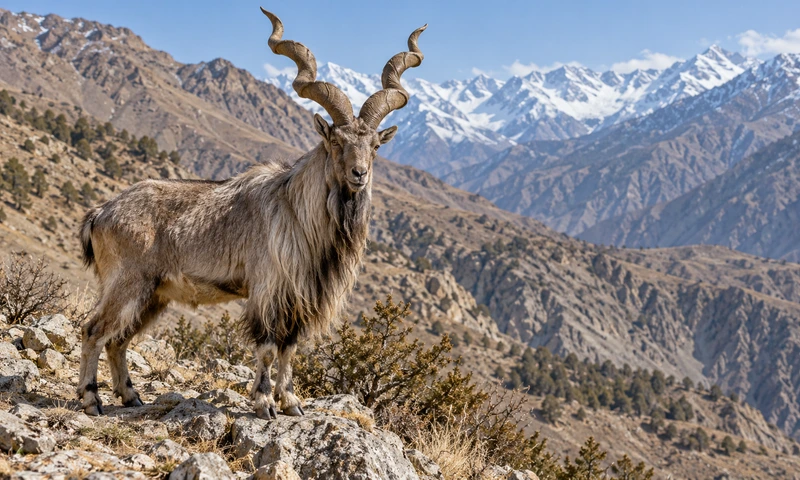
Khyber Pakhtunkhwa has auctioned four markhor trophy hunting permits for $1,211,800, approximately Rs335.7 million, with most proceeds earmarked for communities and conservation.
The highest individual bid reached $335,600, surpassing last year’s top offer of $272,000. The increase amounts to $63,600, or about 23.4 percent.
KP Chief Conservator Wildlife Dr Mohsin Farooqi chaired the auction. The four exportable permits covered areas under village conservation committees in Chitral and Kohistan.
Chitral’s Toshi-II permit attracted the highest offer, equivalent to approximately Rs92.97 million. Last year’s leading bid stood at around Rs75.35 million.
Toshi-I followed with a bid of $320,600, approximately Rs88.8 million. Kaigah Khwar secured the third-highest offer at $295,600, or around Rs81.8 million.
Gehrait Gol fetched $260,000, equivalent to approximately Rs72 million. Together, the two Toshi permits accounted for $656,200, more than half the auction’s total dollar value.
Under the revenue-sharing arrangement, 80 percent of proceeds will support local community welfare and wildlife conservation. The provincial government will receive the remaining 20 percent in its treasury.
Applied to the announced total, those shares amount to $969,440 for community welfare and conservation, and $242,360 for the treasury.
The arrangement directs most income back towards communities in the hunting areas and activities intended to protect wildlife. It therefore gives village conservation committees a financial stake in the programme.
The auction figures represent the sale of hunting permits, rather than confirmation that any hunts have already taken place. The published account does not identify the successful bidders or provide individual hunting dates.
Pakistan’s trophy hunting programme operates within a wider system of quotas and wildlife population assessments. The federal climate ministry has emphasised scientific evidence when explaining how authorities allocate permits.
In its December 2025 announcement for the 2025–26 season, the ministry said verified population surveys informed quota decisions. Pakistan’s CITES Management Authority reviewed data submitted by provincial wildlife departments before making allocations.
That earlier allocation covered markhor alongside Himalayan ibex, Sindh ibex, Blandford’s urial, Punjab urial, blue sheep and Kennion gazelle.
The ministry also said it was working to standardise wildlife surveys nationwide. It linked stronger population data to better conservation decisions and benefits for communities living alongside wildlife.
Markhor, Pakistan’s national animal, is a mountain goat known for its distinctive spiralling horns and climbing ability.
Gilgit-Baltistan’s Forest, Wildlife and Environment Department identifies hunting pressure, competition with domestic livestock and disease transmission as threats to markhor. Its species information page lists the Astore markhor as Near Threatened.
For the latest KP auction, the immediate financial commitment is the 80 percent community and conservation allocation. The announced split identifies how authorities intend to distribute the income, but does not detail individual welfare or conservation projects.

























