
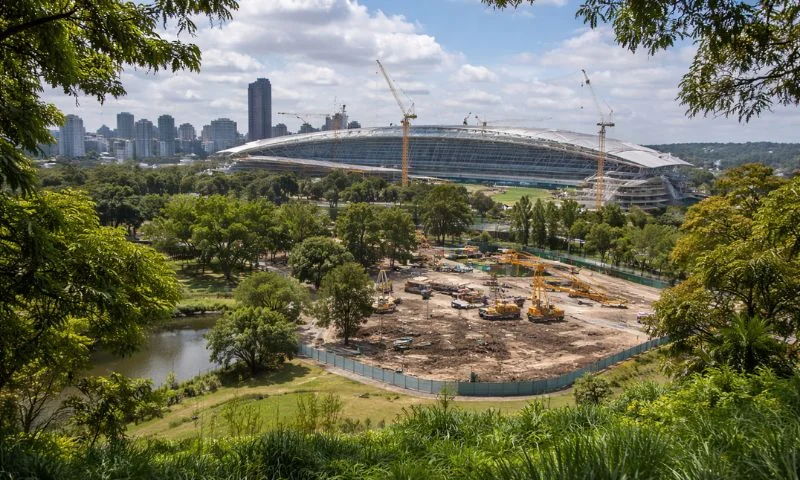
Plans for Brisbane’s main Olympic stadium for the 2032 Games have ignited renewed debate in Australia, after authorities confirmed the venue will be built inside Victoria Park, one of the city’s largest inner-city green spaces.
The proposed 63,000-seat stadium is set to become the centerpiece of the Brisbane 2032 Olympic and Paralympic Games, hosting the opening and closing ceremonies as well as athletics events.
Located just north of Brisbane’s central business district, the stadium will later replace the historic Gabba as the city’s primary venue for cricket and Australian rules football, cementing its long-term role in Queensland’s sporting infrastructure.
A $3.8 billion vision
The project, estimated to cost around A$3.6 to A$3.8 billion, forms part of a broader A$7.1 billion infrastructure plan tied to the 2032 Games.
Early designs show a stadium integrated into the natural landscape of Victoria Park, with shaded seating, a cantilevered roof and a playing field comparable in size to the Melbourne Cricket Ground.
Officials say the location was chosen to maximize access to public transport and existing infrastructure, placing the venue in a central position within the park near Gilchrist Avenue.
Design work is being led by a consortium including Australian firms Cox Architecture and Hassell, alongside Japanese group Azusa Sekkei, known for major stadium projects globally.
Construction is expected to begin in stages from mid-2026, with completion targeted ahead of the Games.
Environmental and cultural concerns
Despite its scale and ambition, the project has faced opposition from community groups and environmental advocates. Critics argue that building a major stadium inside Victoria Park would permanently alter one of Brisbane’s most significant green spaces.
The park holds historical and cultural importance, including connections to Indigenous communities, with some groups raising concerns about the potential impact on heritage sites.
Opponents say the development risks prioritizing global sporting ambitions over local environmental preservation and public access. Supporters, however, argue the project will deliver long-term economic benefits, boost tourism and create a world-class events precinct for the city.
A defining project for Brisbane 2032
The stadium is expected to anchor Brisbane’s Olympic legacy, serving as a multi-purpose venue for decades after the Games. It is also likely to host major events such as international cricket matches, AFL games and large-scale concerts.
Authorities say the design will reflect Queensland’s subtropical lifestyle, blending indoor and outdoor elements while integrating the venue into the surrounding landscape.
As planning progresses, the Victoria Park stadium has become one of the most closely watched Olympic infrastructure projects globally, highlighting the complex balance between development, heritage and sustainability.
With construction expected to accelerate in the coming months, the debate surrounding the project is unlikely to fade, even as Brisbane positions itself for one of the world’s biggest sporting events.