
Pakistan’s ambitious push to promote electric mobility has hit a major roadblock after commercial banks approved only a fraction of applications under the subsidised electric bike scheme, forcing the government to overhaul its strategy.
Officials told the Economic Coordination Committee that banks approved just 4,075 applications out of 44,689 received, roughly 9%, raising concerns about the viability of the programme. The government had aimed to distribute 116,000 electric bikes and rickshaws in the current fiscal year, but progress remains far behind schedule.
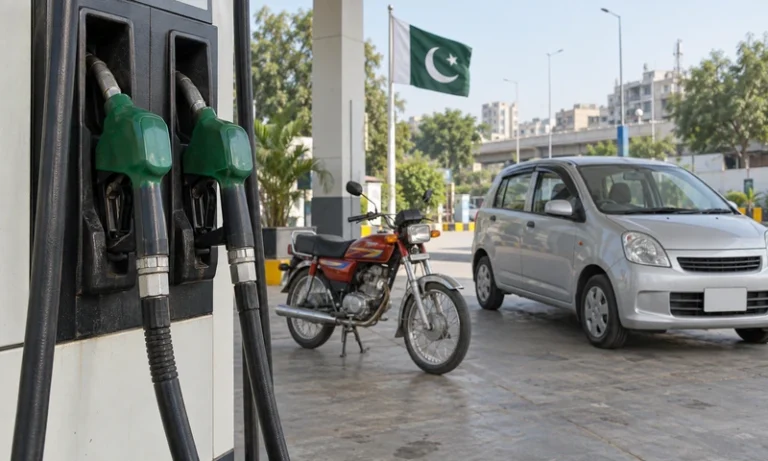
Despite imposing a Rs2.5 per litre climate support levy on petrol and diesel consumers, the scheme has struggled to gain traction. The levy will double from July under commitments linked to the International Monetary Fund programme.
Weak banking response slows rollout
Data presented to the ECC revealed that banks processed only 22% of applications and approved less than half of those. Financing amounted to Rs143 million, a small fraction of the Rs9 billion allocated for the Pakistan Accelerated Vehicle Electrification programme.
So far, only 5,409 electric bikes and rickshaws have been distributed, just 4.5% of the annual target. The first phase itself targeted 41,000 units, yet delivery remained limited.
Applicants had two options. They could acquire a subsidised bike through bank financing with interest covered by the government, or opt for self-financing and claim a subsidy after purchase and verification.
The contrast proved stark. Of 1,339 applicants who chose self-financing, 1,334 received bikes and 77% received subsidies directly. Officials concluded that “the poor bank response necessitated major policy changes.”
Policy shift focuses on self-financing
To address the slowdown, the ECC approved a shift toward self-financing models in the second phase. The government will reduce reliance on banks and allow buyers to pay the price minus subsidy directly to suppliers.
A new option will enable applicants to receive vehicles without paying the full upfront cost. The government will cover the remaining amount in instalments.
The committee also introduced a targeted scheme for government employees in BS-16 and below. Under this plan, buyers will pay Rs10,000 upfront for bikes and Rs100,000 for rickshaws or loaders, with manufacturers charging no interest. The Engineering Development Board will release subsidies within five working days.
Authorities will process all applications on a first come, first served basis. Fleet operators will also join the second phase to scale up adoption.
Officials acknowledged that delays in hiring third-party verification firms had “undermined public confidence in the government’s commitment.”
Fast-track plan targets fuel savings
In a parallel move, the government approved a fast-track rollout of 100,000 electric bikes within three months using existing CKD kits. This initiative will run alongside the original target.
Manufacturers will receive a subsidy of Rs80,000 per bike under a transparent delivery-linked mechanism. Authorities expect this component to save 8.6 million litres of petrol, equal to about $8 million in three months and $222 million over five years.
The ECC also approved a smaller incentive scheme for top-performing students across 26 Boards of Intermediate and Secondary Education, offering around 600 electric bikes.
Pakistan launched the PAVE programme to reduce fuel imports and emissions, aligning with global trends toward electric mobility. However, weak financial sector participation has exposed structural challenges in execution.