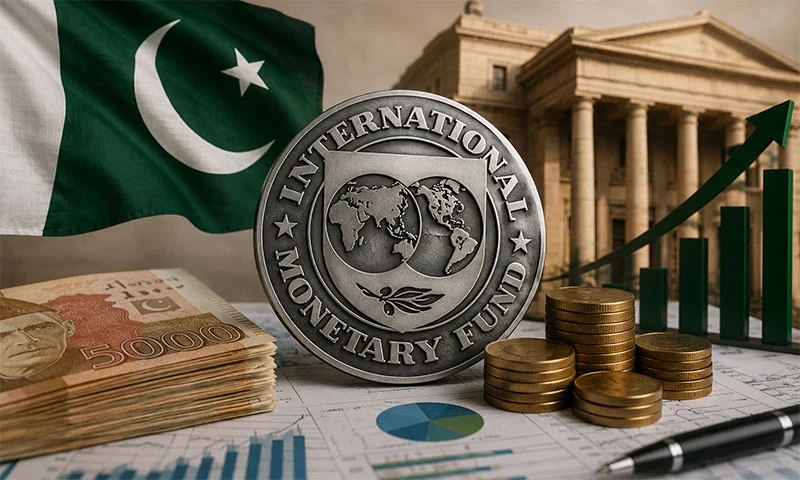
Pakistan secured another major financial lifeline on Friday after the International Monetary Fund (IMF) approved $1.2 billion in loan tranches under two separate lending programmes, giving crucial support to the country’s fragile economy as it struggles with inflation, weak growth and external financing pressures.
The approval came after Islamabad agreed to nearly a dozen additional conditions and assured the IMF that it would stay committed to fiscal discipline and structural reforms despite growing domestic criticism over rising unemployment and poverty.
Read More: Pakistan to End 200-Unit Power Subsidy Under IMF Deal
Government officials said the fresh inflows would be disbursed early next week and push the State Bank of Pakistan’s foreign exchange reserves above $17 billion. Pakistan has so far received $4.5 billion from the IMF against two debt packages totaling $8.4 billion.
The latest approval includes $1 billion under the Extended Fund Facility and another $200 million under the Resilience and Sustainability Facility. Officials said the larger tranche would support the balance of payments while the climate-related funding would help strengthen budgetary support.
Fiscal discipline remains central
The IMF executive board reviewed Pakistan’s economic performance for the July to December 2025 period and found that the country had met all end-December quantitative performance criteria. Pakistan also exceeded targets linked to foreign exchange reserves and achieved the government’s primary budget surplus target.
However, the Federal Board of Revenue remained one of the weakest areas in the programme. Pakistan failed to meet tax collection targets, especially income tax revenues from retailers. To offset the shortfall, the government raised petroleum levy rates and pledged to intensify tax enforcement measures.
Finance Minister Muhammad Aurangzeb assured the IMF that Islamabad remained committed to “sound and prudent macroeconomic policies and structural and institutional reforms to place Pakistan on a path toward long-term sustainable and inclusive growth.”
Pakistan also assured the lender that it would not abandon fiscal targets agreed before the Middle East conflict and would maintain the Rs3.4 trillion primary budget surplus target. Officials further committed to presenting a “fiscally tight budget” for the next fiscal year in consultation with the IMF.
Read More: IMF Sets Tough Budget Priorities for Pakistan Ahead of FY26 Plan
Under the agreement, Pakistan aims to deliver a Rs2.84 trillion primary surplus in fiscal year 2026-27, equal to 2% of GDP. The State Bank has already raised interest rates to 11.5%, while authorities promised additional hikes if inflation exceeds agreed limits.
Energy, climate and industrial reforms
Pakistan also accepted major commitments related to energy pricing and industrial incentives. The government promised to continue adjusting electricity and gas tariffs to maintain what the IMF described as a “progressive tariff structure” while protecting vulnerable consumers.
The government further agreed to amend laws governing Special Economic Zones and Special Technology Zones by June 2027 to gradually phase out tax incentives and shift toward cost-based incentives. Existing fiscal incentives for technology zones will be completely phased out by 2035.
Officials also committed to preventing Export Processing Zones from selling products in the local market by September this year, addressing concerns that industries were using the zones to avoid taxes.
Read More: IMF Demands Fuel Reforms: What It Means for Millions of Pakistanis
As part of the climate financing package, Pakistan adopted a green taxonomy and introduced guidelines for managing climate-related financial risks and corporate disclosures.
According to officials, the IMF programme now carries around 75 conditions covering taxation, governance, energy pricing, private sector reforms and industrial policy, making it one of Pakistan’s most tightly monitored economic reform programmes in recent years.