
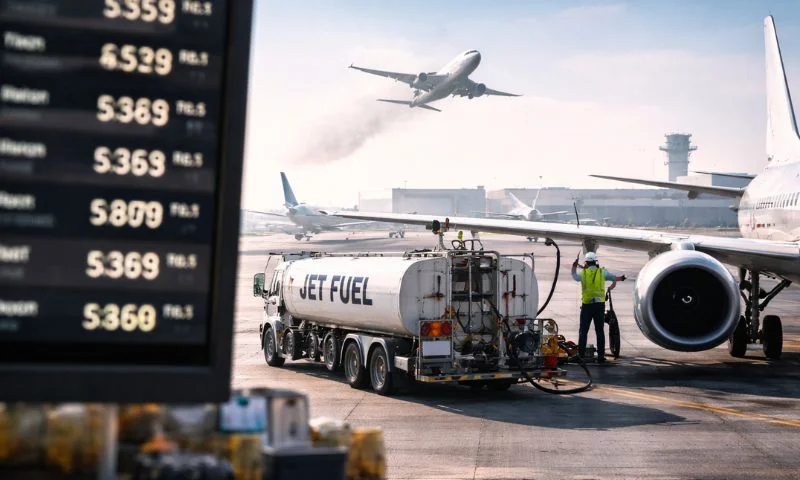
A tightening global supply of jet fuel is emerging as a major driver behind rising airfares, as airlines grapple with higher operating costs, disrupted supply chains and surging travel demand.
Industry analysts say the impact of jet fuel shortages is often invisible to passengers until ticket prices rise sharply, but the underlying causes are complex and deeply tied to global energy systems. According to recent reporting, the world consumes nearly 8 million barrels of jet fuel per day, with demand expected to rise further in 2026.
Why jet fuel shortages occur
Unlike petrol shortages, jet fuel scarcity is rarely caused by a lack of crude oil. Instead, it stems from refining constraints. Aviation fuel is produced from a specific middle fraction of crude oil during the refining process, meaning not all refineries are equipped to produce it in sufficient quantities.
Experts describe the issue as “a refinery allocation problem, not a crude supply problem,” highlighting how mismatches in production capacity can create shortages even when oil supply is stable.
Geopolitical tensions have further complicated the situation. Disruptions in key shipping routes such as the Strait of Hormuz, through which a significant share of global fuel trade passes, have tightened supply and increased volatility.
Rising costs for airlines
Fuel remains one of the largest expenses for airlines, typically accounting for 25 to 35 per cent of total operating costs and sometimes exceeding 40 per cent during periods of volatility.
This cost pressure translates directly into ticket prices. Analysts estimate that around 20 to 30 per cent of an airline ticket reflects fuel costs, with long-haul flights particularly sensitive to fuel price fluctuations.
Recent data shows jet fuel prices have surged significantly amid geopolitical instability, with some markets seeing sharp increases linked to disruptions in oil supply routes.
Airlines often respond by introducing fuel surcharges, raising base fares, or reducing promotional discounts. In more severe cases, carriers may cut routes or reduce flight frequencies to manage costs.
Impact on global travel
The effects are already being felt worldwide. Airlines have begun trimming schedules, particularly on less profitable routes, while passengers face higher fares and fewer travel options.
Industry groups warn that shortages could persist for months even if supply routes stabilise, as refinery disruptions take longer to resolve than shipping delays.
Smaller airports and regional carriers are often hit first due to limited storage capacity and fewer alternative suppliers. In response, some airlines have adopted “tankering” strategies, carrying extra fuel from locations where it is cheaper or more readily available.
Limited alternatives
Efforts to transition to sustainable aviation fuel offer a potential long-term solution, but current production remains minimal. Sustainable aviation fuel accounts for less than one per cent of global jet fuel supply and is significantly more expensive than conventional fuel.
Experts say this limits its ability to offset shortages in the near term, leaving airlines heavily dependent on traditional refining systems.
Outlook for passengers
For travellers, the immediate consequence is clear: higher ticket prices and less flexibility in flight options. Analysts advise booking early and monitoring fare trends, as volatility in fuel markets continues to influence airline pricing.
The broader outlook suggests that until refining capacity improves and geopolitical risks ease, jet fuel shortages will remain a key factor shaping global aviation and the cost of air travel.