A Kenyan court has sentenced a Chinese national to 12 months in prison or a fine of 1 million Kenyan shillings, about $7,746, after he was caught trying to smuggle more than 2,200 live garden ants out of the country through Nairobi’s main international airport, in a case that has renewed scrutiny on the illegal trade in lesser-known wildlife species.
Zhang Kequn, 27, was arrested last month at Jomo Kenyatta International Airport. Prosecutors said the insects were part of an illicit wildlife shipment headed for foreign buyers, with Kenya’s courts and wildlife authorities increasingly treating ant trafficking as a serious form of biopiracy rather than an obscure customs violation. Zhang first denied the charges, including dealing in live wildlife species without a permit, but later changed his plea to guilty.
In sentencing him, Magistrate Irene Gichobi said the court had to send a strong message as such cases rise. “Noting the increasing and rising cases of dealing in large quantities of garden ants and the negative ecological side effects of massive harvesting, there is a need for a stiff deterrent,” she said. Reuters reported that Zhang’s lawyer said he would appeal the sentence.
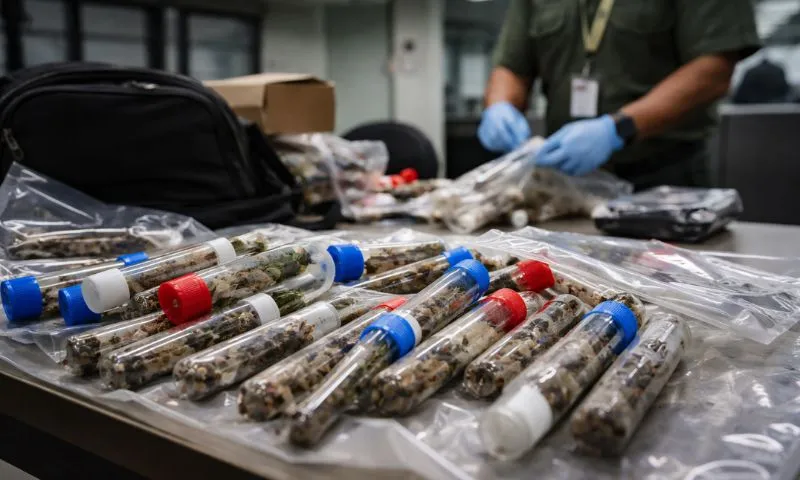
The case also drew attention because prosecutors linked Zhang to a Kenyan suspect, Charles Mwangi, who is accused of supplying the ants. Mwangi has pleaded not guilty and is out on bail. Earlier court reporting said prosecutors alleged Zhang had sourced ants from Mwangi in separate batches, paying 60,000 Kenyan shillings for 600 ants and 70,000 Kenyan shillings for another 700. Authorities said the two men were found with 1,948 garden ants in specialized tubes and another 300 hidden in tissue rolls, and that they did not have permits required under Kenya’s wildlife conservation laws.
The Kenyan case comes amid a broader shift in wildlife trafficking patterns. Rather than focusing only on elephant ivory, rhino horn or exotic skins, authorities say criminal networks and private collectors are increasingly targeting insects and other small species that play an outsized ecological role. Reuters reported last year that four men were fined 1 million shillings each after trying to traffic roughly 5,440 giant African harvester queen ants from Kenya. In that case, the Kenya Wildlife Service said the insects had been concealed in modified test tubes and syringes designed to keep them alive for up to two months and evade airport security.
The demand is being driven in part by a niche but lucrative overseas market. Ant enthusiasts in Asia, Europe and North America keep colonies in transparent containers known as formicariums to observe their behavior and social organization. Kenyan courts have noted that queen ants can command high prices because they are the only ants capable of laying eggs and establishing new colonies. That makes their removal from the wild more than a hobbyist issue. It threatens fragile ecosystems and raises concerns about the commercial extraction of Kenya’s biodiversity.