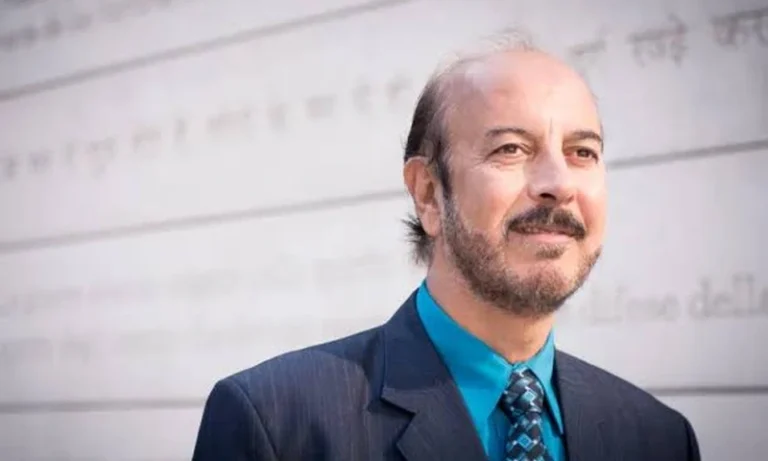
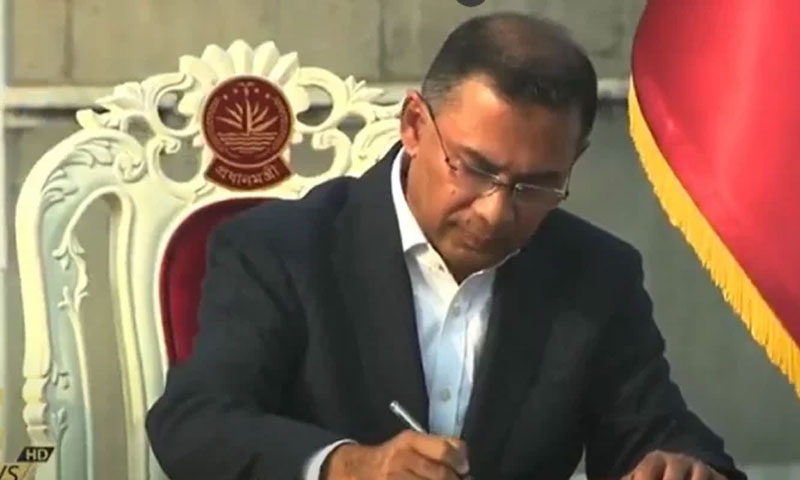
Tarique Rahman has officially taken office as the Prime Minister of Bangladesh, marking a dramatic political shift after the Bangladesh Nationalist Party (BNP) won a landslide in the February 12 general election. The swearing-in occurred on February 17, 2026, in the presence of international dignitaries and lawmakers.
Rahman, 60, is the chairman of the BNP and the eldest son of former leaders Ziaur Rahman and Khaleda Zia. His rise to power follows nearly two decades in exile and political struggle, as well as the overthrow of the long-ruling Awami League government in the 2024 mass uprising.
Historic Election Results and Oath Ceremony
The BNP secured an overwhelming majority in the 13th Jatiya Sangsad, winning 212 of 297 seats contested, while allies such as Jamaat-e-Islami won 68 seats. The Awami League — Bangladesh’s dominant party for 15 years was barred from contesting the polls.
Tarique Rahman took the oath as Bangladesh’s 11th prime minister in an outdoor ceremony at the South Plaza of Jatiya Sangsad Bhaban. President Mohammed Shahabuddin administered the oath, witnessed by leaders and diplomats from across South Asia and beyond.
India’s Lok Sabha Speaker Om Birla attended the event, reflecting strong regional interest in Bangladesh’s new administration. Delegations, including officials from Nepal and the UK, were also present.
From Exile to Leadership
Tarique Rahman returned to Bangladesh from 17 years of self-imposed exile in London in late 2025 after the interim government dismissed previous corruption and graft convictions against him. He had originally left the country in 2008 citing political persecution.
His political comeback has now culminated in one of the most remarkable returns to power in South Asian politics. Rahman’s leadership breaks a 35-year era where Bangladesh was led largely by female prime ministers, including his mother and long-time rival, Sheikh Hasina.
BNP Cabinet and Government Formation
Alongside Rahman’s oath, 25 ministers and 24 state ministers were called to take oaths as part of the new cabinet. The list of ministers includes senior BNP figures like Mirza Fakhrul Islam Alamgir, Salahuddin Ahmed, and Amir Khasru Mahmud Chowdhury.
The new government, called the Tarique ministry, now officially leads the 25th Cabinet of Bangladesh, with the BNP holding control of the legislature. This administration follows an interim government led by Nobel laureate Muhammad Yunus.
Challenges Ahead
As prime minister, Tarique Rahman inherits a nation grappling with economic pressures, youth unemployment, and regional diplomatic challenges. Analysts note that rebuilding investor confidence, stabilizing the economy, and managing ties with India and other neighbours will be among his immediate priorities.
Global Dignitaries Attend Swearing-In Ceremony
In a show of strong regional and global engagement, Pakistan’s Federal Minister for Planning, Development and Special Initiatives, Ahsan Iqbal attended the swearing-in ceremony in Dhaka to represent Islamabad, as Prime Minister Shehbaz Sharif was on an overseas visit at the time. Islamabad’s foreign office said Pakistan’s participation “reflects its support for Bangladesh’s democratic process and underscores its commitment to further strengthening bilateral relations.” Other senior dignitaries present included India’s Lok Sabha Speaker Om Birla, Bhutan’s Prime Minister Tshering Tobgay, Nepal’s Foreign Minister Bala Nanda Sharma, and ministers from the Maldives and Sri Lanka, among a large delegation of representatives from several countries invited to witness Tarique Rahman’s oath taking.