Pakistan has launched its first-ever Rs3 billion, AAA-rated Green Sukuk for the telecom sector, marking a significant step toward sustainable infrastructure financing and a cleaner energy transition in one of the country’s most critical industries.
The initiative, led by InfraZamin Pakistan in partnership with Infralectric and major financial institutions, aims to fund large-scale deployment of solar energy and battery storage solutions across telecom tower networks nationwide.
Clean Energy Push for Telecom Infrastructure
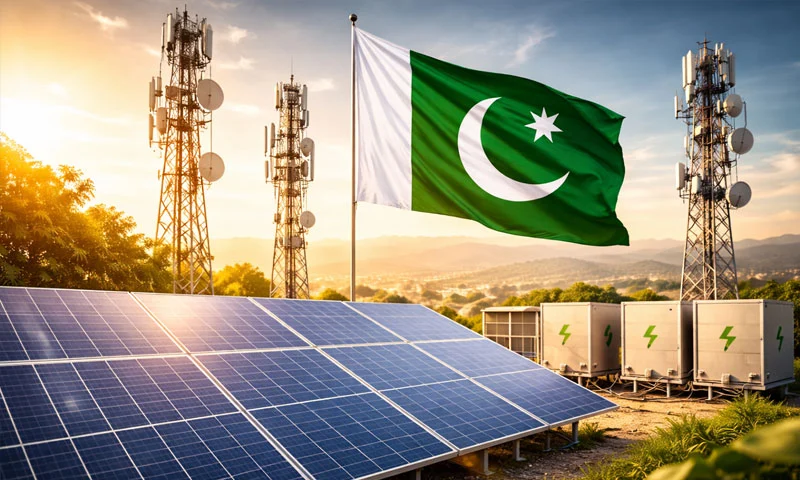
The proceeds from the Sukuk will finance the rollout of lithium-ion Battery Energy Storage Systems and solarisation projects at nearly 2,000 telecom tower sites across Pakistan. The country’s telecom sector, which serves around 190 million users through more than 50,000 towers, has long relied heavily on diesel generators due to unreliable grid connectivity.
Officials say the transition to renewable energy will significantly reduce dependence on imported fuel, lower operational costs and improve network reliability, particularly in off-grid and weak-grid areas.
“This landmark transaction demonstrates how innovative credit enhancement can unlock capital markets for transformative green infrastructure,” said Maheen Rahman, Chief Executive Officer of InfraZamin Pakistan.
The Sukuk, which was oversubscribed by investors, reflects growing confidence in climate-focused financial instruments and Pakistan’s expanding green finance market.
Industry Collaboration and Financial Structure
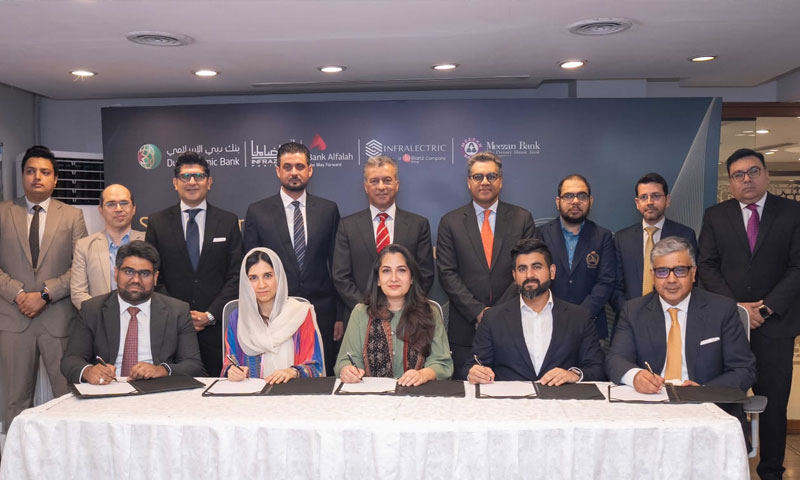
The transaction brings together a consortium of leading financial institutions, including Dubai Islamic Bank Pakistan as lead arranger, Bank Alfalah as joint lead arranger and Meezan Bank as the import bank.
InfraZamin Pakistan is providing a full principal guarantee, a move aimed at strengthening investor confidence and enabling broader participation in the debt capital market.
“This agreement represents a defining moment in the Bank’s commitment to the country’s green transition,” said Muhammad Ali Gulfaraz, CEO of Dubai Islamic Bank Pakistan.
Industry stakeholders say the model could serve as a template for future infrastructure financing projects, particularly those aligned with environmental and sustainability goals.
Economic and Environmental Impact
The project is expected to deliver multiple benefits, including reduced carbon emissions, lower fuel import bills and improved efficiency in telecom operations.
By replacing diesel-based power systems with solar and battery solutions, the initiative aims to cut emissions while supporting Pakistan’s broader climate commitments.
Experts note that the transition could also generate employment opportunities across installation, maintenance and technical operations, while strengthening the resilience of digital infrastructure.
The project aligns with several global development goals, including clean energy adoption, climate action and sustainable industrial growth.
“This landmark transaction sets a new benchmark for business model innovation, demonstrating how private capital can accelerate energy transition,” said Bilal Qureshi, Group CEO of Brillanz Group.
Analysts say the success of this Sukuk could encourage further investment in green projects, helping Pakistan bridge its infrastructure gap while moving toward a more sustainable economic model.