


Pakistan’s Climate Change Minister Musadik Malik called climate change an “enemy” of civilisations on Saturday. He urged the Shanghai Cooperation Organisation (SCO) to help protect South Asia’s heritage after deadly floods in Pakistan and Nepal. Malik spoke at Purana Qila on the second day of the inaugural SCO Civilisational Dialogue Forum. His three-day visit runs from November 20 to 22. It marks the first visit to India by a Pakistani minister since Bilawal Bhutto-Zardari attended an SCO meeting in Goa in May 2023. "بڑا عجیب سا لگا کہ چند کوس دور غالب کے مقبرے سے یہاں بیٹھ کر میں انگریزی میں بات کر رہا ہوں۔"وفاقی وزیر ڈاکٹر مصدق ملک کا نئی دہلی میں پہلے ایس سی او سولائزیشن ڈائیلاگ فورم سے اہم خطاب pic.twitter.com/1w6AVWsC3U— Musadik Malik (Office) (@Team_Musadik) November 21, 2026 Malik told delegates that climate change posed a shared threat across civilisations. Nepal’s representative also raised the issue. Malik recalled the August 26 flash floods in Nepal, which killed more than 1,400 people and left thousands missing. He also recalled Pakistan’s 2022 monsoon floods. He said they killed about 1,700 people and submerged a third of the country, including almost all of Sindh. “Four days of rain caused Mohenjo Daro’s walls to fall; those walls that no one was able to break for 4,500 years, [climate change] did it.” ”دہلی باہر سے آنے والی تہذیبوں اور لوگوں سے کم نہیں، بلکہ مضبوط ہوا ہے۔“وفاقی وزیر ڈاکٹر مصدق ملک کا نئی دہلی میں پہلے ایس سی او سولائزیشن ڈائیلاگ فورم سے اہم خطاب pic.twitter.com/zniw1WmkP9— Musadik Malik (Office) (@Team_Musadik) November 21, 2026 A conservation assessment published by UNESCO’s World Heritage Centre identified three causes of damage at the site. These included rainwater, salt damage and drainage problems. In particular, rainwater penetrated the base of several walls before they collapsed. Malik also called humans an “enemy” for contributing to climate destruction. “Do you know what is the meaning of Mohenjo-Daro?” Malik asked. “It means mound of the dead.” Yet during the floods, Malik said the site opened its gates to the living by sheltering displaced families. People also sought refuge in parking lots and shopping malls. Meanwhile, mosques, temples, shrines and schools in Balochistan opened their doors to those affected. “This is the power of civilisation. This is the power through which nations survive,” Malik said. Malik proposed a network of cultural institutions. In addition, he called for a digital repository to showcase the region’s historical and natural “gifts”. Finally, he proposed a climate-resilient heritage framework to tackle damage across the region. On Friday, Malik told ANI that the forum offered a “tremendous opportunity” for multilateral dialogue. He said cultures transcend borders. He also pointed to shared history and geography as topics the gathering could explore. Federal Minister @DrMusadikMalik met President of the Islamic Culture and Relations Organization of Iran Mr.Mohammad Mahdi Imanipour on the sidelines of the 1st SCO Civilizational Dialogue Forum, in New Delhi, today.@ForeignOfficePk @epwing_official @MoIB_Official pic.twitter.com/5036i3n0bL— Pakistan High Commission India (@PakinIndia) November 21, 2026 On the sidelines, Malik met Tajik Culture Minister Sattoriyon Amonzoda and called for more people-to-people exchanges. Separately, he met Mohammad Mahdi Imanipour, president of Iran’s Islamic Culture and Relations Organisation. Malik reaffirmed Pakistan’s commitment to expanding its longstanding cultural and historical ties with both countries. The visit comes two years after Indian External Affairs Minister Subrahmanyam Jaishankar attended an SCO meeting in Islamabad. Pakistan now holds the rotating chair of the SCO Council of Heads of State for 2026–27. Islamabad is due to host the leaders’ summit in August 2027.
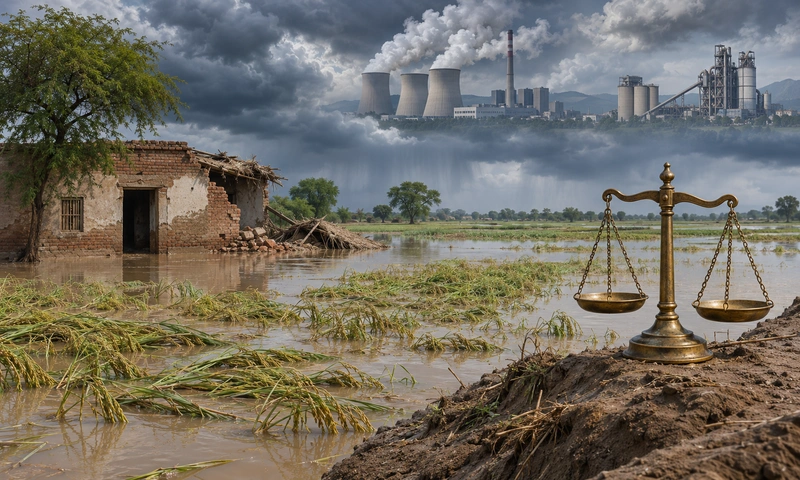
Pakistani Farmers Take German Giants to Court Over 2022 Flood Losses
Thirty-nine farmers from Sindh are pursuing a climate lawsuit against German energy company RWE and cement producer Heidelberg Materials. They seek compensation for losses from Pakistan’s devastating 2022 floods. The farmers argue that the companies’ greenhouse gas emissions contributed to climate change and intensified rainfall that destroyed crops, livestock and homes. Both companies reject the claims. Abdul Hafeez Khoso, 43, travelled to Germany to pursue the case. He lives with his wife and toddler in a Jacobabad village of about 800 people. “They’re spreading pollution: up in the sky there are no borders, it can affect anywhere,” he said. “We had nothing left.” Farmers Seek Compensation for Lasting Losses The farmers filed their lawsuit at Heidelberg Regional Court on December 22, 2025, following an unsuccessful demand for compensation. Supporting organisation ECCHR says their combined losses exceed €1 million. The plaintiffs attribute 0.68 per cent of global industrial emissions to RWE and 0.12 per cent to Heidelberg Materials. Their case concerns historical emissions rather than specific company operations in Pakistan. Pakistani and European organisations support the litigation. HANDS Welfare Foundation helped mobilise affected communities. Read More: Pakistan Puts Women, Farmers and Small Businesses at Heart of Green Finance Development expert Mir Keerio said scientific evidence connects climate change with increasingly severe extreme weather. He argued that major contributors must face accountability. The floods killed about 1,700 people, affected more than 30 million and inundated roughly a third of Pakistan. In Dadu district, Abdul Khalique Laghari, 55, estimates losses of $14,000, including his home, livestock and crops across 40 acres. “To this day, we are unable to repay our debt,” he said. “This has caused us serious mental harm.” Munawar Khatoon, 43, a female landowner in Usman Samtio village, described losing her family’s main agricultural income. “We worry about how the next generation will manage to live if this continues,” she said. German Ruling Shapes Climate Liability Fight The lawsuit builds on a May 2025 ruling involving Peruvian farmer Saúl Luciano Lliuya and RWE. Germany’s Higher Regional Court of Hamm dismissed his claim because the evidence did not establish sufficient flood danger. However, the court recognised that German civil law does not automatically exclude liability for climate impacts abroad. Lawyer Roda Verheyen, involved in both cases, argues that companies knew the general consequences of climate change decades ago. “Large companies knew about the general impacts of climate change since the 1960s,” she said. Both defendants call the claims “unfounded”. Heidelberg Materials says its operations complied with German law and rejects retrospective standards. Read More: Faysal Bank and Waseela Pakistan Launch Major Islamic Finance Drive for Farmers RWE describes the lawsuit as “yet another attempt to shift climate policy demands to German courtrooms”. It argues that lawful emissions should not create retrospective civil liability. The civil proceedings could take years. Lawyers say compensation proportionate to corporate emissions would represent a major breakthrough. Pakistan contributes less than one per cent of global emissions but faces severe climate impacts. “This case is for justice,” Khatoon said. “We hold these companies responsible for our destruction.”
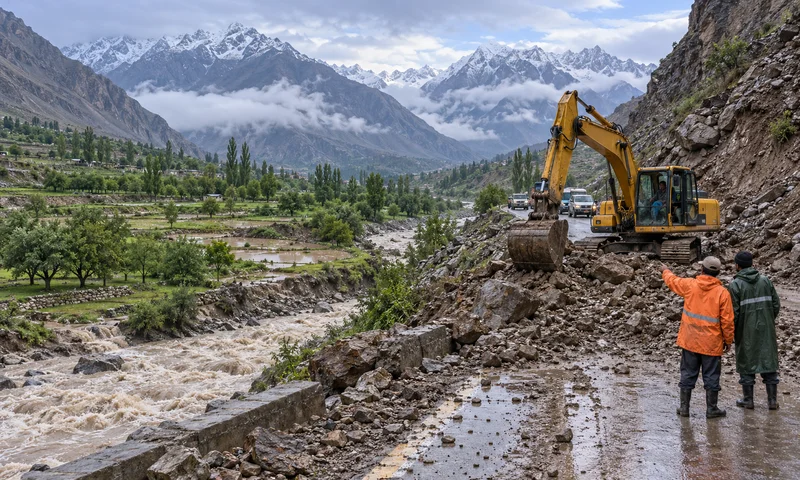
Why Gilgit-Baltistan’s Traditional Weather Cycle Is Breaking Down
Cloudburst-triggered flash floods have disrupted life across Gilgit-Baltistan, damaging homes and farmland, blocking roads and cutting electricity supplies in parts of Ghizer and Hunza. Heavy rain generated sudden flooding early on Saturday in several Ghizer areas. Naubahar village suffered extensive damage, including harm to Gushgush Jamaat Khana. Floodwater also destroyed crops, fruit trees and agricultural land. Roads blocked as communities seek help Flooding blocked the road between Immit and Barjangle and damaged electricity transmission lines running along the route. The disruption isolated residents from surrounding areas. Affected communities urged the administration to reopen the road quickly and provide immediate assistance and compensation for their losses. A Gilgit-Baltistan police spokesperson said landslides completely closed the Karakoram Highway between Sost and Khunjerab Top. Relevant departments deployed teams and machinery to restore the critical route. Authorities advised tourists to avoid unnecessary journeys while unstable weather and landslide risks persisted. Tourism police later reopened the KKH section between Murtazaabad and Hassanabad village in Hunza after clearing landslide debris. Babusar Top receives first snowfall Intermittent rain, lightning and thunderstorms have affected Gilgit-Baltistan since August 1. Residents described the latest downpour as unusually intense and said the severe thunderstorms created panic. Gilgit resident Waseem Baigal said he had never witnessed rain and thunderstorms of such intensity. However, he reported no damage in his locality. Continuous rainfall also brought temperatures down across the mountainous region. The Diamer district administration reported the season’s first snowfall at Babusar Top on Saturday morning. Despite the snow, traffic continued moving on Babusar Road. The unusual conditions have challenged traditional expectations about the region’s seasonal transition. Resident Ali Ahmed said cold weather historically began arriving after the middle of August. “According to indigenous knowledge, ice started to freeze at high altitudes and the risk of flash floods was over. However, for the last many years, a weather shift has been experienced,” he said. Climate change intensifies disaster risks The Gilgit-Baltistan Disaster Management Authority recorded 120 floods caused by cloudbursts and melting glaciers between June and August this year. Those events destroyed dozens of homes and damaged farmland, orchards, trees, irrigation channels, roads and electricity systems. Road blockages also left residents in several communities stranded for days. Experts said Gilgit-Baltistan now faces more frequent cloudbursts, flash floods, glacial lake outburst floods, landslides, rapid glacier melting and periods of extreme heat. The region’s fragile ecosystem includes more than 8,000 glaciers and about 300 glacial lakes, according to experts cited in local reporting. Its steep mountains and scattered settlements increase the threat to communities and transport links. Climate research has linked rising temperatures with faster glacier melt and growing instability in mountain lakes. These changes can increase the frequency and intensity of sudden flooding. Resident Safdar Ali said people in Gilgit-Baltistan ranked among those most vulnerable to climate change. He said repeated climate-related disasters had created growing fear among local communities.
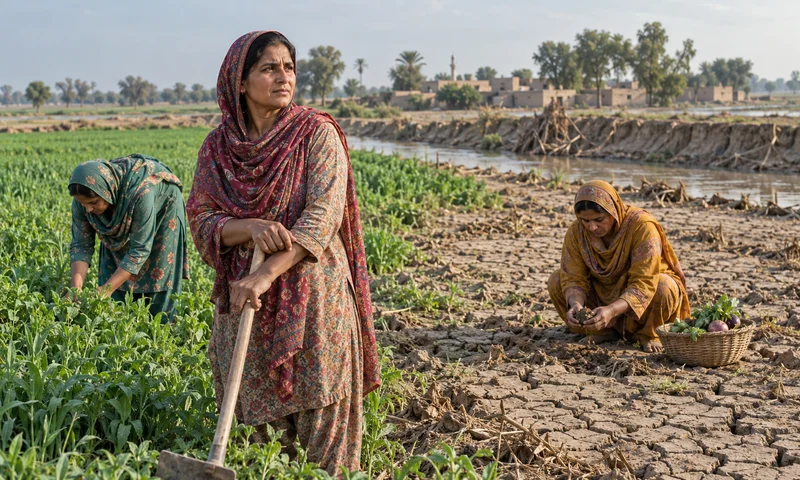
In Sindh, 99.1pc of Women Own No Land, Study Reveals
A new study has exposed a deep divide in agricultural ownership and financial power across Pakistan. Only about 2 per cent of ever-married women aged 15 to 49 own land alone or jointly. SDPI and Mobilink Bank presented the research at an Islamabad policy dialogue attended by regulators, banks and development partners. Women power agriculture but rarely own land The study found that 67pc of employed Pakistani women work in agriculture. However, official records classify only 1.5pc of agricultural households as female-headed. About 97.2pc of ever-married women in the surveyed age group had not inherited land or a house. The disparity proved even wider in Sindh, where 99.1pc did not own land individually or jointly. Read More: Pakistan Beats 16 Countries With Insurance Policy for Women Women also face limited access to financial and digital services. Around 56pc of men hold full-service financial accounts, compared with 14pc of women. Mobile-wallet ownership reaches 48pc among men but only 11pc among women. Researchers said the exclusion remains structural because conventional financial products depend on land ownership, personal mobility and digital access. Those requirements rarely reflect the circumstances of women farmers. Climate shocks push women towards debt More than nine in 10 surveyed women farmers experienced an extreme climate event during the previous five years. They reported heatwaves, floods, heavy rainfall and drought-like conditions. More than 80pc suffered crop losses or other negative effects on farming. Borrowing ranked among the two most common coping strategies in every surveyed district. Read More: Airblue Offers Cabin Crew Careers to Multan and Sialkot Women In Khushab, every woman who reported using a coping method had borrowed money. More than half had also sold livestock, potentially weakening future household income. Engr Ubaid Zia, head of SDPI’s Energy Unit, said “women are doing the agricultural work, absorbing the climate shocks, and already borrowing to survive, yet the formal financial system does not treat them accordingly.” The risks have intensified since Pakistan’s 2022 floods. A World Bank-led assessment calculated more than $30 billion in combined damage and economic losses. It estimated that resilient rehabilitation and reconstruction would require at least $16.3bn. Study proposes climate-responsive finance SDPI said half of Pakistan’s population remains largely unrecognised as active agricultural workers. Strengthening agriculture and livestock would therefore support both the rural and national economies. Researchers proposed three financial products. These include input-market loans ranging from Rs50,000 to Rs500,000 over two years, backed by a 3pc insurance premium for recurring climate shocks. They also recommended solar asset-backed financing to reduce women’s reliance on selling gold for household systems. A third proposal covers saffron entrepreneurship through a gender-transformative loan. The study advised lenders to link applications directly to women instead of male household heads. It also proposed female relationship officers to build awareness and encourage participation. SDPI said collaboration with institutions such as Mobilink Bank could sustain research through access to large customer datasets. The framework offers guidance to banks, regulators, development finance institutions and partners designing inclusive climate finance.
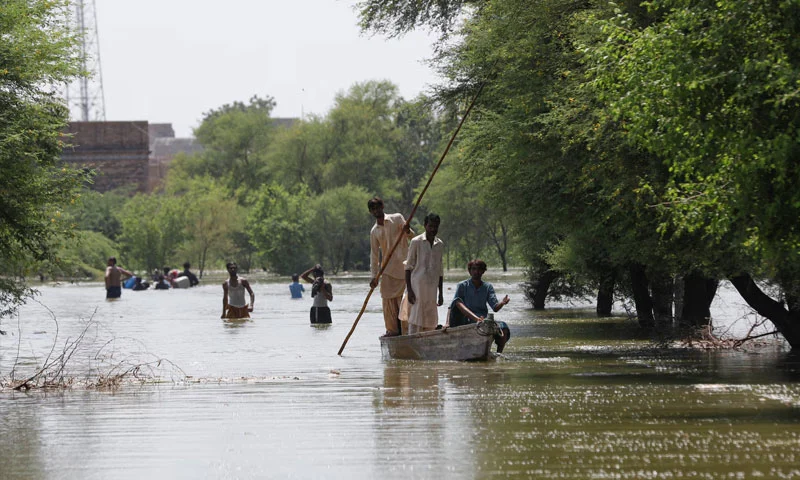
Pakistan Needs $331 Billion to Fight Climate Change by 2030: SBP
Pakistan will require an estimated $331 billion in climate financing between 2024 and 2030 to strengthen climate resilience and avoid severe economic losses from increasingly frequent climate disasters, according to the State Bank of Pakistan (SBP). The estimate, based on data from the Climate Policy Initiative (CPI), equals nearly 10 percent of Pakistan’s cumulative GDP, or about $47 billion annually during the seven-year period. The findings appear in the SBP’s latest report on climate finance, which highlights the urgent need for greater investment in climate adaptation, mitigation and resilient infrastructure. CPI, an internationally recognized climate finance research and advisory organization, estimates that the world requires $8.6 trillion in climate finance every year to keep global warming within the 1.5°C target set under the Paris Agreement. The report also notes that Pakistan ranked as the 15th most climate-affected country worldwide between 1995 and 2024, despite contributing only about 1 percent of global greenhouse gas emissions. Economic losses continue to mount The SBP said the Government of Pakistan estimates climate financing needs between $200 billion and $348 billion by 2030 to support climate-resilient development and implement its Nationally Determined Contributions (NDCs). Meanwhile, the government’s Pakistan Climate Prosperity Plan estimates that the country will require $1.6 trillion by 2050 for phased investments, technology access and sustainable development. Climate-related disasters have already inflicted enormous damage on Pakistan’s economy. According to the report, climate events caused economic losses of $58.8 billion by 2025. Of this amount, $29.3 billion occurred between 1992 and 2021. The catastrophic 2022 floods alone caused nearly $28 billion in damage, while floods in 2025 added another $1.5 billion in losses. SBP analysis shows floods have directly reduced economic growth by damaging infrastructure, agriculture and businesses. Rising input costs also created indirect pressure on GDP, although post-flood agricultural recovery and reconstruction partly offset the overall impact. The report also cites World Bank projections showing Pakistan’s GDP could decline by 4.5 to 6.5 percent by 2050 under an optimistic climate scenario. Under a pessimistic scenario, losses could reach 7 to 9 percent, with agriculture and industry facing the greatest risks. Funding remains far below requirements Despite its growing vulnerability, Pakistan receives only a fraction of the climate finance it needs. The SBP said the country attracted only $1.4 billion to $2 billion annually in climate finance over the past decade. Funding peaked at around $4 billion in 2021, but remains well below national requirements. The report says Pakistan also receives significantly less climate finance per person than comparable countries, including Bangladesh, India, Kenya and the Philippines. SBP identified several reasons for the financing gap. Globally, investors prefer mitigation projects because they generate stronger financial returns than adaptation projects. Pakistan, however, requires greater investment in adaptation due to its high exposure to floods, droughts and extreme weather. The report also points to recurring macroeconomic instability, exchange rate volatility, political uncertainty, sovereign risk and weak financial markets as factors reducing investor confidence. Another major challenge is the country’s limited ability to develop bankable climate projects. The report notes that stronger project pipelines help attract financing from Multilateral Development Banks and private investors. However, bureaucratic delays and institutional weaknesses continue to slow implementation. It cited the World Bank’s Pakistan Hydromet and Climate Services Project, which concluded in 2025 after key components, including weather radars and automatic weather stations, were dropped because of procurement delays and institutional frictions. The SBP stressed that improving project preparation, strengthening monitoring systems and accelerating reforms will be essential if Pakistan is to secure the climate finance needed to protect its economy from future climate shocks.
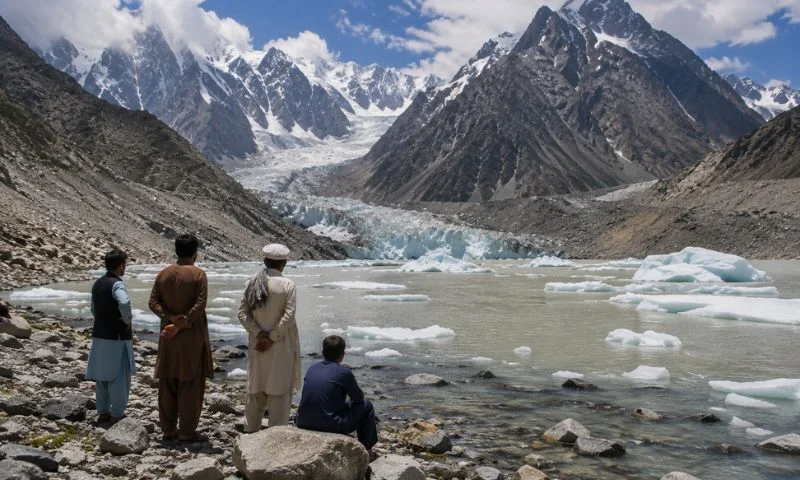
Pakistan’s North Reaches Highest Temperatures in 65 Years
Pakistan experienced its second-warmest year in 65 years during 2025, continuing a worrying climate trend that economists and environmental experts say poses growing risks to the country’s economy, water resources and food security. According to the Economic Survey 2025-26, the country recorded a national annual mean temperature of 23.9°C in 2025. That figure stood 1.09°C above the long-term average of 22.8°C. The survey identified 2024 as the hottest year on record and 2025 as the second warmest, marking consecutive years of exceptionally high temperatures. Despite contributing less than 1% of current global greenhouse gas emissions and only 0.4% historically, Pakistan remains among the countries most vulnerable to climate change. “Climate change is no longer a distant or abstract threat to the country but a present reality,” the survey stated. Scientists note that Pakistan’s average temperature has increased by around 0.5°C over the past five decades. Climate projections indicate temperatures could rise by another 3°C to 5°C by the end of the century if global emissions remain high. Northern Regions See Sharpest Temperature Rise The strongest warming occurred in northern Pakistan during 2025. Temperature anomalies reached 1.24°C in Gilgit-Baltistan, 1.29°C in Khyber Pakhtunkhwa and 1.56°C in Azad Jammu and Kashmir. All three regions recorded their highest annual temperatures in 65 years. Pakistan received 288.5 millimetres of rainfall during the year, slightly below the long-term average of 297.6 millimetres. Rainfall patterns, however, remained highly uneven. Sindh, Punjab and Gilgit-Baltistan received above-average precipitation, while Khyber Pakhtunkhwa and Balochistan remained below average. The monsoon season from July to September brought rainfall levels 23% above normal. Earlier months remained unusually dry. Experts say rising temperatures are accelerating glacier melt across the Himalaya, Karakoram and Hindu Kush mountain ranges. The changes are also altering monsoon behaviour and increasing the likelihood of extreme floods. The survey noted that fewer rainy days and more intense downpours have shifted monsoon patterns southward. Those changes contributed to widespread flooding across Pakistan in 2025, echoing the devastation witnessed during the catastrophic floods of 2022. The government also warned that limited international climate financing could hinder Pakistan’s ability to meet its commitments under global climate agreements. The World Bank estimates Pakistan requires $565.7 billion in climate-related investments by 2030. Of that amount, approximately $217.7 billion remains unfunded. Global Heat Emergency Deepens The climate crisis is not limited to Pakistan. The World Health Organization reported that extreme heat has claimed more than 200,000 lives across Europe since 2022. “The impacts of climate change are a clear and present danger, and its most immediate and lethal manifestation is extreme heat,” said Hans Henri Kluge, the WHO’s regional director for Europe. Scientists are also monitoring the return of the El Nino climate pattern. The National Oceanic and Atmospheric Administration said there is a 63% chance that El Nino will strengthen into one of the most powerful events recorded since 1950. UN Secretary-General Antonio Guterres warned that “El Nino conditions will pour fuel on the fire of a warming world”. Meanwhile, India has already reported delays in monsoon progress and below-average rainfall, raising concerns about agricultural production across the region. As temperatures continue to rise, climate experts warn that South Asia faces increasing risks from extreme heat, floods, water shortages and economic disruption.
