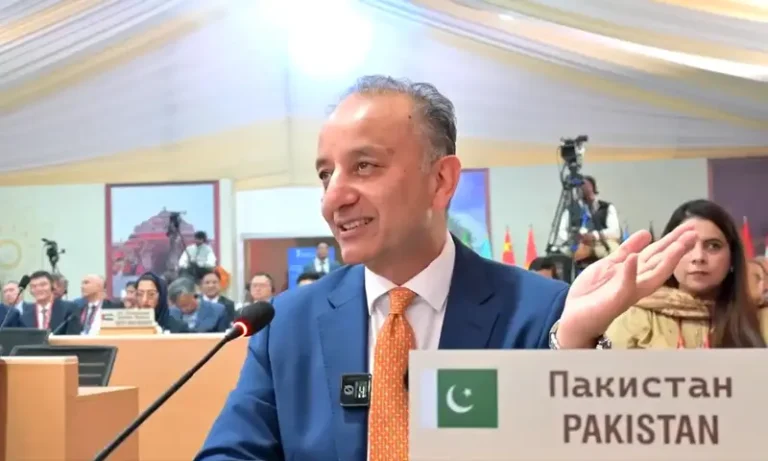


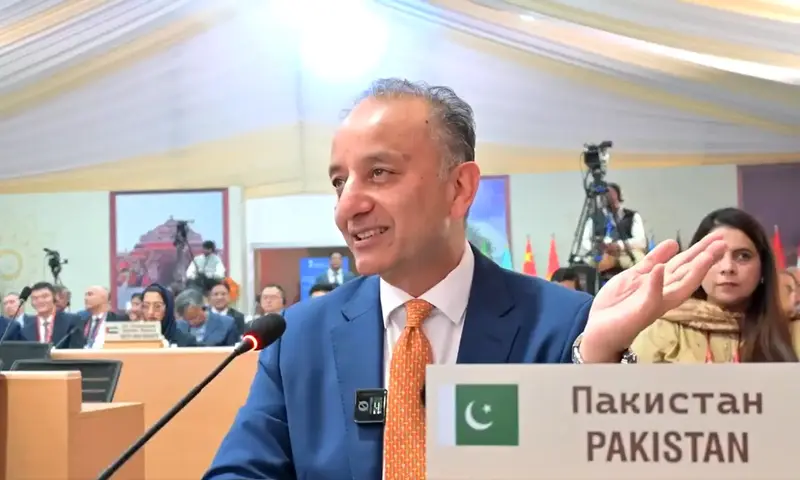
Pakistan’s Climate Change Minister Musadik Malik called climate change an “enemy” of civilisations on Saturday. He urged the Shanghai Cooperation Organisation (SCO) to help protect South Asia’s heritage after deadly floods in Pakistan and Nepal.
Malik spoke at Purana Qila on the second day of the inaugural SCO Civilisational Dialogue Forum. His three-day visit runs from November 20 to 22. It marks the first visit to India by a Pakistani minister since Bilawal Bhutto-Zardari attended an SCO meeting in Goa in May 2023.
Malik told delegates that climate change posed a shared threat across civilisations. Nepal’s representative also raised the issue. Malik recalled the August 26 flash floods in Nepal, which killed more than 1,400 people and left thousands missing.
He also recalled Pakistan’s 2022 monsoon floods. He said they killed about 1,700 people and submerged a third of the country, including almost all of Sindh.
“Four days of rain caused Mohenjo Daro’s walls to fall; those walls that no one was able to break for 4,500 years, [climate change] did it.”
A conservation assessment published by UNESCO’s World Heritage Centre identified three causes of damage at the site. These included rainwater, salt damage and drainage problems. In particular, rainwater penetrated the base of several walls before they collapsed.
Malik also called humans an “enemy” for contributing to climate destruction. “Do you know what is the meaning of Mohenjo-Daro?” Malik asked. “It means mound of the dead.”
Yet during the floods, Malik said the site opened its gates to the living by sheltering displaced families. People also sought refuge in parking lots and shopping malls. Meanwhile, mosques, temples, shrines and schools in Balochistan opened their doors to those affected.
“This is the power of civilisation. This is the power through which nations survive,” Malik said.
Malik proposed a network of cultural institutions. In addition, he called for a digital repository to showcase the region’s historical and natural “gifts”. Finally, he proposed a climate-resilient heritage framework to tackle damage across the region.
On Friday, Malik told ANI that the forum offered a “tremendous opportunity” for multilateral dialogue. He said cultures transcend borders. He also pointed to shared history and geography as topics the gathering could explore.
On the sidelines, Malik met Tajik Culture Minister Sattoriyon Amonzoda and called for more people-to-people exchanges. Separately, he met Mohammad Mahdi Imanipour, president of Iran’s Islamic Culture and Relations Organisation. Malik reaffirmed Pakistan’s commitment to expanding its longstanding cultural and historical ties with both countries.
The visit comes two years after Indian External Affairs Minister Subrahmanyam Jaishankar attended an SCO meeting in Islamabad. Pakistan now holds the rotating chair of the SCO Council of Heads of State for 2026–27. Islamabad is due to host the leaders’ summit in August 2027.