Cloudburst-triggered flash floods have disrupted life across Gilgit-Baltistan, damaging homes and farmland, blocking roads and cutting electricity supplies in parts of Ghizer and Hunza.
Heavy rain generated sudden flooding early on Saturday in several Ghizer areas. Naubahar village suffered extensive damage, including harm to Gushgush Jamaat Khana. Floodwater also destroyed crops, fruit trees and agricultural land.
Roads blocked as communities seek help
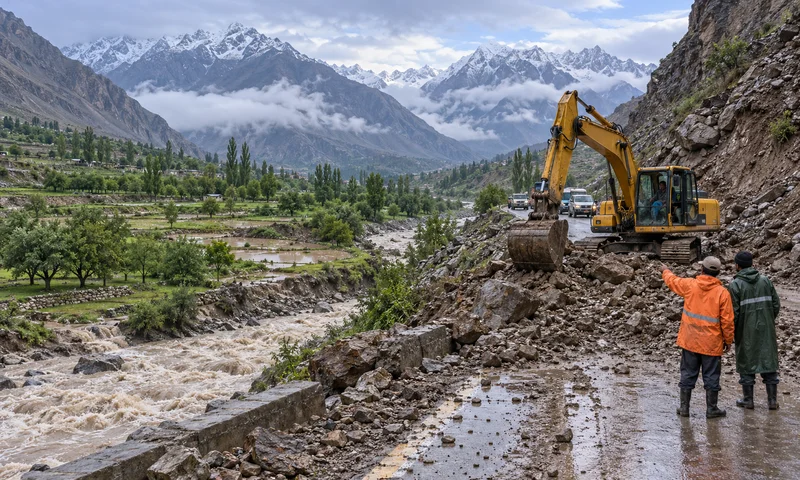
Flooding blocked the road between Immit and Barjangle and damaged electricity transmission lines running along the route. The disruption isolated residents from surrounding areas.
Affected communities urged the administration to reopen the road quickly and provide immediate assistance and compensation for their losses.
A Gilgit-Baltistan police spokesperson said landslides completely closed the Karakoram Highway between Sost and Khunjerab Top. Relevant departments deployed teams and machinery to restore the critical route.
Authorities advised tourists to avoid unnecessary journeys while unstable weather and landslide risks persisted. Tourism police later reopened the KKH section between Murtazaabad and Hassanabad village in Hunza after clearing landslide debris.
Babusar Top receives first snowfall
Intermittent rain, lightning and thunderstorms have affected Gilgit-Baltistan since August 1. Residents described the latest downpour as unusually intense and said the severe thunderstorms created panic.
Gilgit resident Waseem Baigal said he had never witnessed rain and thunderstorms of such intensity. However, he reported no damage in his locality.
Continuous rainfall also brought temperatures down across the mountainous region. The Diamer district administration reported the season’s first snowfall at Babusar Top on Saturday morning. Despite the snow, traffic continued moving on Babusar Road.
The unusual conditions have challenged traditional expectations about the region’s seasonal transition. Resident Ali Ahmed said cold weather historically began arriving after the middle of August.
“According to indigenous knowledge, ice started to freeze at high altitudes and the risk of flash floods was over. However, for the last many years, a weather shift has been experienced,” he said.
Climate change intensifies disaster risks
The Gilgit-Baltistan Disaster Management Authority recorded 120 floods caused by cloudbursts and melting glaciers between June and August this year.
Those events destroyed dozens of homes and damaged farmland, orchards, trees, irrigation channels, roads and electricity systems. Road blockages also left residents in several communities stranded for days.
Experts said Gilgit-Baltistan now faces more frequent cloudbursts, flash floods, glacial lake outburst floods, landslides, rapid glacier melting and periods of extreme heat.
The region’s fragile ecosystem includes more than 8,000 glaciers and about 300 glacial lakes, according to experts cited in local reporting. Its steep mountains and scattered settlements increase the threat to communities and transport links.
Climate research has linked rising temperatures with faster glacier melt and growing instability in mountain lakes. These changes can increase the frequency and intensity of sudden flooding.
Resident Safdar Ali said people in Gilgit-Baltistan ranked among those most vulnerable to climate change. He said repeated climate-related disasters had created growing fear among local communities.