
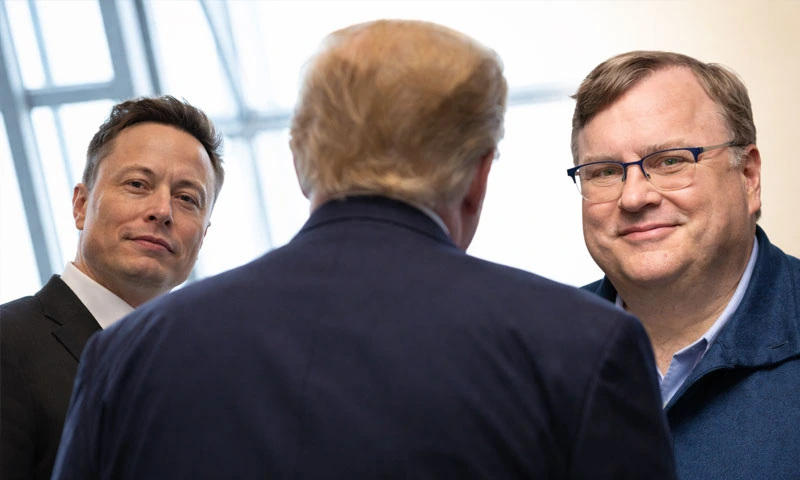
Tech billionaire Elon Musk has reignited a political controversy by posting on X (formerly Twitter) that LinkedIn co-founder Reid Hoffman publicly said he wished former U.S. President Donald Trump had been killed in a recent assassination attempt — a claim that has drawn widespread attention and debate across social and traditional media. Musk’s post referenced comments Hoffman made during a July 2024 panel at the Allen & Company Sun Valley Conference, a gathering of influential tech leaders and investors. According to multiple accounts, at that event Hoffman responded to conservative billionaire Peter Thiel by saying, “Yeah, I wish I had made him an actual martyr,” a remark many interpreted as expressing a wish for Trump to die. In Musk’s post shared this week, he wrote: “Just a reminder that Reid Hoffman really did say in a public forum that he wished President Trump had been killed in the assassination attempt.” The comments have resurfaced amid renewed scrutiny after Trump survived an attempted assassination in Pennsylvania in 2024, an incident that sparked political tensions and a flurry of misinformation online. Hoffman’s Response and Clarifications In the aftermath of the original controversy last year, Hoffman publicly sought to clarify his remarks, framing them as sarcastic and contextual rather than literal calls for violence. In a statement on X that summer, he explained that his comment was made in the context of a heated exchange with Thiel, who had sarcastically thanked him for legal actions against Trump that had, in Thiel’s view, strengthened the former president’s political position. Hoffman stated his remark was meant metaphorically about accountability, not about physical harm. He wrote, according to reports: “Of course we meant nothing about any sort of physical harm or violence, which I categorically deplore.” He also condemned political violence following the assassination attempt. The White House said “violence should only be condemned, never encouraged or joked about,” after Musk drew criticism for related posts. Broader Context: Political Rhetoric and Tech Leaders Reid Hoffman is a prominent figure in tech and politics. Best known as co-founder of LinkedIn and an early executive at PayPal, he is also deeply involved in venture capital and political funding, particularly for Democratic causes. His political engagement and billionaire status have made him a polarising figure among both left and right audiences. Hoffman’s original comment drew ire from conservative circles last year, with some arguing that elites in tech and finance were out of touch and hostile toward conservative political figures. Reports at the time noted that Republicans seized on the remark as evidence of broader anti-Trump sentiment in Silicon Valley. Musk’s post this week is part of a broader trend in which high-profile tech personalities increasingly wade into political disputes on social platforms. Musk himself has a history of controversial political posts on X, including comments about past assassination attempts and political violence, some of which he later deleted or walked back after public backlash. Impact and Reactions The resurfacing of Hoffman’s comment has further ignited discussions about the role and responsibility of tech leaders in public discourse, especially around sensitive topics like political violence. Experts warn that rhetoric, even sarcastic, can be misinterpreted and fuel division. Public opinion remains sharply divided, with social media users on both sides debating the intent and impact of such statements. Whether this controversy will have long-term effects on Hoffman’s reputation or influence in tech and politics remains to be seen. However, it highlights how remarks by influential figures can resurface and reverberate long after they were first made.
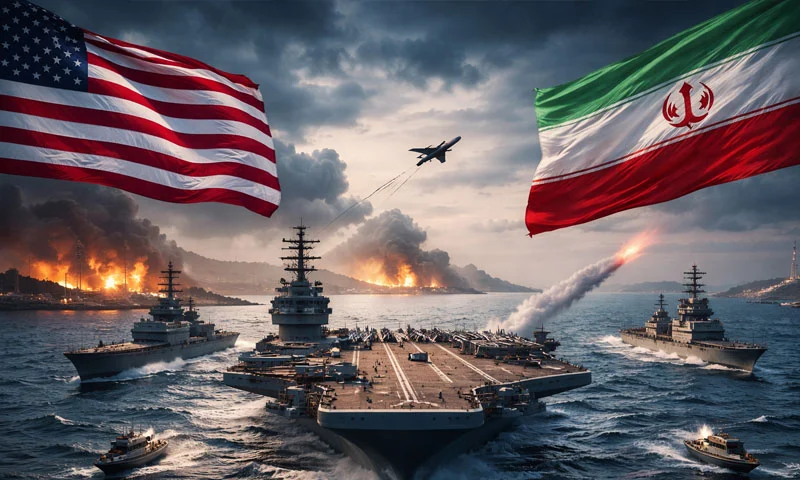
Explained: The Root of the US–Iran Crisis and the Dangers Ahead
Tensions between the United States and the Islamic Republic of Iran have sharply increased in late January 2026, driven by renewed disputes over Iran’s nuclear program, continued internal unrest within Iran, and growing U.S. military pressure aimed at forcing Tehran back to negotiations. The escalation has raised serious concerns across the Middle East and beyond, with global powers closely watching developments due to their political, economic, and security stakes in the region. The Core Issue: Nuclear Program and Strategic Confrontation At the heart of the current standoff lies Iran’s nuclear program and Washington’s long-standing demand that Tehran permanently abandon any pathway toward nuclear weapons. The United States has reiterated that Iran must return to binding negotiations that impose strict and verifiable limits on its nuclear activities. President Donald Trump has publicly called on Iran to accept a new agreement focused on what he describes as a “no nuclear weapons” outcome, warning that failure to comply could result in military action. This nuclear dispute is not isolated. It is part of a broader strategic conflict that includes regional influence, sanctions enforcement, and long-running mistrust between the two countries following years of collapsed agreements and diplomatic disengagement. Human Rights Concerns and Domestic Unrest in Iran Alongside the nuclear issue, U.S. officials have cited Iran’s internal situation as a key concern. Washington has accused Iranian authorities of using excessive force against nationwide protests, with reports indicating large-scale civilian casualties. American leaders have linked these human rights concerns to their broader pressure strategy, arguing that Iran’s domestic conduct reflects its broader regional and international behavior. Tehran, however, rejects these accusations and views them as interference in its internal affairs. Military Build-Up and Pressure Tactics The escalation has been underscored by a visible U.S. military buildup in the Middle East. The United States has deployed a major naval carrier strike group, centered on the USS Abraham Lincoln, along with additional air and naval assets. Washington describes these deployments as defensive and deterrent in nature, intended to prevent regional instability. However, U.S. officials have also acknowledged that the military presence serves as leverage to push Iran toward negotiations. Iran has interpreted these moves as direct threats. In response, Tehran has conducted military exercises near the Strait of Hormuz and warned that any violation of its territorial waters would be met with force. Trump’s Position and Iran’s Rejection of Talks Under Threat President Trump has repeatedly stated that “time is running out” for diplomacy and that Iran must choose between negotiations and the risk of military confrontation. His administration has also expanded economic pressure, including new sanctions targeting Iranian oil shipments and related entities. Iran’s leadership has firmly rejected the idea of negotiating under coercion. Iranian officials have stated that no meaningful talks can occur in an environment dominated by military threats and economic punishment. Iran’s mission to the United Nations has warned that any U.S. attack would trigger a strong and unprecedented response. Potential Regional Consequences of a Military Conflict Analysts and regional officials warn that a U.S. attack on Iran could have far-reaching consequences. Iran maintains influence through allied groups and armed networks across Iraq, Syria, Lebanon, and Yemen. Any direct confrontation could therefore expand beyond Iran’s borders, increasing instability across the Middle East. The mere prospect of conflict has already heightened anxiety among regional governments, many of which fear being drawn into a wider confrontation. Global Oil Markets at Risk Iran remains a significant oil producer, with output estimated at over three million barrels per day. Rising tensions have already affected global energy markets, as traders factor in the risk of supply disruptions. A major concern is the Strait of Hormuz, a critical chokepoint through which a substantial portion of the world’s oil shipments pass. Any disruption to traffic through the strait could have immediate and severe consequences for global energy prices and economic stability. Reactions of Key Global Stakeholders China and Russia, both of which maintain strategic ties with Iran, have historically opposed unilateral military action by the United States. While neither has indicated support for a U.S. strike, both are expected to resist such action diplomatically and call for de-escalation. Pakistan, which seeks balanced relations with both Washington and Tehran, is unlikely to participate in any military action. However, a regional conflict could still affect Pakistan through economic pressures, energy price shocks, and potential refugee movements. Across the broader international community, calls for restraint and renewed diplomacy have grown louder. Several Gulf states have expressed concern that a full-scale conflict would destabilize the region and undermine economic and security interests. Outlook and Risks Ahead With diplomatic channels strained and military posturing intensifying, the current U.S.–Iran standoff represents one of the most serious escalations in recent years. The situation carries significant risks not only for the Middle East but also for global markets and international security. Whether the crisis moves toward renewed negotiations or further confrontation will likely depend on whether both sides find a way to reduce tensions without appearing to concede under pressure—a challenge that has repeatedly undermined past diplomatic efforts.
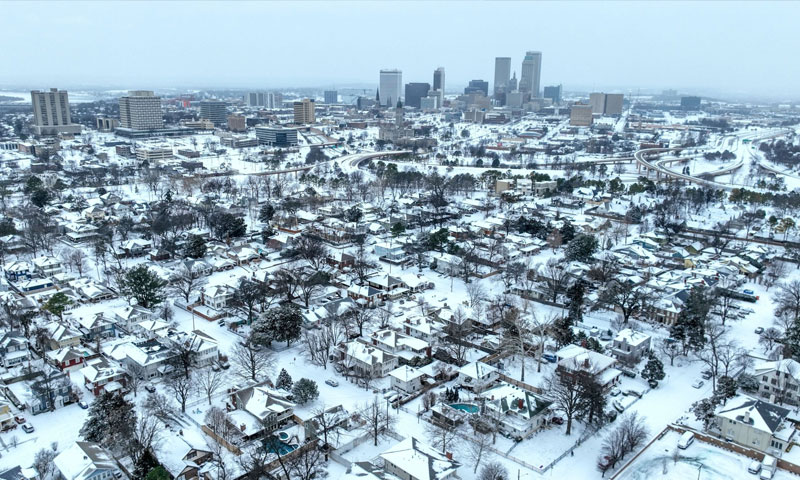
Monster Winter Storm Paralyzes U.S. Travel, Triggers Widespread Blackouts and Emergency Declarations
A powerful winter storm sweeping across large parts of the United States has triggered widespread disruption, forcing the cancellation of thousands of flights and knocking out electricity to hundreds of thousands of homes as dangerously cold weather advances eastward. More than 4,000 flights were cancelled on Saturday, with disruptions expected to worsen as the storm spreads across the eastern two-thirds of the country. By early Sunday, power outages had already affected over 230,000 customers, stretching as far west as Texas, according to outage monitoring data. Weather forecasters warned that a combination of heavy snow, sleet, freezing rain and extreme cold would persist through Sunday and into the coming week, raising the risk of prolonged travel disruption and infrastructure strain. Describing the storm system as “historic,” U.S. President Donald Trump approved federal emergency disaster declarations for multiple states, including South Carolina, Virginia, Tennessee, Georgia, North Carolina, Maryland, Arkansas, Kentucky, Louisiana, Mississippi, Indiana and West Virginia. “We will continue to monitor and stay in touch with all states in the path of this storm,” Trump said in a social media post, urging Americans to remain safe and prepared. Widespread Emergency Declarations and Power Concerns At least 17 states and Washington, D.C. declared weather emergencies, according to the Department of Homeland Security (DHS). DHS Secretary Kristi Noem said tens of thousands of people across southern states were without power as utility crews raced to restore service. The hardest-hit states included Louisiana, Mississippi, Texas, Tennessee and New Mexico, where outages continued to rise into Sunday. https://x.com/dwnews/status/1876253635744514424 To prevent grid failures, the U.S. Department of Energy (DOE) issued emergency orders allowing grid operators in Texas and the mid-Atlantic region to deploy backup power resources, including at data centers and major facilities, even if doing so exceeded normal regulatory limits. Airlines and Airports Brace for Continued Disruptions Airlines across the country scrambled to adjust schedules as conditions deteriorated. By late Saturday night, more than 9,400 additional flights scheduled for Sunday had already been cancelled, according to flight-tracking data. Major carriers warned passengers to expect abrupt changes. Delta Air Lines reported further cancellations across Atlanta and the East Coast, while relocating cold-weather specialists to assist de-icing operations at southern airports. JetBlue said it had cancelled about 1,000 flights through Monday, while United Airlines confirmed it had proactively grounded flights in areas forecast to receive the worst conditions. Images from affected airports showed de-icing crews working around the clock as ice and snow accumulated on aircraft. Forecast Warns of “Crippling” Conditions The National Weather Service warned that the storm could bring widespread and long-lasting ice accumulation across the Southeast, where even moderate icing can lead to what forecasters described as “crippling to locally catastrophic impacts.” Meteorologists also warned that record-low temperatures and dangerous wind chills could push further into the Great Plains by Monday, increasing risks to public safety. Officials urged residents to stock up on food and fuel, limit travel where possible, and prepare for prolonged outages as the storm continues to move east.
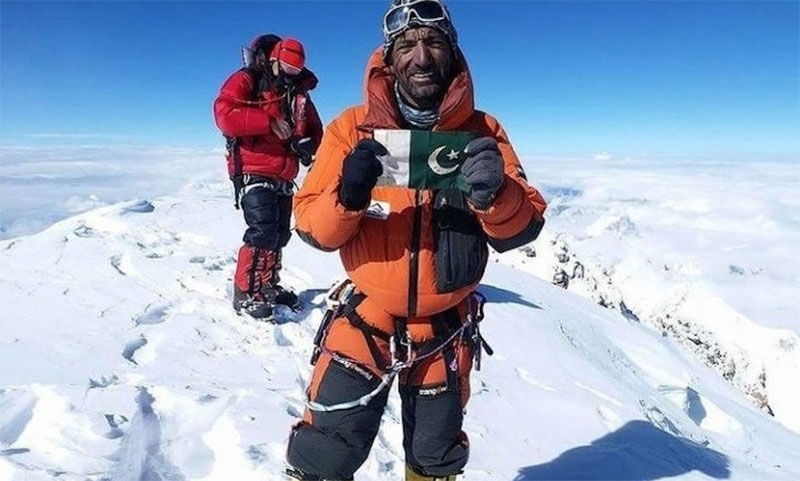
Ali Sadpara’s Last Climb: Winter K2 Tragedy Takes Centre Stage at Sundance
A haunting new documentary revisiting one of mountaineering’s most devastating tragedies — the fatal 2021 winter climb of K2 that claimed the lives of legendary climbers Muhammad Ali Sadpara and John Snorri — has captured international attention after premiering at the 2026 Sundance Film Festival in the United States. Directed by award-winning filmmaker Amir Bar-Lev, the film offers a stark and deeply personal account of one of the most dangerous seasons ever recorded on K2, the world’s second-highest mountain. The documentary explores the high-stakes race to conquer what mountaineers long considered the sport’s final unclaimed achievement — the first winter ascent of K2. The film centres on the expedition involving Snorri and the father-son duo of Ali Sadpara and Sajid Sadpara, who set out to summit K2 during winter, when extreme cold, violent winds, and technical challenges make survival uncertain. That season proved deadly, claiming multiple lives and exposing fractures within modern mountaineering culture. The Last First: Winter K2 chronicles the climbers’ final push toward the summit and the tragic events that followed, including the disappearance of Ali Sadpara and Snorri during their descent. Their deaths sent shockwaves through the global climbing community and reignited debate about risk, responsibility, and ethics in extreme alpinism. Beyond the tragedy itself, the documentary examines deeper issues shaping the sport today — including the pressures of commercial expeditions, the influence of social media and influencer culture, and long-standing inequalities between climbers from the Global South and those who have traditionally dominated mountaineering narratives. Sajid Sadpara, who survived the climb after being forced to turn back and later took part in search operations for his father, attended the film’s premiere in Park City, Utah. Addressing the audience, he shared emotional details about the expedition’s strategy and the moment his father and Snorri went missing during their descent. Festival organisers described the film as a powerful exploration of the immense dangers of winter climbing on K2 and a meditation on the evolving identity of high-altitude mountaineering. Bar-Lev, whose previous work includes The Tillman Story and Long Strange Trip, uses the tragedy as a lens to examine how extreme climbing has changed over time. In an interview with Deadline, he reflected on the historical context behind the expedition. “By January 2005, all the world’s tallest mountains — the 14 peaks above 8,000 metres — had been climbed in winter, all except one,” Bar-Lev said. “That mountain was K2, in Pakistan.” “Becoming the first to summit K2 in winter stood as mountaineering’s last great unachieved feat — ‘the last first,’” he added. The film also documents how the original expedition was unexpectedly joined by rival climbers, film crews, and commercial clients, transforming a singular quest into a crowded and high-pressure race — with fatal consequences.
History, Rules, and Reality: What Past Nobel Medal Gifts Reveal About Trump’s Case
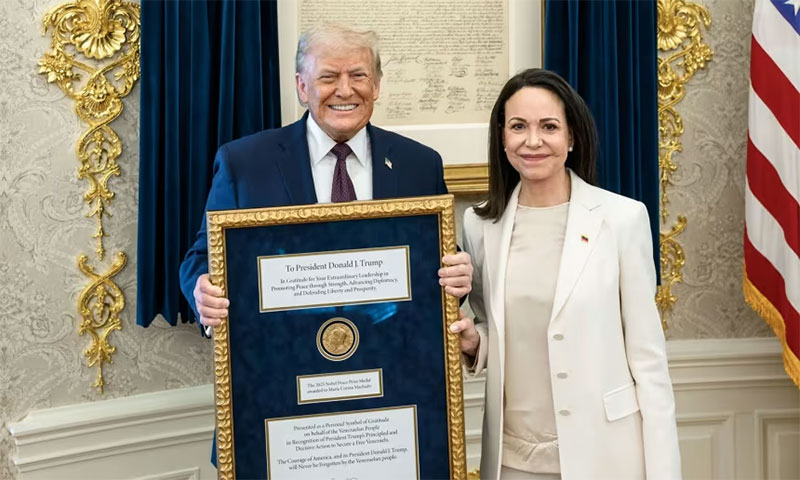
The decision by Venezuelan opposition leader and María Corina Machado, the 2025 Nobel Peace Prize laureate, to present her Nobel Peace Prize medal to Donald Trump during a White House meeting has ignited international debate over the limits of symbolism, the rules governing the Nobel Prize, and the ethical weight of such gestures. Machado handed over the gold medal during a meeting with Trump on January 15, describing it as a personal token of gratitude. Trump accepted the medal and publicly thanked her, calling it a gesture of “mutual respect,” according to international media reports. What the Nobel authorities say The Norwegian Nobel Committee moved quickly to clarify the institutional position. In a statement carried by Reuters, the committee stressed that while a laureate is free to dispose of the physical items associated with the prize — including the medal, diploma, and prize money — the Nobel Peace Prize itself cannot be transferred. “Regardless of what may happen to the medal, the diploma, or the prize money, it is and remains the original laureate who is recorded in history as the recipient of the prize,” the committee said. The Nobel Peace Center echoed that stance, noting that although a medal can change hands, the title of Nobel Peace Prize laureate remains permanently linked to the person selected by the committee. Rare, but not without precedent While the episode is highly unusual, Nobel historians note that it is not the first time a Nobel medal has changed ownership. One of the most controversial examples dates back to 1943, when Swedish writer Knut Hamsun gave his Nobel Prize in Literature medal to Nazi propaganda minister Joseph Goebbels. More recently, Nobel Peace Prize laureate Dmitry Muratov auctioned his medal in 2022 to raise funds for Ukrainian refugee children, while the family of former UN secretary-general Kofi Annan donated his Nobel medal to the United Nations’ Geneva office in 2024. What sets the current case apart, analysts say, is the explicit political symbolism of handing the medal to a sitting U.S. president during an official visit. Ethical criticism in Norway The move drew sharp criticism from Norwegian political figures and academics. Janne Haaland Matlary, a professor at the University of Oslo and former politician, described the act as “completely unheard of” in comments to Norway’s public broadcaster NRK. She argued that while the gesture may be legally permissible, it showed “a lack of respect for the award itself.” Other Norwegian commentators, quoted by international media, called the episode “absurd” and warned that such acts risk politicizing a prize intended to recognize independent efforts for peace. Trump’s response Ahead of the meeting, Trump told reporters that Machado — not himself — was the Nobel Peace Prize winner, pushing back against any suggestion that the gesture made him a laureate. After accepting the medal, he publicly thanked Machado but did not claim the Nobel title. Legal bottom line According to the Nobel Foundation’s statutes and the committee’s clarification, the rules are clear: A Nobel laureate may give away, sell, or donate the physical medal. The Nobel Peace Prize itself cannot be transferred, shared, or reassigned. The official historical record remains unchanged, with Machado listed as the sole laureate. As the controversy continues, the Nobel institutions have sought to draw a firm line between symbolic gestures and formal recognition, underlining that while medals may travel, the Nobel Prize — in law and in history — does not.
Gaza After the War: Trump Assembles US-Led Board, Appoints Blair and Military Chief
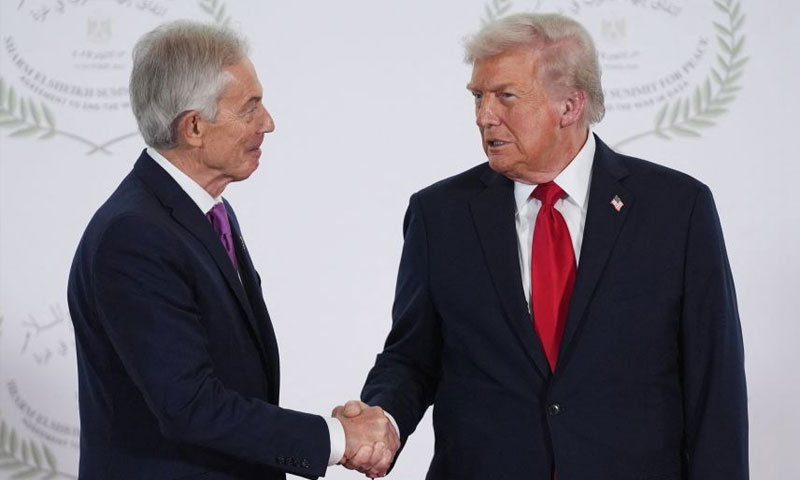
US President Donald Trump has appointed former British prime minister Tony Blair to a prominent role in a new US-backed plan for post-war Gaza, while naming a senior American military officer to lead a proposed international security force in the devastated Palestinian territory. The White House said on Friday that Trump had finalized the membership of a newly created “Board of Peace,” a body dominated by Americans that will oversee Gaza’s reconstruction, governance planning, and economic revival following more than two years of intense Israeli bombardment. Trump, who has declared himself chair of the board, said its mandate will include governance capacity-building, regional diplomacy, reconstruction planning, investment attraction, and large-scale capital mobilisation for Gaza. Alongside Blair, the board includes Trump’s son-in-law Jared Kushner, US Secretary of State Marco Rubio, and Trump’s longtime associate and special envoy Steve Witkoff. Other members named to the board are Ajay Banga, billionaire financier Marc Rowan, and Robert Gabriel, a close Trump aide serving on the National Security Council. Blair’s controversial return to Middle East diplomacy Blair’s appointment is likely to prove contentious across the Middle East, where he remains a divisive figure due to his role in the 2003 US-led invasion of Iraq. Trump acknowledged last year that Blair’s involvement would need to be “acceptable to everybody.” After leaving office in 2007, Blair spent several years working on Israeli-Palestinian diplomacy as a representative of the Middle East Quartet, which included the United Nations, the European Union, the United States, and Russia. Parallel Palestinian governance talks in Cairo The US announcement came as a Palestinian technocratic committee intended to help govern Gaza held its first meeting in Cairo. The gathering was attended by Kushner and international envoys, including Nickolay Mladenov, who has been appointed as a high representative to liaise between the Palestinian committee and Trump’s Board of Peace. Gaza native Ali Shaath, a former deputy minister in the Palestinian Authority, has been selected to head the governing committee. Members said they hope to travel to Gaza in the coming weeks to begin on-the-ground work, security permitting. Security force to replace Hamas policing Trump also named Jasper Jeffers, a US Major General from Central Command’s special operations forces, to lead a newly proposed International Stabilisation Force. The force is expected to provide security in Gaza and help train a new local police service intended to replace Hamas-run security structures. Jeffers previously oversaw monitoring of a ceasefire between Israel and Lebanon in late 2024, a role that involved managing periodic violations linked to Hezbollah activity. US officials said Washington is seeking international partners to contribute troops, with Indonesia emerging as an early volunteer. However, diplomats cautioned that persuading countries to deploy forces may prove difficult unless Hamas agrees to fully disarm. Ceasefire strains and Israeli strikes The announcement came as Israel’s military confirmed fresh strikes on Gaza on Friday, citing what it described as a “blatant violation” of the ceasefire declared in October. The strikes occurred despite US statements that the Gaza plan had moved into a second phase, shifting focus from halting hostilities to disarming Hamas. Advisory board and regional tensions Trump also announced a secondary executive advisory board, which will include Blair, Witkoff, Mladenov, and Hakan Fidan. Israel has rejected any Turkish role in the security force, citing President Recep Tayyip Erdogan’s sharp criticism of Israel’s actions in Gaza. Senior representatives from Egypt, Qatar, and the United Arab Emirates—all key regional mediators—will also sit on the advisory body. The UAE normalised relations with Israel in 2020 under the US-brokered Abraham Accords. Despite strained relations with the United Nations, Trump also named Sigrid Kaag, the UN’s humanitarian coordinator for Gaza, to the board.
Trump Warns Protesters With the Military — How Often Has a US President Done This Before?
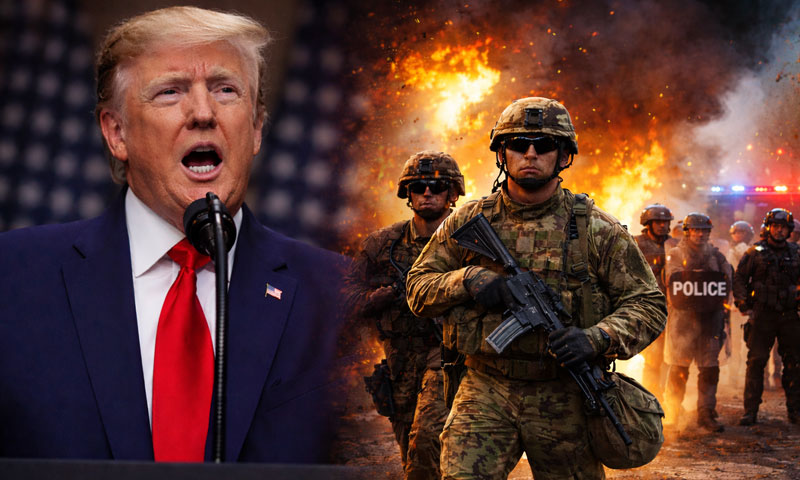
President Donald Trump has again ignited controversy after warning that he could deploy the US military to deal with protests in Minnesota targeting Immigration and Customs Enforcement (ICE). The remarks, made amid escalating demonstrations, revive a question that has followed Trump throughout his political career: how often has he threatened to use force against Americans—and how unusual is this in US history? Trump’s latest warning centres on the Insurrection Act, a centuries-old statute that allows a sitting president to deploy federal troops inside the United States to suppress rebellion or enforce federal law when state authorities are deemed unable or unwilling to act. Trump’s Record: Repeated Threats, Rare Use During his first term, Trump repeatedly raised the prospect of military intervention against domestic unrest. In 2020, amid nationwide protests following the killing of George Floyd, Trump publicly urged governors to “dominate the streets” and said he was prepared to invoke the Insurrection Act if states failed to restore order. Although active-duty troops were placed on standby near Washington, the Act was never formally invoked. Since returning to office, Trump has again turned to similar rhetoric. Protests linked to immigration enforcement, federal policing, and internal security have prompted warnings that federal troops could be deployed if local authorities resist or fail to act. The Minnesota protests represent the latest instance where Trump has threatened military involvement without yet taking the formal legal step required to do so. Legal scholars note that while Trump has frequently discussed the Insurrection Act, no US president has invoked it primarily to suppress political protest without state consent in modern times. When Other Presidents Actually Used Force Historically, US presidents have used military force domestically—but usually under narrow circumstances. George H. W. Bush invoked the Insurrection Act in 1992 at the request of California’s governor during the Los Angeles riots following the Rodney King verdict. Federal troops were deployed after local authorities were overwhelmed. During the civil rights era, Dwight D. Eisenhower, John F. Kennedy, and Lyndon B. Johnson used federal troops or nationalised the National Guard to enforce court-ordered desegregation and protect Black Americans from violent resistance. These actions were framed as enforcement of constitutional rights rather than suppression of dissent. Earlier presidents, including Abraham Lincoln, also used military power internally during periods of rebellion or civil war, but those cases predate modern democratic norms and legal safeguards. What Makes Trump Different What distinguishes Trump from many of his predecessors is not actual deployment, but the frequency and public nature of his threats. Experts argue that repeatedly raising the prospect of military force against civilians—even without invoking it—can have a chilling effect on democratic protest and civil liberties. Unlike past presidents who acted after state requests or court orders, Trump’s warnings have often come in direct response to political demonstrations against federal policy. This has prompted concerns from constitutional scholars and civil rights groups about the normalisation of military rhetoric in domestic governance. A Pattern, Not an Isolated Moment Trump’s Minnesota remarks do not stand alone. They reflect a broader pattern in which military force is positioned as a solution to internal political dissent. While the Insurrection Act remains unused—for now—the repeated threats themselves mark a significant shift in how presidential power is discussed in public life. As protests continue, the central question remains whether such warnings will remain rhetorical—or whether the United States could once again see troops deployed on its own streets.

25% Tariff Shock: Trump Moves to Punish Nations Doing Business With Iran
US President Donald Trump has dramatically escalated pressure on Iran, announcing a sweeping new tariff policy aimed not only at Tehran but also at countries that continue to trade with it. In a social media post on Monday, Trump said the United States would impose a 25 percent tariff on any country doing business with Iran while also maintaining commercial ties with the US. He said the measure would take effect immediately, describing it as “final and conclusive,” though he did not clarify which countries would be targeted first. The announcement comes as Iran faces its most serious wave of unrest in years. Protests, initially sparked by economic grievances, have spread nationwide and evolved into a broader challenge to the ruling system that has governed the country since the 1979 Islamic Revolution. According to economic data platform Trading Economics, Iran’s largest trading partners include China, Turkiye, the United Arab Emirates, and Iraq — all nations with varying degrees of trade exposure to the United States. Iranian authorities have responded to the unrest with force and a near-total internet blackout, measures that rights groups say are intended to obscure the true scale of casualties. The Norway-based NGO Iran Human Rights warned that the communications shutdown has made independent verification of deaths and injuries nearly impossible. “The international community has a duty to protect civilian protesters against mass killing by the Islamic republic,” said IHR director Mahmood Amiry-Moghaddam. Despite the crackdown, protests have persisted for more than two weeks, defying heavy security deployments. Iranian officials have blamed foreign powers for inflaming the unrest and have organised mass pro-government rallies in response. On Monday, Iran’s supreme leader Ayatollah Ali Khamenei, who has ruled since 1989, claimed the demonstrations had failed. Speaking on state television, he said large counter-rallies across the country sent a “warning” to the United States and showed that foreign-backed plans had been thwarted. At a rally in Tehran’s Enghelab Square, parliament speaker Mohammad Bagher Ghalibaf accused the US and Israel of waging a “four-front war” against Iran, citing economic, psychological, military and internal security pressures. He warned that any direct attack would provoke a severe response. Meanwhile, Washington signalled that military options remain on the table. The White House said Trump was “unafraid” to use force if necessary, while still prioritising diplomacy. The US State Department also issued a fresh warning to Americans in Iran, urging dual nationals to leave the country using Iranian passports and cautioning that US citizens face a high risk of detention. China swiftly rejected Trump’s tariff threat. A spokesperson for the Chinese embassy in Washington said Beijing opposed “unilateral sanctions and long-arm jurisdiction,” warning that tariff wars benefit no one and vowing to protect China’s interests. Europe, meanwhile, has taken a harder political stance. The European Union said it was considering additional sanctions over Iran’s handling of protests, while the European Parliament banned Iranian diplomats from its premises. French President Emmanuel Macron condemned what he called indiscriminate state violence against protesters. Russia, a key ally of Tehran, criticised what it described as foreign interference in Iran’s internal affairs, signalling deepening geopolitical divisions as the crisis unfolds. With protests ongoing, diplomacy fragile, and economic pressure intensifying, Iran now finds itself facing mounting isolation — and the growing risk of a broader international confrontation.
America on the Streets: Why Rising Protests Are Testing Trump’s Grip on the Presidency
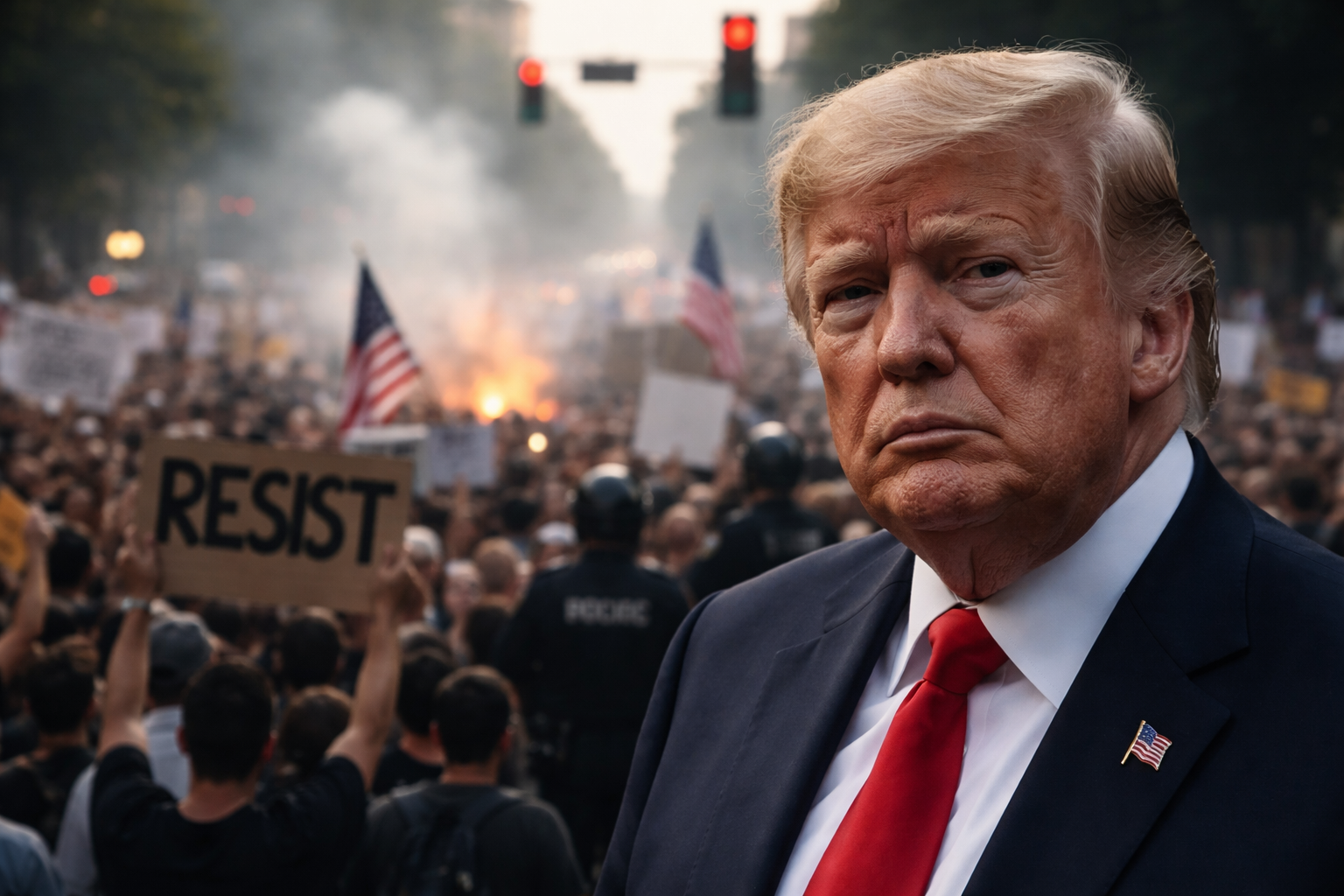
From Minneapolis to major coastal cities, a widening wave of protests against Donald Trump is turning into one of the most sustained opposition movements of his current tenure—raising questions about how much political pressure the White House can absorb while pushing controversial policies. The latest flashpoint emerged in Minneapolis, where thousands poured onto the streets after a fatal shooting involving a federal immigration officer during an enforcement operation. City officials described the incident as unjustified, while federal authorities defended the officer’s actions. The clash ignited days of demonstrations, some peaceful and others tense, forcing local authorities to deploy additional police and issue repeated appeals for calm. Massive protests in Minneapolis happening right now demanding justice for Renee Good. A revolution is brewing. The people are fed up with the system. We need this all over the country. It’s the only way to make change! pic.twitter.com/mGjXvVCpKf— Power to the People ☭🕊 (@ProudSocialist) January 10, 2026 What stands out, however, is that Minneapolis is no longer an exception—it has become part of a nationwide pattern. How widespread are the protests? Independent protest-tracking initiatives and academic research paint a clear picture: opposition to Trump’s policies has translated into tens of thousands of protest events across the United States since January 2025. Civil rights groups and grassroots coalitions have coordinated hundreds to more than a thousand demonstrations on single national days, while smaller, localized protests continue almost daily. Importantly, these rallies are not limited to traditionally liberal urban centers. Research shows that more than a third of U.S. counties have witnessed at least one protest in peak months, including areas that previously voted for Trump. Unlike one-off protest surges seen in earlier political cycles, this movement has shown persistence. Protest activity has flared repeatedly around immigration enforcement, civil liberties, and federal-state tensions—creating a rhythm of mobilization rather than a single moment of outrage. Why this matters for Trump’s presidency Street protests alone do not remove a U.S. president from office. Yet analysts warn that the scale, spread, and consistency of the current demonstrations could still pose a serious challenge to Trump’s ability to govern effectively. First, the geographic reach matters. When opposition activity spills into politically mixed or conservative-leaning regions, it increases pressure on Republican lawmakers and local officials who must balance party loyalty with voter sentiment. 🇺🇸 Protests erupt in several cities across the United States🚨 The United States rises up in protest against Trump’s repressive policies. pic.twitter.com/PcGz2IZHJy— China pulse 🇨🇳 (@Eng_china5) January 9, 2026 Second, the protests are policy-driven, especially around immigration raids and federal enforcement actions. Each new operation risks triggering another cycle of demonstrations, lawsuits, and political confrontation—draining time and political capital. Third, sustained protests shape the national narrative. They influence media coverage, energize opposition voters, and keep controversial policies in the spotlight ahead of critical elections and legislative battles. The bigger picture The demonstrations erupting in Minneapolis—and echoed across the country—signal that public resistance to Trump’s agenda is no longer sporadic. It is organized, recurring, and increasingly national in character. While the White House remains institutionally secure, the growing protest movement represents a long-term political stress test: not an immediate threat to Trump’s position, but a mounting force capable of complicating governance, weakening public approval, and reshaping the political landscape as his tenure continues.
