

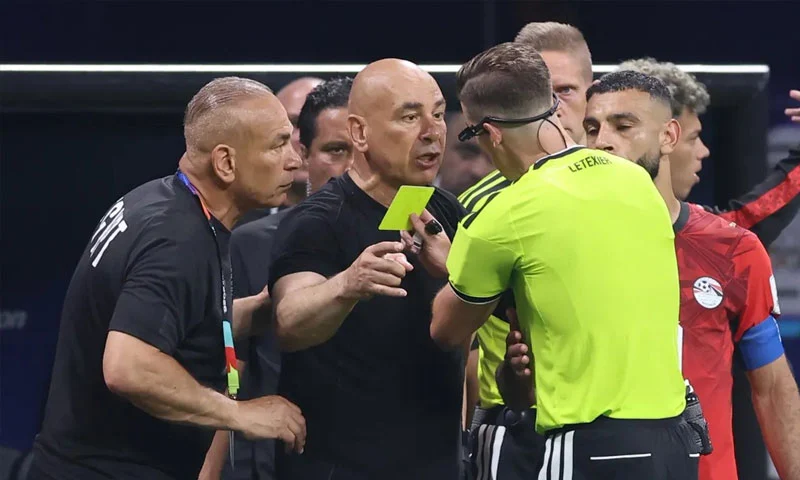
Egypt head coach Hossam Hassan has claimed his team’s dramatic 3-2 defeat to Argentina in the FIFA World Cup Round of 16 was influenced by “marketing support” designed to keep the defending champions and Lionel Messi in the tournament. Argentina staged a remarkable comeback after trailing by two goals to secure victory through a stoppage time winner from Enzo Fernandez, ending Egypt’s historic World Cup campaign in heartbreaking fashion. Speaking after the match, Hassan strongly criticised French referee Francois Letexier and questioned the fairness of several key decisions. “We suffered an unjust defeat,” Hassan told reporters. “There is support for the world champions from every direction – marketing support. They wanted the previous world champions to stay in the tournament. They wanted Messi to stay.” The Egyptian coach insisted his players deserved a different outcome after matching and, in his view, outperforming the reigning champions. “We were better than the world champions in everything, but there were factors on and off the pitch that affected the result,” he said. Egypt questions controversial refereeing decisions Hassan expanded on his criticism during an interview with BeIN Sports, suggesting the officials may have faced pressure because of Argentina’s status and Messi’s global appeal. “Perhaps they wanted to keep the world champions in the competition. Perhaps they wanted Messi to stay in the running,” he said. “In football, there are sometimes external factors that go beyond the technical aspects. The world champions received support at every level.” His comments came after Egypt protested several refereeing decisions, including a disallowed goal following a VAR review and appeals for a late penalty that were rejected. Egypt’s bench and players reacted angrily after the final whistle, with coaching staff confronting match officials before being restrained. Forward Mostafa Zico also questioned the officiating. “The referee was unfair and wasted the efforts of an entire nation,” Zico said. “From the beginning of the match, he was against us. The tournament is already directed.” Zico later apologised to Egyptian supporters, saying the squad had hoped to deliver a memorable victory for the country. Argentina survives as Egypt exits with pride Despite the controversy, Argentina completed one of the tournament’s most dramatic comebacks. Cristian Romero started the revival before Lionel Messi scored the equaliser. Enzo Fernandez then headed home the winning goal deep into stoppage time to send the defending champions into the quarterfinals. The result kept Argentina’s title defence alive while ending Egypt’s impressive World Cup journey. The Pharaohs had produced one of their strongest performances on football’s biggest stage and came within minutes of eliminating the defending champions. Neither FIFA nor the match officials immediately responded to Hassan’s allegations. No evidence has been presented publicly to support claims that the result was influenced by factors beyond the match itself. Hassan later said he would not watch the remainder of the tournament, maintaining that his side had suffered an injustice after coming so close to producing one of the biggest upsets in World Cup history.
Cape Verde Push Argentina to the Limit as Messi Steals Spotlight
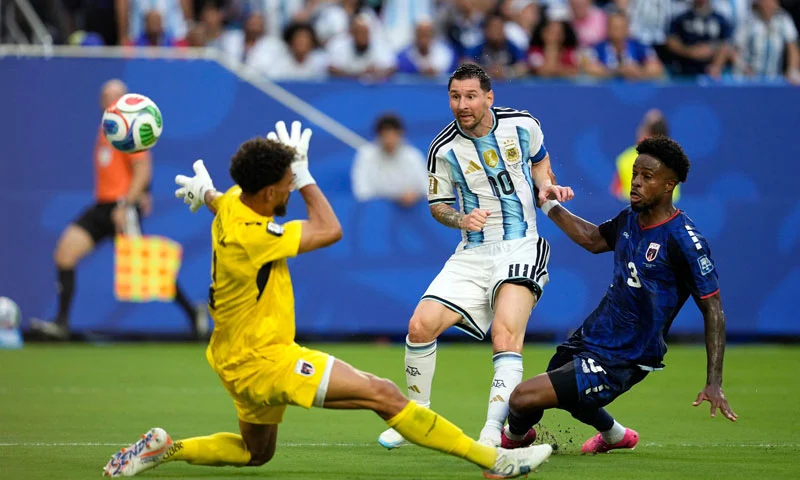
Lionel Messi continued his remarkable World Cup form on Friday with another decisive performance. He scored as Argentina defeated Cape Verde 3-2 after extra time in a tightly contested knockout match. The Argentina captain struck in the 29th minute. That goal marked his 20th World Cup goal. He now leads France’s Kylian Mbappé by two goals in the all time World Cup scoring chart. Messi also extended his record run to eight consecutive World Cup matches with at least one goal. The streak highlights his consistency across multiple tournaments and high pressure knockout games. That control from Lionel Messi is simply out of this world. Then again… so is Messi himself. He’s definitely not from this planet.👽🐐 https://t.co/7hOrU3F4MR— Football Xtra (@FootballXtra365) July 3, 2026 He came close earlier in the match. In the 15th minute, he dragged a left footed shot just wide. Moments later, his free kick was saved comfortably by the goalkeeper. Cape Verde stayed organised in defence during the early stages. Argentina struggled to break them down in the final third. Martinez assist opens the door as Argentina respond The breakthrough came after a precise pass from Lisandro Martínez. He split the defence with a perfectly timed ball into the box. Messi reacted instantly. He stayed onside and controlled the pass. He then lifted a calm finish over the goalkeeper to give Argentina the lead. The goal was his 124th international strike. Only Portugal’s Cristiano Ronaldo remains ahead in the global scoring list with 146 goals. The only player in @FIFAWorldCup history to score in eight successive games… Lionel Messi 👏 pic.twitter.com/yRJCOF0BNT— FIFA (@FIFAcom) July 3, 2026 Messi acknowledged the assist immediately. He pointed toward Martínez as Argentina took control of the match. Cape Verde refused to collapse. They responded with intensity and pushed Argentina into a tense second half. The match became more open and physical as both sides created chances. Momentum swung repeatedly before full time. Neither side managed to secure a winner in regulation time. Extra time drama sends Argentina through The match went into extra time after Cape Verde equalised late in normal play. Argentina eventually found the winning goal to seal a 3-2 victory. The result secured Argentina’s place in the Round of 16. It also extended Messi’s extraordinary World Cup legacy. He now leads the tournament Golden Boot race with seven goals. Kylian Mbappé follows closely with six. Norway’s Erling Haaland and England’s Harry Kane remain in contention with five each. Messi has scored 12 goals across his last eight World Cup appearances. That run underlines his long term impact at the highest level. He finished runner up in the 2022 Golden Boot race with seven goals. He also shared third place in 2014, showing his consistent presence among top scorers. Lionel Messi 🌟#FIFAWorldCup pic.twitter.com/Na1X8ADKgn— FIFA World Cup (@FIFAWorldCup) July 4, 2026 Argentina continue their campaign with confidence. However, they needed extra time to overcome a determined Cape Verde side that tested them throughout the match. Messi’s record now stands as one of the most dominant scoring runs in World Cup history. His performance once again shaped Argentina’s progress on football’s biggest stage.
Experts Say the World Cup Is Being Played in Dangerous Heat
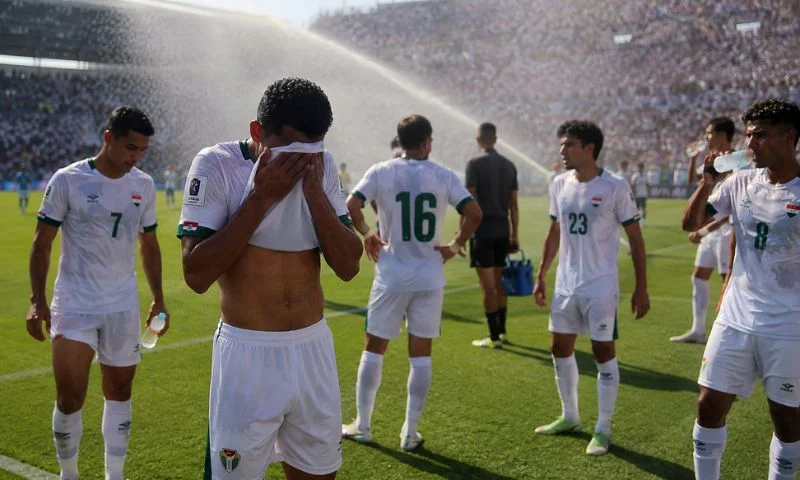
The extreme heat and humidity affecting large parts of the United States during the 2026 FIFA World Cup would have been “virtually impossible” without human driven climate change, a new scientific study has found. The research, released on Friday by the World Weather Attribution (WWA) group, says climate change has dramatically increased the severity of the current heat wave across the central and eastern United States and southern Canada. “On America’s 250th birthday, our study gives a clear reality check,” said Theodore Keeping, an extreme weather and wildfire researcher at Imperial College London who co-authored the study. “The climate the country has today is fundamentally different to the one it had when the Founding Fathers signed the Declaration of Independence.” The findings come as the United States celebrates Independence Day and hosts several FIFA World Cup matches under dangerous weather conditions. Scientists said a strong “heat dome” has trapped hot, humid air over a vast region. Heat domes occur naturally. However, climate change now makes them much more intense. Many cities have recorded temperatures above 100 degrees Fahrenheit, or 38 degrees Celsius. High humidity has made the heat feel even more dangerous. Researchers say climate change made the event far more likely Instead of using air temperature alone, researchers measured heat stress through Wet Bulb Globe Temperature, or WBGT. The index combines temperature, humidity, wind and sunlight to measure health risks. The team compared today’s climate with a world that had no human caused warming. Researchers said greenhouse gas emissions have already increased global temperatures by about 1.4 degrees Celsius since the pre industrial era. The results showed a dramatic difference. Without climate change, forecast WBGT levels would have been almost impossible. Scientists estimated such conditions would appear only once every 5,000 years. Even today, researchers estimate the event happens only once every 200 years. They also noted uncertainty because of the event’s exceptional intensity. The team also tested whether the developing El Nino influenced the heat wave. Instead, El Nino produced a slight cooling effect across northeastern North America. Researchers concluded it did not drive the extreme weather. Player safety concerns grow ahead of key World Cup matches The study has renewed concerns about player and fan safety during the tournament. The July 4 World Cup match between France and Paraguay in Philadelphia could begin with WBGT levels above 82 degrees Fahrenheit. FIFPRO, the global players’ union, says organisers should delay matches when heat stress reaches unsafe levels for players and spectators. FIFA has already introduced mandatory cooling breaks during matches. Officials have also increased access to drinking water and shaded areas at stadiums. Climate experts, however, say those steps alone will not solve the growing problem. Earlier WWA research found climate change has increased the number of World Cup matches likely to face dangerous heat compared with the 1994 tournament in the United States. Scientists estimated that 26 matches could reach WBGT levels of at least 26 degrees Celsius. Several games may exceed the 28 degree threshold where FIFPRO recommends postponements. Researchers say future tournaments will face similar risks unless countries reduce greenhouse gas emissions and sports bodies strengthen heat safety measures.
Paraguay Make World Cup History as Germany Crash Out in Stunning Upset
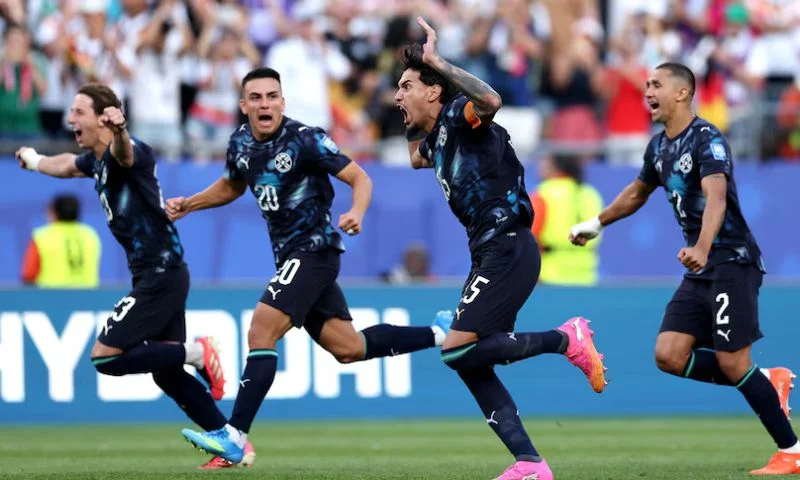
Paraguay produced the biggest upset of the 2026 FIFA World Cup knockout stage on Monday, eliminating four time champions Germany 4 to 3 in a dramatic penalty shootout after a 1 to 1 draw following extra time at Boston Stadium in Foxborough. Ranked 37th in the latest FIFA rankings, Paraguay defied the odds against 12th ranked Germany in front of 63,945 spectators to book their place in the Round of 16. It was the tournament’s first penalty shootout and one of the biggest knockout upsets in World Cup history. Paraguay make history! 🇵🇾After scoring their first-ever @FIFAWorldCup knockout goal, they went on to defeat Germany on penalties and secure a spot in the Round of 16 👏 pic.twitter.com/4L8MNH5qLt— FIFA (@FIFAcom) June 29, 2026 Julio Enciso gave Paraguay a surprise lead late in the first half with the country’s first ever goal in a men’s World Cup knockout match. Germany responded in the 54th minute when Kai Havertz equalised, but neither side could find a winner during the additional 30 minutes. Germany thought they had completed the comeback in extra time when Jonathan Tah found the net. However, the goal was ruled out after a controversial foul on Paraguay goalkeeper Orlando Gill, a decision that sparked debate among broadcasters and fans alike. Gill and Canale become Paraguay’s heroes The shootout delivered more drama. Paraguay appeared on course to seal victory before veteran goalkeeper Manuel Neuer saved their fifth penalty, forcing sudden death. Germany’s Jonathan Tah then blasted his team’s sixth penalty over the crossbar, leaving José Canale with the chance to complete one of Paraguay’s greatest footballing achievements. He calmly converted the decisive kick to send the South American side into the Round of 16. Reuters reported that Gill had already denied penalties from Kai Havertz and Nick Woltemade before Tah’s miss handed Paraguay the advantage. The defeat also marked Germany’s first ever loss in a World Cup penalty shootout. Speaking after the famous victory, Paraguay goalkeeper Orlando Gill said, “It’s difficult to describe in words. It was a very challenging game. We were under attack from all sides but we resisted.” A historic @FIFAWorldCup win as Paraguay become the first-ever team to win a @FIFAWorldCup Round of 32 fixture on penalties! 👏🇵🇾 pic.twitter.com/sRfpbj8Qkh— FIFA (@FIFAcom) June 30, 2026 Captain Gustavo Gómez praised his teammates’ determination, calling the result a proud moment for the nation after one of the most disciplined defensive displays of the tournament. Germany’s World Cup struggles continue Germany entered the match as clear favourites after topping their group and enjoying more possession throughout the contest. However, Julian Nagelsmann’s side once again failed to convert dominance into victory. The four time world champions have now suffered group stage exits at the 2018 and 2022 World Cups before crashing out in the first knockout round in 2026. The latest disappointment is expected to increase scrutiny on Nagelsmann and his squad after another underwhelming campaign. Paraguay will face the winner of France versus Sweden in Philadelphia on July 4. By reaching the Round of 16, the South Americans have secured at least $15 million in FIFA prize money, while Germany leave the tournament with $11 million. The match also drew attention off the pitch. Although Boston Stadium fell just 201 spectators short of capacity, the atmosphere remained vibrant throughout. Ticket prices had dropped sharply before kickoff as resale demand softened, while viral German supporter “Freddy” reacted to the disallowed extra time goal with a series of question marks before posting a broken heart emoji after Germany’s elimination.
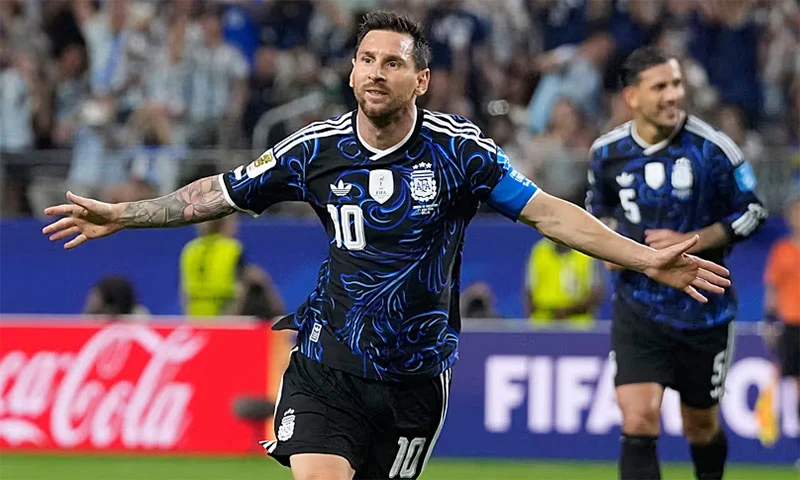
Lionel Messi Makes World Cup History, Scores in 7 Straight Games
Lionel Messi celebrated his 39th birthday week with another milestone, coming off the bench to score in Argentina’s 3-1 win over Jordan and extend his remarkable FIFA World Cup scoring streak. Although Argentina had already secured first place in Group J before kickoff, thousands of supporters packed the stadium hoping to see their captain in action. The defending champions rested Messi at the start, but the crowd erupted when he entered the match in the 60th minute. Twenty minutes later, the eight time Ballon d’Or winner delivered another memorable moment. After drawing a foul just outside the penalty area, Messi curled a low free kick through the defensive wall and into the corner of the net to seal Argentina’s victory. The goal made him the first men’s player to score in seven consecutive World Cup matches. It also increased his overall World Cup tally to 19 goals, extending his record as the competition’s highest scoring male player. Another Milestone for Argentina’s Captain The strike also added another chapter to Messi’s remarkable international career. It was the 72nd direct free kick goal of his professional career and his 12th for Argentina. Messi now has 123 international goals in 202 appearances, leaving him second on the all time men’s list behind Cristiano Ronaldo’s 145 goals. https://Twitter.com/itsmeuv10/status/2071078241557733727 His latest free kick also placed him among a select group of players to score multiple direct free kicks in World Cup history. The achievement puts him alongside Pelé, Rivellino, Téofilo Cubillas, Bernard Genghini and David Beckham. Argentina also received an important contribution from Giovani Lo Celso, who opened the scoring with a first half free kick. After the match, Lo Celso praised his captain’s influence on the squad. “I am very happy for him, for the moment he is having,” Lo Celso said. “The truth is that seeing him every day excites, excites and infects a lot. So obviously seeing him like that for us is very important.” Knockout Stage Awaits Messi started on the bench after dealing with a minor hamstring issue before the tournament. Argentina’s coaching staff also had little reason to risk him because the team had already guaranteed top spot in the group, while Jordan had no chance of reaching the knockout stage. Even so, the atmosphere changed the moment Messi began warming up. Supporters repeatedly chanted his name before welcoming him with a standing ovation as he entered the field. Argentina now moves into the Round of 32 as one of the tournament favourites. The team’s knockout campaign begins next Friday in South Florida. Messi also leads the race for the Golden Boot with six goals. He sits two clear of Kylian Mbappé, Vinícius Júnior and Erling Haaland. With five more matches separating Argentina from another possible World Cup title, Messi’s latest record has only strengthened belief that his extraordinary international career still has more history to make.
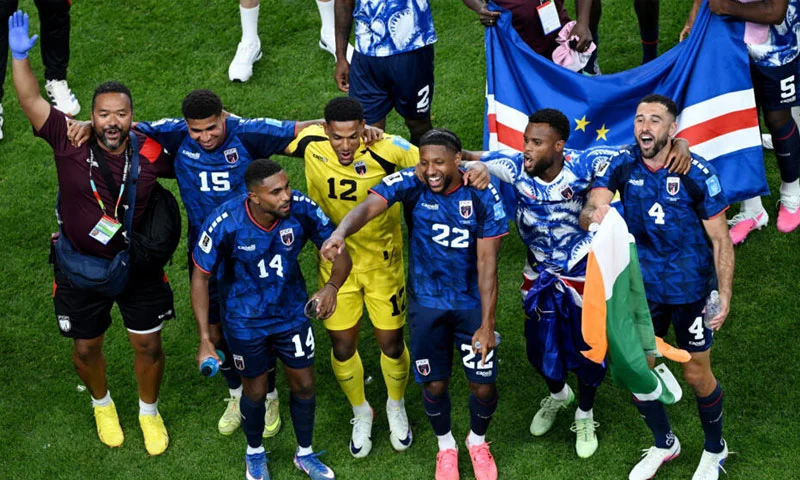
World Cup Debutants Cape Verde Make History, Reach Last 32
Cape Verde continued their remarkable FIFA World Cup debut by reaching the Round of 32 after a goalless draw with Saudi Arabia in Houston. The result secured second place in the group and set up a blockbuster meeting with defending champions Argentina. The African nation completed one of the tournament’s biggest surprises despite failing to score. Cape Verde finished with three points after drawing all three group matches. Spain topped the group with seven points after beating Uruguay 1-0, while Uruguay and Saudi Arabia both exited with two points. The final whistle sparked emotional celebrations among Cape Verde’s players, coaches and supporters. Players gathered around their phones to monitor the outcome of Spain’s victory over Uruguay before celebrating qualification together. Historic Night for Cape Verde The celebrations continued long after the match ended. Supporters beat drums inside Houston Stadium as players wrapped themselves in national flags and posed for photographs on the pitch. The achievement marked another milestone for the island nation of around 500,000 people, which is making its first appearance at a men’s FIFA World Cup. Cape Verde celebrate history. 🇨🇻 Fans and players together after sealing a historic knockout qualification on their World Cup debut. Pure emotion. ❤️#WorldCupwithMicky#CapeVerde pic.twitter.com/lHSmGwh9eC — Micky Jnr (@MickyJnr__) June 27, 2026 Cape Verde looked the more dangerous side throughout the match. However, the team failed to convert several clear chances despite dominating large periods of play. Laros Duarte missed the best opportunity when he found himself one on one with Saudi goalkeeper Mohammed Alowais but failed to finish. Both teams started with urgency because qualification remained within reach. However, misplaced passes and mistimed tackles disrupted the game’s rhythm during the opening half. Willy Semedo produced Cape Verde’s first notable effort after cutting inside from the left before firing from a tight angle. The Africans gradually increased the pressure and controlled possession. Saudi Arabia Exit After Disappointing Campaign Saudi Arabia produced their first shot on target only in first half stoppage time. Mohamed Kanno directed a header straight at Cape Verde goalkeeper Vozinha. The match also carried an emotional moment for Vozinha. His mother watched him from the stands after arriving late in the United States because of delays linked to the cost of obtaining a US visa. Cape Verde dominated the second half and finished with 15 attempts on goal. Yet the team lacked composure in the final third and could not find the breakthrough. Saudi Arabia struggled to threaten throughout the match. The Green Falcons rarely tested Cape Verde’s defence and finished the tournament with just one goal from three group matches. The draw proved enough for Cape Verde to extend its fairytale run. The debutants now face defending champions Argentina in the knockout stage, where they will attempt to produce another historic upset. Spain advanced as group winners with seven points following their victory over Uruguay. Cape Verde claimed second place with three draws. Uruguay and Saudi Arabia bowed out after collecting two points each.
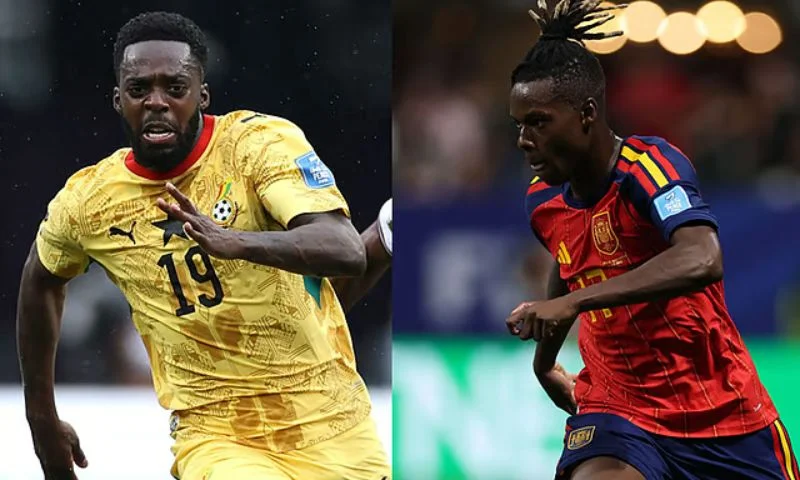
Meet the Brothers Divided by National Teams at the FIFA World Cup
The FIFA World Cup has long produced stories that extend beyond football. At the 2026 tournament, one of the most fascinating narratives involves four families whose sons are representing different countries on the sport’s biggest stage. For parents and relatives, national allegiances have become secondary to family pride. Yet the possibility remains that brothers could face each other in matches that carry the highest stakes in international football. “The ultimate test for any parent: two sons lining up on opposite sides of the pitch. Who do you cheer for?” The unusual scenario is not entirely new. Football fans still remember the famous rivalry between half-brothers Jérôme Boateng and Kevin-Prince Boateng, who represented Germany and Ghana respectively. The pair first faced each other at the 2010 FIFA World Cup in South Africa when Germany defeated Ghana in the group stage. Four years later, they met again at the 2014 World Cup in Brazil, creating one of football’s most memorable family stories. Sixteen years later, the possibility of similar encounters remains alive at the 2026 tournament. Williams and Doué Brothers Follow Different Paths The highest-profile sibling story at this year’s World Cup belongs to Iñaki and Nico Williams. Born in Bilbao to Ghanaian parents who migrated to Spain, both brothers developed through the youth ranks of Athletic Club and became stars in European football. However, their international journeys took different directions. Iñaki Williams, 32, chose to represent Ghana and switched allegiance from Spain in 2022. Since then, he has become one of the Black Stars’ most experienced players and a key figure in their attack. His younger brother Nico Williams, 23, opted to remain with Spain. The winger emerged as one of Europe’s most exciting talents and played a crucial role in Spain’s UEFA Euro 2024 triumph. Another family divided by international football is the Doué family. Désiré Doué has rapidly established himself as one of France’s brightest young stars following his breakthrough performances for club and country. His older brother, Guéla Doué, represents Ivory Coast. Although both were born in France, family heritage and personal choices led them down different international paths. The possibility of France and Ivory Coast meeting later in the tournament has added another layer of intrigue. Ghana Features in Two Sibling Stories Ghana appears in two separate sibling rivalries at World Cup 2026. Netherlands striker Brian Brobbey progressed through the Dutch football system and earned his place in the Oranje squad. His older brother Derrick Luckassen chose to represent Ghana, strengthening the African nation’s connection to this unique World Cup subplot. The fourth family involves Harry and John Souttar. Harry Souttar represents Australia through his mother’s Australian heritage and has become one of the Socceroos’ most influential defenders. His brother John Souttar plays for Scotland and remains a key figure in the Scottish national team setup. Football’s increasingly global nature has made such stories more common. FIFA eligibility rules allow players with multiple national connections to represent countries linked through birth, ancestry or residency. As migration and multicultural identities continue shaping modern football, sibling rivalries across national teams may become less unusual. For now, however, the Williams, Doué, Brobbey-Luckassen and Souttar families remain among the most compelling human stories of World Cup 2026. Should the tournament draw align, football fans could witness another unforgettable chapter in the history of brothers divided by flags but united by family.
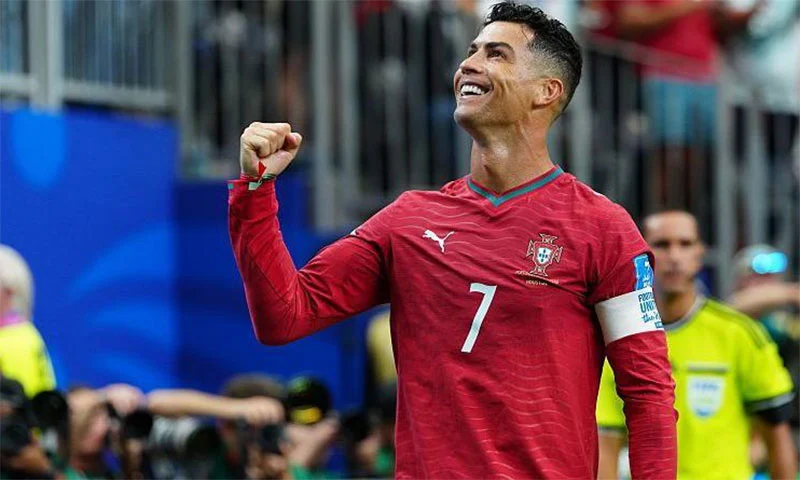
Ronaldo Breaks New Ground in World Cup History at 41
Cristiano Ronaldo etched his name deeper into football history on Tuesday after becoming the first men’s player to score in six different FIFA World Cup campaigns. The Portugal captain reached the milestone during his side’s World Cup clash against Uzbekistan in Houston, finding the net just six minutes into the match. The goal ended weeks of scrutiny surrounding the 41-year-old forward and provided a timely response to critics who questioned his place in Portugal’s attack. Ronaldo reacted quickest inside the penalty area and converted from close range to hand Portugal an early lead. The strike added another remarkable achievement to a career that has already rewritten numerous football records. His first World Cup goal came nearly two decades ago during the 2006 tournament in Germany, when he scored against Iran. Twenty years later, he has now scored in the 2006, 2010, 2014, 2018, 2022 and 2026 editions of football’s biggest tournament. Ronaldo Silences Critics After Difficult Run The historic goal arrived at an important moment for the Portuguese star. Ronaldo entered the Uzbekistan match under pressure after failing to score in Portugal’s opening 1-1 draw against the Democratic Republic of Congo. That result drew criticism from fans and pundits, with many questioning whether the veteran striker could still make the difference on the biggest stage. 𝐂𝐫𝐢𝐬𝐭𝐢𝐚𝐧𝐨 𝐑𝐨𝐧𝐚𝐥𝐝𝐨 at his best. 🇵🇹 pic.twitter.com/C9AFikoNW1 — World Cup Xtra (@WorldCupXtraa) June 23, 2026 The match against Congo also extended a difficult run at major international tournaments. Before Tuesday’s game, Ronaldo had gone 10 consecutive appearances at the World Cup and European Championship without scoring a goal. During that period, he registered only one assist. The drought stood in sharp contrast to the recent performances of global stars such as Lionel Messi, Kylian Mbappe, Erling Haaland and Harry Kane. Portugal coach Roberto Martinez defended Ronaldo after the draw with Congo and insisted his experience remained vital to the team’s World Cup ambitions. A Career Defined by Longevity Ronaldo nearly made history even earlier in the match. Just three minutes after kick-off, he narrowly missed connecting with a cross from Nuno Mendes at the far post. The miss left the veteran visibly frustrated. He slapped the turf before quickly refocusing. Three minutes later, he made no mistake. The goal highlighted the extraordinary longevity that has defined Ronaldo’s career. He made his international debut for Portugal in 2003 and has remained a key figure for more than two decades. The former Manchester United, Real Madrid and Juventus forward now plays for Saudi Pro League side Al Nassr. Despite turning 41 this year, Ronaldo continues to produce at the highest level. He scored 28 goals in 30 league appearances for Al Nassr during the most recent season. His latest World Cup milestone further strengthens his status as one of football’s greatest players. Portugal now hopes Ronaldo’s breakthrough goal will spark a deep run in the tournament as the European side pursues its first FIFA World Cup title. For Ronaldo, however, the night in Houston already secured a place in history. No male player has ever scored in six different World Cups. The Portugal captain now stands alone.
Argentina Advance as Messi Sets New World Cup Scoring Record
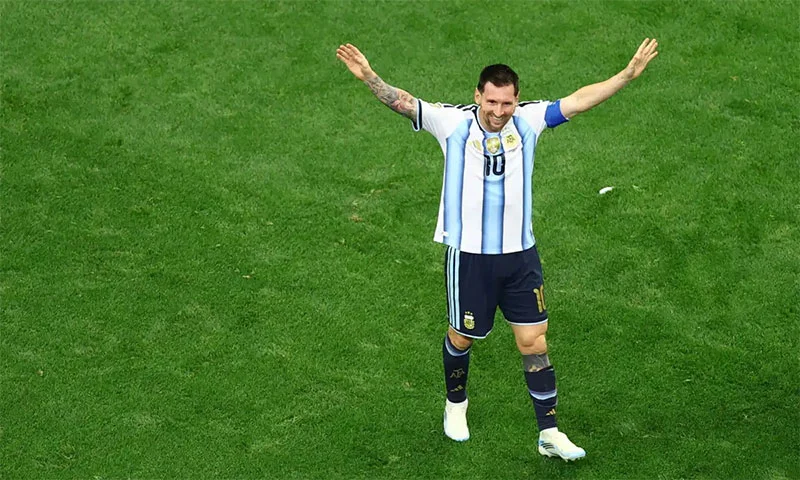
Lionel Messi became the highest scorer in FIFA World Cup history on Monday after netting twice in Argentina’s 2-0 victory over Austria, guiding the defending champions into the knockout stage of the 2026 tournament. The Argentina captain scored his 16th and 17th World Cup goals in front of 70,649 spectators at AT&T Stadium in Texas. The brace moved him ahead of former Germany striker Miroslav Klose, who held the previous record with 16 goals. Argentina now advances to the Round of 32 with a match to spare. Lionel Scaloni’s side tops its group after opening the tournament with a 3-0 win over Algeria, where Messi also scored a hat-trick. The 38-year-old celebrated another milestone in a career already filled with records. His latest goals further strengthened his claim as one of football’s greatest players. Messi Misses Early Penalty but Makes History Argentina had a chance to take an early lead after Lautaro Martinez won a penalty. Referee Amin Mohamed awarded the spot kick following a VAR review. Messi stepped up in the ninth minute, but his effort drifted wide of the post. The miss surprised Argentina supporters inside the stadium. Lionel Messi extends his record: 18 @FIFAWorldCup goals! 👏 https://t.co/72Jb5SXlUQ pic.twitter.com/IAPTGfo056— FIFA (@FIFAcom) June 22, 2026 Penalty kicks have remained one of the few blemishes in Messi’s remarkable career. He also missed from the spot during the 2018 World Cup and had another penalty saved against Poland in the 2022 tournament. Despite the setback, Argentina continued to dominate possession. Messi nearly scored in the 19th minute before Austria captain David Alaba made a crucial challenge. Alaba denied him again shortly after the half-hour mark. The defender blocked a goalbound effort with goalkeeper Alexander Schlager out of position. Austria, coached by Ralf Rangnick, spent most of the opening period defending deep. The European side failed to register a shot on target before halftime. Argentina Captain Delivers Again The breakthrough finally arrived in the 38th minute. Facundo Medina delivered a low pass into the penalty area. Thiago Almada cleverly allowed the ball to run through his legs, leaving Messi with a clear sight of goal. The Inter Miami star calmly swept the ball into the net. Argentina supporters erupted as Messi celebrated his record-breaking strike. All the records broken by Lionel Messi today:Most FIFA World Cup finals goals by a football (soccer) player – 18Most FIFA World Cup matches played in by an individual – 28Most matches won by a player at the football (soccer) FIFA World Cup – 18Most minutes played in the…— Guinness World Records (@GWR) June 22, 2026 The goal carried extra emotional weight. Reports later revealed that Messi’s father is recovering from an undisclosed health issue. Messi had already equalled Klose’s record with his hat-trick against Algeria. Monday’s opener moved him into sole possession of first place on the all-time World Cup scoring chart. Austria attempted to respond after the break, but Argentina controlled large portions of the match. Goalkeeper Emiliano Martinez faced little danger throughout the second half. Messi sealed the victory deep into stoppage time. Following a scramble inside the penalty area, he navigated past several defenders before forcing the ball over the line. The second goal ended Austrian hopes and confirmed Argentina’s place in the knockout rounds. Argentina will now focus on securing first place in the group, while Austria must regroup quickly to keep its qualification hopes alive. For Messi, the night added another chapter to an extraordinary international career. The World Cup champion now stands alone at the top of football’s biggest scoring list.
NASA Took FIFA’s New World Cup Ball to Space. Here’s Why
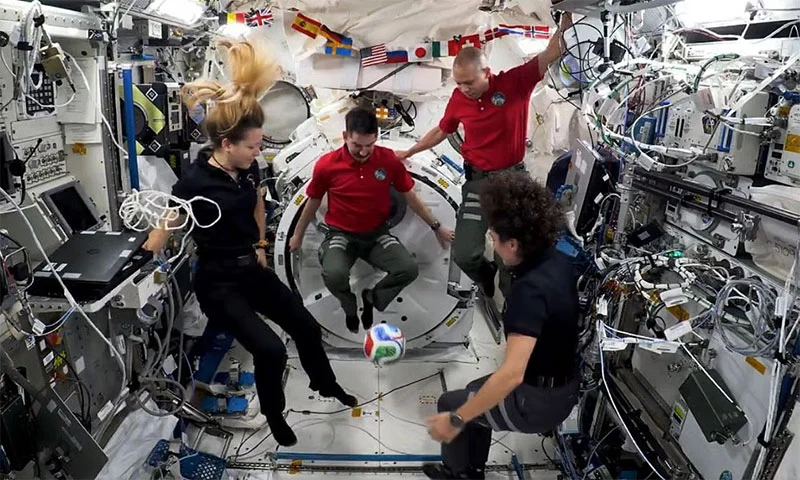
The official ball of the 2026 FIFA World Cup has already achieved something no player can claim before the tournament begins. Astronauts aboard the International Space Station tested Adidas’ Trionda football in space to study how balance and movement affect performance. The experiment formed part of a scientific project designed to better understand how footballs behave under unique conditions. NASA shared images from the tests on Instagram and explained that astronauts recreated a study first conducted in 2019. The agency said the exercise showed how small differences in balance can change the way a football moves. “The official FIFA World Cup ball went to space,” NASA said. According to the agency, sports engineers carefully adjust a ball’s balance and centre of mass to ensure consistent performance on the pitch. NASA Studies Football in Microgravity Astronauts used the Trionda ball to observe its movement in microgravity. The experiment allowed researchers to examine how balance influences flight and motion without the effects of Earth’s gravity. NASA said the findings could help scientists better understand how modern football technology influences performance. The official FIFA World Cup ball went to space! We're working to inspire the next generation by showing how space exploration inspires innovation in sports science — and everyday life. Learn more: https://t.co/CWbI8MFDtp pic.twitter.com/ebJtkpD5uM— NASA (@NASA) June 20, 2026 “Helping to improve the beautiful game is just one of the ways NASA science done on the International Space Station makes life better for people on Earth,” the agency said. Researchers often use the ISS to conduct experiments that would be difficult to perform on Earth. Microgravity allows scientists to isolate variables and study movement with greater precision. The project also highlighted the growing role of technology and data analysis in modern football. Trionda Brings New Technology to World Cup Adidas developed Trionda for the 2026 FIFA World Cup, which the United States, Canada and Mexico will jointly host. According to FIFA, the name Trionda comes from a Spanish phrase meaning “three waves”. The name reflects the tournament’s three host nations. The ball combines red, green and blue colours. Its design also includes symbols linked to each host country. A maple leaf represents Canada. An eagle represents Mexico. A star represents the United States. Adidas equipped the ball with several advanced features. Deep seams help improve flight stability. Textured details help players maintain control during wet conditions. The ball also includes connected-ball technology. A built-in 500Hz motion sensor sends real-time movement data to the Video Assistant Referee system. Officials can use that information to assist with offside decisions and other key incidents during matches. FIFA and Adidas describe Trionda as one of the most extensively tested World Cup balls ever produced. Now, before a single match has kicked off, the ball has already completed a journey beyond Earth and into space.
