

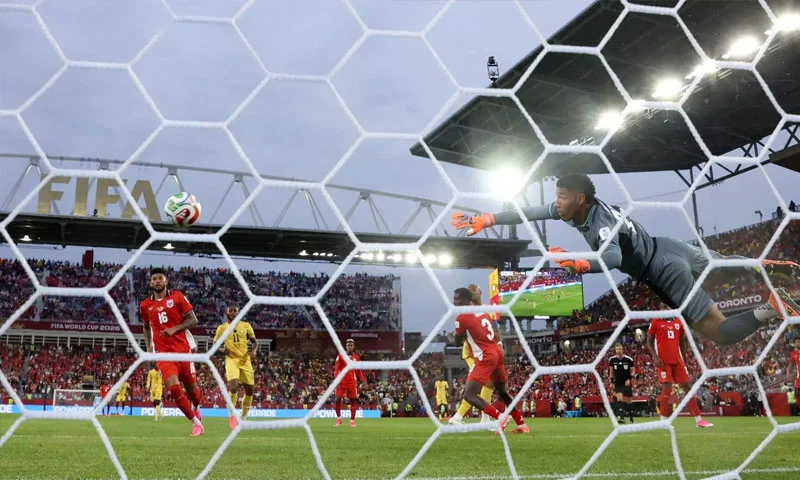
The race for the knockout stage of the 2026 FIFA World Cup is gathering pace, with co-hosts Mexico and the United States becoming the first two teams to secure places in the round of 32 as the expanded tournament begins to take shape. The tournament’s new 48-team format has added a fresh layer of complexity to qualification scenarios. For the first time, eight of the 12 third-placed teams will also advance, making projections more difficult and keeping hopes alive for many nations heading into the final group-stage matches. According to FIFA regulations, teams level on points are first separated by head-to-head results before overall goal difference and goals scored come into play. The revised format has already created a series of high-stakes battles across multiple groups. Mexico became the first nation to book its place in the knockout rounds after defeating South Korea 1-0 in Guadalajara. The victory also secured top spot in Group A with one game remaining. The Mexicans will now face a third-placed team in the round of 32. The United States followed shortly afterwards. The Americans sealed qualification with a 2-0 victory over Australia after opening their campaign with a historic win against Paraguay. Türkiye’s defeat to Paraguay confirmed the United States as Group D winners and simultaneously eliminated Türkiye from the competition. At the other end of the standings, Haiti and Türkiye became the first teams officially eliminated from the tournament. Haiti’s defeat to Brazil ended its hopes of progression, while Türkiye’s results left no mathematical path to the knockout stage. Heavyweights Close In on Qualification Several traditional football powers now stand on the brink of qualification. Brazil tops Group C after defeating Haiti and can secure first place with a victory over Scotland. Morocco also sits in a strong position and can guarantee a top-two finish with a win or draw in its final group match. Germany strengthened its position in Group E with a dominant 7-1 victory over Curaçao. A win against Ivory Coast could send the four-time champions into the knockout rounds. Ivory Coast also remains well placed after defeating Ecuador. France and Norway have similarly placed themselves in commanding positions in Group I. Wins in their upcoming matches would secure progression and set up a final group-stage showdown for first place. Kylian Mbappé and Erling Haaland have already played key roles in their teams’ strong starts. Argentina and Austria could also qualify during the next round of fixtures. The two teams meet in a crucial Group J clash where victory would likely secure passage to the last 32. Expanded Format Keeps More Teams Alive The introduction of the round of 32 has ensured that many teams remain in contention despite mixed starts. Paraguay, Scotland and several other nations still hold realistic hopes of advancing as some of the tournament’s best third-placed teams. Goal difference could prove decisive in many groups. Groups G and H remain completely open after both opening matches in each group ended in draws. None of the teams in those groups can qualify or be eliminated after Matchweek Two, ensuring a dramatic finish. In Group K, Colombia could secure qualification with a win over Congo DR. Portugal, led by Cristiano Ronaldo, remains under pressure after a surprise draw against Congo DR in its opening match. England and Ghana also have an opportunity to qualify when they meet in Group L. The winner of that contest will secure a place in the knockout rounds, adding further significance to one of the tournament’s most anticipated fixtures. With several groups still finely balanced, the final round of matches is expected to determine not only the remaining automatic qualifiers but also the eight third-placed teams that will advance under FIFA’s expanded World Cup format.
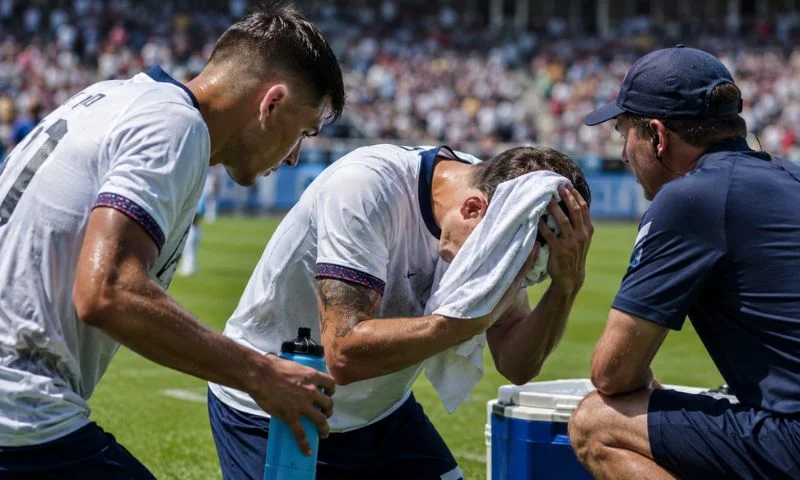
FIFA Hydration Breaks Spark Debate Over Player Safety
FIFA has introduced mandatory hydration breaks at the 2026 World Cup for the first time in tournament history. The move aims to protect players from extreme heat as experts warn that this year’s competition could become one of the hottest World Cups on record. The governing body now requires a three-minute hydration break midway through each half of every match. The rule applies regardless of weather conditions or whether a stadium is enclosed or air-conditioned. FIFA said the measure seeks to “ensure equal conditions for all teams, in all matches.” The decision follows concerns raised during recent tournaments. Last year’s FIFA Club World Cup in the United States saw temperatures climb into the mid-30s Celsius in several host cities. However, the policy has divided opinion. Some coaches argue that mandatory breaks disrupt the rhythm of matches. Others believe the pauses give managers an opportunity to alter tactics and influence momentum. At the same time, sports scientists say the breaks may not last long enough to effectively cool players during extreme conditions. “When we look at the three minute hydration breaks, we’re really looking at this as a way to mitigate anything that could potentially lead to an incident or an emergency,” said Joshua L. DeVincenzo, assistant director of applied research services at Columbia University’s National Center for Disaster Preparedness. Scientists warn elite athletes remain vulnerable Experts say even the world’s best athletes remain susceptible to exertional heat illness when they compete in hot and humid environments. The condition occurs when body temperature rises to dangerous levels and places significant stress on the heart, muscles and nervous system. Common symptoms include cramps, fatigue, dizziness, headaches and dehydration. In severe cases, athletes may suffer exertional heat stroke. “When internal body temperature exceeds 105 F (40.5 C), athletes might feel confused, aggressive or lose consciousness,” said Yuri Hosokawa, associate professor at Waseda University in Japan. Hosokawa recently joined other experts in urging FIFA to adopt stricter heat protocols. In May, a group of scientists sent a letter recommending cooling breaks of at least six minutes. Research shows that athletes can lose one to two litres of fluid per hour during intense exercise in hot conditions. Furthermore, losing just 2% of body weight through dehydration can reduce physical performance. Ryan Calsbeek, a professor of biological sciences at Dartmouth College, said athletes eventually reach a point where the body struggles to regulate temperature. “Your body starts to really fall apart, you lose the ability to cool off fast enough,” he said. Calls grow for longer cooling breaks Experts agree that hydration breaks help reduce risk. However, many argue that three minutes provides limited time for meaningful cooling and rehydration. Douglas Casa, chief executive of the University of Connecticut’s Korey Stringer Institute, said cold towels and aggressive cooling strategies can lower body temperature. Nevertheless, he believes longer breaks would produce far better results. “That’s why we’re suggesting doing something like five or six minutes, because it just makes such a big impact when you’re dealing with a change of that magnitude,” he said. Meanwhile, climate experts expect heat-related challenges to become more common across global sport. Bharat Venkat, director of the Heat Lab at the University of California, Los Angeles, said sporting organisations will need to adapt. “No matter what sport you play, there’s going to be adjustments that have to be made in the face of climate change,” he said. As temperatures continue to rise worldwide, the debate over player safety is likely to remain a major issue long after the final whistle of World Cup 2026.

Shakira Steals the Show as Mexico Kicks Off World Cup With Victory
The FIFA World Cup 2026 officially began on Thursday in Mexico City with a colourful opening ceremony featuring global music stars, traditional cultural performances and a packed Azteca Stadium witnessing Mexico’s opening victory over South Africa. More than 80,000 fans filled the iconic stadium, which hosted World Cup matches in 1970 and 1986. The tournament marks the first time Mexico has hosted football’s biggest event in 40 years and makes history as the first nation to stage matches at three separate men’s World Cups. The ceremony blended music, football and Mexican culture before the opening match. “Bienvenida a México. Welcome to Mexico,” a performer announced. “We are a nation of diversity, heritage and pride. Football carries the same heartbeat, uniting generations.” Global superstar Shakira headlined the event alongside J Balvin, Burna Boy and Danny Ocean. Mexican singer Fher Olvera performed the classic “Oye Mi Amor”, while renowned tenor Andrea Bocelli and K-pop artist EJAE sang the tournament’s official anthem, DNA. Grammy-winning South African star Tyla performed South Africa’s national anthem before kickoff. Performers dressed in indigenous-inspired clothing and traditional Mexican attire filled the pitch, while fireworks illuminated the stadium in the colours of the Mexican flag. Mexico Starts With Victory Amid Tight Security The celebrations continued when Mexico defeated South Africa 2-0 to launch its campaign on a winning note. Fans arrived hours before kickoff, creating a festive atmosphere around the stadium. Javier Pérez, who attended the match with his family, described the experience as unforgettable. “We were lucky to get hospitality tickets and it’s a unique experience. I have never been to a World Cup before so to bring my family is wonderful,” he told the BBC. “I just want Mexico to get off on the right foot, win today and score a load of goals! And then we’ll see how far we can go!” Authorities deployed a heavy security presence around the 82,000-capacity venue. Mexican officials said nearly 200 hooded protesters broke away from two larger groups of around 800 demonstrators and clashed with police near the stadium. The unrest temporarily disrupted nearby metro services before security forces restored order. Protests Cast Shadow Over Global Celebration While football dominated headlines, activists used the global spotlight to highlight domestic issues. Teachers’ unions and families of people missing during Mexico’s long-running drug war staged demonstrations across the capital. The protests coincided with the opening of a tournament expected to attract billions of viewers worldwide. Mexico is co-hosting the World Cup alongside the United States and Canada. The two countries are scheduled to stage separate opening celebrations on Friday. FIFA has assembled a diverse lineup of artists for the tournament. Several performers also feature on the 18-track Official FIFA World Cup 2026 Album. Despite isolated unrest outside the stadium, the focus inside remained firmly on football, music and celebration as the world’s biggest sporting event officially got underway.

What Does $1 Million Buy You at the 2026 World Cup Final?
As demand for the FIFA World Cup 2026 final continues to surge, a luxury Manhattan hotel has introduced a hospitality package carrying a price tag few football fans can afford. The Mark Hotel in New York has unveiled a World Cup weekend experience worth $1 million, positioning it among the most expensive football hospitality packages ever offered. The package, called the “World Cup Extravaganza,” includes exclusive access to the FIFA World Cup final, private helicopter transportation, luxury accommodation and high-end hospitality services for six guests. The offer covers a five-night stay from July 16 to July 21, 2026, at The Mark Penthouse, which the hotel describes as the largest hotel penthouse suite in North America. The FIFA World Cup 2026 will take place across the United States, Canada and Mexico. The tournament final is scheduled for July 19 at New York New Jersey Stadium in East Rutherford, New Jersey. With New York expected to attract hundreds of thousands of football fans during the final weekend, the package targets ultra-high-net-worth travellers seeking privacy and premium access. Helicopters, Caviar and a Private Yacht Guests will stay in a sprawling penthouse occupying the hotel’s top two floors. The property overlooks Central Park and offers panoramic views of the Manhattan skyline. The suite will feature oversized screens showing every World Cup match, private lounges and personalized entertainment services. The package accommodates six guests. The hotel will also provide two additional rooms for assistants, security personnel or support staff. A dedicated butler and an on-call massage therapist will remain available throughout the stay. One of the headline attractions is a private charter aboard The Mark’s 70-foot Herreshoff sailboat. Guests will sail around New York Harbor and pass landmarks including the Statue of Liberty. The experience also includes bespoke dining prepared by renowned chef Jean-Georges Vongerichten or luxury dining brand Caviar Kaspia. Visitors will enjoy caviar service and drinks on the penthouse terrace while taking in views of Manhattan. The suite also includes access to a private gym and a cold plunge area. Pitchside Access to Football History Perhaps the most exclusive feature comes on match day. Guests will travel to and from the World Cup final by private helicopter, avoiding the congestion expected around the stadium and across New York City. A chauffeur-driven luxury vehicle will remain available throughout the trip. At the stadium, guests will receive midfield pitchside premium seats, among the most sought-after tickets in world football. The package also includes access to exclusive lounges, private entrances, premium hospitality services and commemorative gifts. Read More: FIFA Just Made the 2026 World Cup Richer Than Ever Before After the final whistle, guests will return to The Mark for a private celebration overlooking Madison Avenue. Luxury travel experts say major sporting events increasingly attract high-end hospitality offerings. The FIFA World Cup, the Olympics and Formula One races have all become major opportunities for luxury brands and hotels to target wealthy travellers. For most football supporters, the World Cup final remains a dream. For six guests at The Mark Hotel, that dream comes with helicopters, caviar and a $1 million bill.

FIFA Makes Surprise U-Turn on Water Bottles Ahead of World Cup
FIFA has relaxed its controversial World Cup water bottle policy. Fans can now bring one factory-sealed disposable plastic water bottle into stadiums during the 2026 FIFA World Cup. The decision came days after criticism of FIFA’s ban on reusable water bottles. Many supporters and health experts raised concerns about hydration during a summer tournament expected to feature extreme temperatures. In a video posted on FIFA’s official X account, World Cup chief operating officer Heimo Schirgi explained the updated rule. “All fans will be permitted to bring in one, soft, plastic 20 ounces (590ml), factory sealed disposable water bottle into any FIFA World Cup 2026 match in the USA and Canada,” Schirgi said. FIFA described the announcement as a clarification. However, the move eases restrictions announced earlier this week. Safety Concerns Drive Policy Earlier this week, FIFA updated its stadium code of conduct and banned reusable water bottles. The organisation defended the move on security grounds. “Fifa made the decision to prohibit bottles to prevent risk and injury to players and attendees,” FIFA said. The governing body noted that many World Cup venues already enforce similar restrictions. All fans will be permitted to bring in one, soft, plastic, 20 ounces (590ml), factory sealed disposable water bottle into any FIFA World Cup 2026 match in the USA and Canada. ✅As FIFA World Cup 2026 Chief Operating Officer, Heimo Schirgi, explains, fans will not be permitted… pic.twitter.com/ePEHq9oalJ— FIFA (@FIFAcom) June 5, 2026 “Outside bottles are already prohibited at several of these venues for safety considerations, and Fifa is applying this consideration across its tournament stadiums,” the statement added. Despite Friday’s change, FIFA continues to prohibit reusable containers. Schirgi said, “fans will not be permitted to bring in hard sided, reusable water bottles due to safety and security reasons.” He also displayed examples of permitted and prohibited bottles. Under the revised rules, fans may carry only one soft plastic disposable bottle that remains factory sealed upon entry. Heat Risks Remain in Focus The debate has intensified because experts continue to warn about extreme temperatures during the tournament. The United States, Canada and Mexico will host the 2026 World Cup. The competition will feature a record 48 teams and 104 matches. Last month, the World Weather Attribution research group released a report on tournament conditions. Researchers estimated that 26 matches could take place in conditions where the Wet Bulb Globe Temperature exceeds 26 degrees Celsius. The Wet Bulb Globe Temperature, or WBGT, measures heat stress on the human body. It combines temperature, humidity, sunlight and wind into a single reading. Fans raised similar concerns during last year’s FIFA Club World Cup in the United States. Many complained about intense heat inside stadiums. Organisers also prohibited outside water bottles during that tournament. FIFA says it will provide hydration stations, cooling tents, misting stations and fans throughout venue areas. The organisation also says bottled water inside stadiums will remain priced similarly to other events held at each venue. As preparations continue for the largest World Cup in history, FIFA faces growing pressure to balance security requirements with fan comfort and safety.
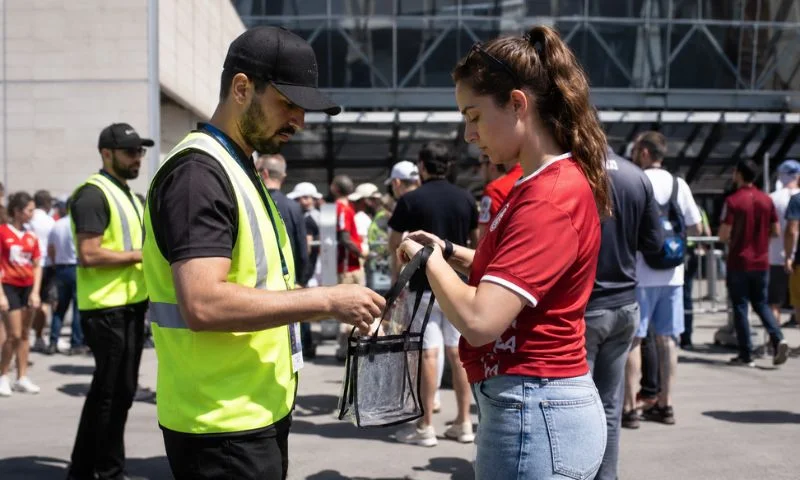
FIFA Bans Water Bottles at World Cup 2026 Amid Heat Concerns
FIFA has introduced a controversial policy ahead of the 2026 World Cup. The governing body will not allow fans to bring refillable water bottles into stadiums across the United States, Canada and Mexico. The decision has triggered debate among supporters and health experts. Many have raised concerns about spectator welfare during the summer tournament. The Athletic first reported the policy change. FIFA later confirmed it in a statement. Just weeks ago, FIFA allowed fans to carry empty transparent reusable plastic bottles with a capacity of up to one litre into stadiums. The earlier code of conduct stated: “For the avoidance of doubt, empty, transparent, reusable plastic bottles, up to (1 litre in) capacity, may be brought into the Stadium.” FIFA has now changed that rule. The updated code states: “For the avoidance of doubt, reusable water bottles may not be brought into the stadium.” FIFA Defends the Decision FIFA says safety concerns drove the policy shift. “Fifa is committed to protecting the health and safety of all players, referees, fans, volunteers, and staff,” a FIFA spokesperson told AFP. “Fifa made the decision to prohibit bottles to prevent risk and injury to players and attendees. “Outside bottles are already prohibited at several of these venues for safety considerations, and Fifa is applying this consideration across its tournament stadiums.” Several host venues already ban outside bottles during sporting events. FIFA decided to apply the same rule across all World Cup stadiums. The organisation says fans will still have access to hydration facilities. These include misting stations, cooling tents, fans and dedicated hydration points. FIFA also said spectators can buy bottled water inside stadiums. According to the governing body, prices will remain similar to those charged during other events. Heat Concerns Continue to Grow The announcement comes as climate experts warn about the risk of extreme heat during the tournament. Last month, the World Weather Attribution research group released a report on World Cup conditions. Researchers estimated that 26 of the tournament’s 104 matches could take place in conditions where the Wet Bulb Globe Temperature exceeds 26 degrees Celsius. The Wet Bulb Globe Temperature, or WBGT, measures heat stress on the human body. It combines temperature, humidity, sunlight and wind into a single index. Scientists and sports organisations use WBGT to assess heat-related risks. Several host cities could experience high temperatures during the competition. Concerns about fan safety have therefore intensified in recent months. Similar issues emerged during last year’s FIFA Club World Cup in the United States. Many supporters complained about intense heat inside venues. Tournament organisers also banned outside water bottles during that competition. The 2026 World Cup will feature 48 teams and 104 matches. It will be the largest tournament in FIFA history. Organisers expect record crowds across North America. As kickoff approaches, the debate over fan comfort, hydration and safety is likely to continue. For now, supporters attending matches must leave reusable water bottles at home. They will need to rely on hydration stations or purchase water inside the stadiums.

From $15 to $150: Train Fare Spike Hits FIFA World Cup Fans
Fans planning to attend matches at the 2026 FIFA World Cup are facing a sharp increase in transportation costs, with train fares to key venues rising more than tenfold, adding to the already high cost of attending football’s biggest tournament. Authorities in New Jersey, one of the main host regions for the tournament, have announced that round-trip public transit tickets from New York City to MetLife Stadium will cost $150, compared with less than $15 on a typical day. The spike in fares comes as organizers prepare for a surge in demand, with the stadium set to host eight matches including the final of the expanded 48-team tournament, which will run from June to July 2026 across the United States, Canada and Mexico. Sharp Price Increase Raises Concerns The more than tenfold increase in train fares has drawn criticism from fans and officials alike, with concerns that rising costs could limit accessibility for ordinary supporters. “We’re expecting public transportation… to sell out, because those are going to be the fastest and most efficient ways to get to the stadium,” a host committee official said. Officials say the higher prices reflect the cost of managing large crowds, increased security requirements and logistical challenges associated with hosting an event of this scale. New Jersey Transit estimates that transporting fans could cost tens of millions of dollars, with limited parking options forcing most spectators to rely on public transport. In addition to train fares, shuttle bus services are also expected to be priced significantly higher than usual, with round-trip tickets costing around $80 for select routes. Growing Cost Burden on Fans The rising transport costs add to an already expensive experience for fans attending the World Cup. Match tickets, accommodation and travel expenses have all increased, with some tickets reportedly reaching thousands of dollars. Governors and local officials have questioned whether global football body FIFA should bear a greater share of transportation costs rather than passing them on to commuters and fans. “I won’t stick N.J. commuters with that tab,” one official said, calling for a more balanced approach to funding. Analysts say the situation reflects broader economic pressures, including inflation and rising operational costs, which are impacting major global events. The 2026 World Cup is expected to attract millions of visitors and generate significant economic activity, but affordability remains a growing concern. High Demand, Limited Options With limited parking at venues and restrictions on ride-sharing services, public transport is likely to be the primary mode of travel for most fans. Authorities have also indicated that access to certain transit hubs may be restricted during match days to manage crowd flow. Approximately 40,000 transit tickets will be made available for each match, and officials expect them to sell out quickly, further highlighting the imbalance between demand and supply. Despite the backlash, organizers maintain that the pricing is necessary to ensure safe and efficient transportation during the tournament. As preparations continue, the rising costs of attending the World Cup are likely to remain a key issue, with fans weighing the financial burden against the once-in-a-lifetime experience of watching the world’s biggest football event live.
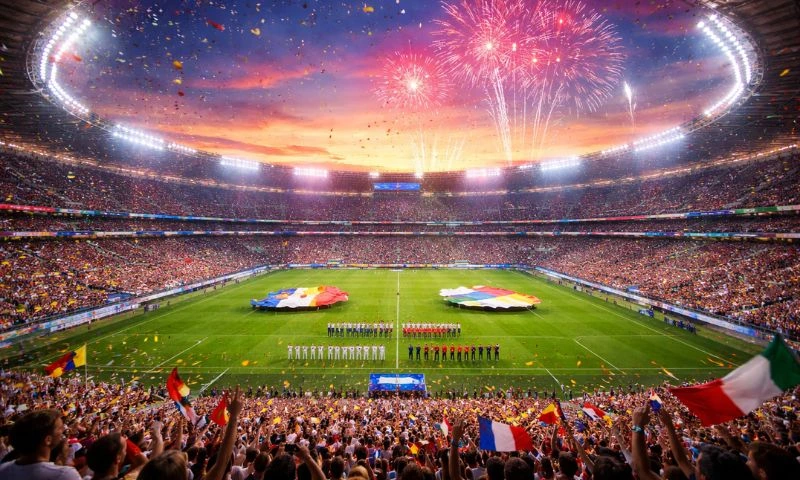
508 Million Requests For Seven Million World Cup Tickets Sees All Games Sold Out
All 104 matches of the 2026 FIFA World Cup will be “sold out,” said FIFA president Gianni Infantino on Wednesday, despite some tickets still being technically available months before the tournament begins on June 11. His comments came during an interview with CNBC from President Donald Trump’s Mar-a-Lago resort in Florida, where Infantino shared astonishing figures on global demand for the biggest soccer event in history. Record-Breaking Demand Infantino revealed that FIFA has received 508 million ticket requests in just four weeks for roughly seven million tickets available for all 104 matches. Requests poured in from more than 200 countries during the main sales phase in January. “The demand is there. Every match is sold out,” he told CNBC, adding, “(We’ve) never see anything like that extraordinary.” He explained that while tickets still exist for some matches, FIFA is holding back a number of them for the last-minute sales phase starting in April and running until the final on July 19. This approach ensures a continuous release of tickets to fans who have not yet secured seats. Pricing and Market Dynamics The FIFA president addressed widespread criticism about ticket pricing that has reached record highs. Supporters’ associations and fan groups have described prices as “exorbitant”, especially on resale markets where headline prices sometimes hit eye-watering levels. Infantino defended the pricing structure, saying it reflects market dynamics, particularly in the United States. “Ticket prices have been fixed but you have, in the US in particular, something called dynamic prices, meaning the prices will go up or down,” he said. He also noted that official resale platforms will allow ticket holders to sell their seats, which can push prices higher. Read More:World Cup 2026 Ticket Prices Under Fire as FIFA President Defends Costs Economic Impact and Legacy The 2026 World Cup will be the first to feature 48 national teams, spread across United States, Canada, and Mexico. Infantino projected that FIFA could generate more than $11 billion in revenue from the event, with every dollar reinvested into football development across FIFA’s 211 member associations. He also estimated that the tournament would boost the U.S. economy by around $30 billion through tourism, hospitality, security, and related investments. The event is expected to attract between 20 and 30 million tourists in addition to the seven million spectators. The organisation also anticipates creation of 185,000 full-time jobs connected to the tournament. Read More: Unbelievable Demand: Over 500 Million People Tried to Buy World Cup 2026 Tickets Fan Experience and Next Steps Even as tickets are effectively sold out due to overwhelming demand, FIFA will offer opportunities in April for fans to secure last-minute seats on a first-come, first-served basis. Fans are cautioned to purchase only through fifa.com/tickets and to ensure they meet travel requirements for host countries.
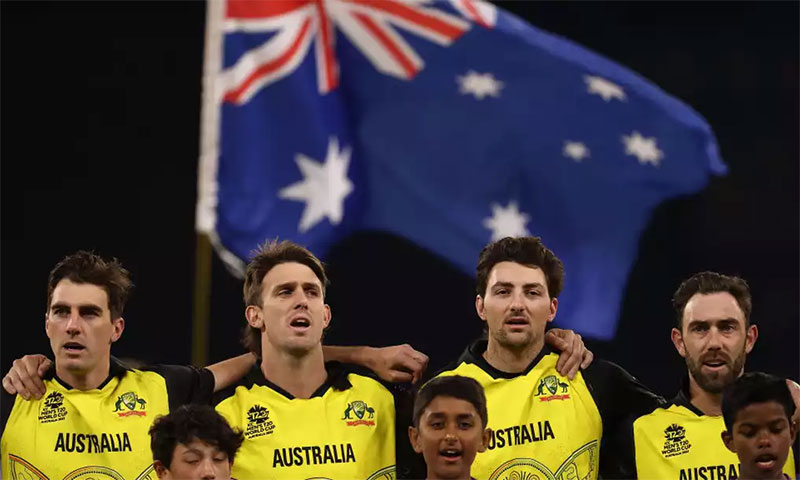
Australia unveil spin-heavy provisional squad for T20 World Cup 2026
Australia have announced a provisional 15-player squad for the ICC Men’s T20 World Cup 2026, with conditions in India and Sri Lanka clearly shaping the selectors’ thinking. The side will be led by Mitchell Marsh, who captains a group that welcomes back several senior names. Pat Cummins, Cameron Green and Cooper Connolly all return after missing Australia’s most recent T20 series against India. The provisional squad features a strong spin and all-round options, reflecting expectations of slower pitches and turning tracks across the subcontinent. Specialist leg-spinner Adam Zampa is supported by Matthew Kuhnemann, Connolly, and spin-capable all-rounders Glenn Maxwell and Matthew Short. Australia’s chair of selectors George Bailey said the panel benefited from recent success, allowing them to focus on players best suited to conditions in India and Sri Lanka, even as a few squad members manage fitness concerns. Bailey confirmed that Cummins, Josh Hazlewood and Tim David are progressing well and are expected to be fit for the tournament. He also stressed that the squad remains provisional and could be adjusted ahead of the final submission deadline. Notably, Australia have opted against selecting a left-arm fast bowler. Following Mitchell Starc’s retirement from T20 internationals and an injury to Spencer Johnson, the selectors chose right-arm seamer Xavier Bartlett rather than a like-for-like replacement such as Ben Dwarshuis. Australia are yet to announce a separate squad for the three-match T20 series against Pakistan, which will serve as their final lead-up to the World Cup.
