

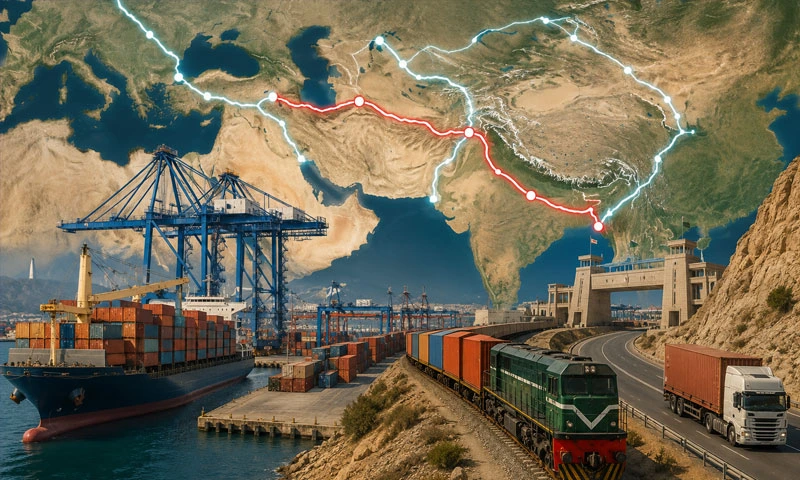
Pakistan plans to join the International North-South Transport Corridor (INSTC), a major trade route connecting South Asia, Central Asia, Russia and Europe, as Islamabad and Moscow move to deepen economic and strategic cooperation under a new partnership framework extending to 2030. The development emerged during a webinar titled “Pakistan-Russia Bilateral Relationship at the cusp of shifting global order”, where Federal Minister for Energy Sardar Awais Ahmed Khan Leghari outlined the growing momentum in ties between the two countries. A major focus of the discussion was regional connectivity. Pakistan signalled its intention to become part of the INSTC, a 7,200-kilometre multimodal transport network that combines sea, rail and road routes linking India, Iran, Azerbaijan, Russia, Central Asia and Northern Europe. Leghari welcomed recent remarks by Russian Deputy Prime Minister Alexey Overchuk regarding the possibility of connecting the INSTC to Pakistan’s Gwadar Port. Such a move could create a strategic link between the corridor and regional trade routes connected to China’s Belt and Road Initiative. Analysts say the corridor could significantly reduce transportation costs and delivery times between South Asia, Russia and Europe while opening new opportunities for trade and logistics cooperation. Russia-Pakistan Ties Gain Momentum Leghari said Pakistan-Russia relations have undergone a significant transformation during the past two decades. Addressing the webinar, he noted that mistrust inherited from the Soviet era has largely disappeared, allowing both countries to build cooperation in trade, energy, defence, technology and regional security. The minister described Russia as a “trusted friend” and highlighted growing engagement at the highest political level. According to Leghari, Prime Minister Shehbaz Sharif and Russian President Vladimir Putin have held four meetings in recent years, helping strengthen bilateral cooperation. As co-chairman of the Pakistan-Russia Intergovernmental Commission, Leghari said he regularly engages with Russian Energy Minister Sergey Tsivilev. He described the commission as the cornerstone of the expanding partnership. Both countries have also increased consultations on security, strategic stability and counterterrorism while working closely at forums such as the United Nations and the Shanghai Cooperation Organisation. Economic Cooperation Until 2030 To address trade barriers and unlock greater economic potential, Pakistan and Russia have agreed to sign the Program of Economic Cooperation between the Russian Federation and Pakistan for the Period until 2030. The agreement aims to improve trade mechanisms, facilitate investment and remove long-standing obstacles, including payment-related challenges. Leghari also highlighted the recent signing of the Russia-Pakistan Readmission Agreement in Bishkek, a long-pending arrangement expected to simplify visa procedures and encourage business travel and people-to-people exchanges. The minister said Russian leaders have also acknowledged Pakistan’s diplomatic efforts in easing tensions between Iran and the United States, describing the recognition as evidence of Pakistan’s growing role in regional affairs. Concluding his remarks, Leghari stressed that stronger Pakistan-Russia relations would contribute to broader Eurasian connectivity, economic integration and regional stability. With Gwadar emerging as a potential gateway to one of the world’s most ambitious trade corridors, Islamabad appears determined to position itself at the centre of future regional commerce.

Meet the Eight Players Over 40 Heading to the FIFA World Cup
The 2026 FIFA World Cup will feature a record number of players aged 40 or older, highlighting how elite footballers continue to extend their careers through fitness, nutrition and sports science. Eight players aged 40 and above will compete in the tournament across Canada, Mexico and the United States. That total exceeds the combined number from the previous 22 World Cups. The list includes Cristiano Ronaldo, Luka Modric, Edin Dzeko, Manuel Neuer and Guillermo Ochoa. Their presence challenges the idea that top-level football belongs only to younger players. Portugal captain Ronaldo, now 41, will make history as the first player to appear in six FIFA World Cups. Mexico goalkeeper Ochoa, 40, will also reach that milestone. Argentina captain Lionel Messi, who turns 39 later this month, remains one of football’s most influential figures. He led Argentina to World Cup glory in Qatar and now aims to add another chapter to his remarkable career. Veteran Stars Chasing More History Ronaldo arrives with a record few players can match. He has scored in each of the five World Cups he has played. Portugal coach Roberto Martinez believes experience remains Ronaldo’s greatest asset. “None have lived what he has in the number of decisive games he’s played over his career,” Martinez said. “He also brings experience in decisive moments that nobody else in the squad can match.” Croatia’s Modric and Bosnia and Herzegovina’s Dzeko also have an opportunity to make history. Both players could join a very exclusive group of over-40 World Cup goalscorers. Only Cameroon’s Roger Milla has achieved that feat. He scored at the age of 42 during the 1994 World Cup in the United States and remains the oldest scorer in tournament history. More than three decades later, his record still stands. Goalkeepers Continue to Defy Age Scotland goalkeeper Craig Gordon will be the oldest player at the tournament. At 43, he could become the second-oldest player ever to appear in a World Cup match. Only Egypt’s Essam El Hadary ranks ahead of him. The Egyptian goalkeeper played at 45 during the 2018 World Cup in Russia. Gordon is likely to serve as backup to Angus Gunn. However, even a single appearance would secure his place in the record books. Germany’s Manuel Neuer, who helped his country win the 2014 World Cup, hopes to recover from a calf injury before Germany’s opening match against Curaçao. Cape Verde’s Vozinha and Uruguay’s Fernando Muslera, who turns 40 during the tournament, complete the group of veteran players. Recent injuries have affected both Messi and Ronaldo. Even so, neither player’s legacy faces any threat. Their achievements already rank among the greatest in football history. The 2026 World Cup now offers one more opportunity for football’s elder statesmen to prove they can still perform on the sport’s biggest stage.

ICC Raises Red Flag Over Lord’s and Gaddafi Stadium Pitches
The International Cricket Council (ICC) has rated the pitches used in the recent England-New Zealand Test at Lord’s and the Pakistan-Australia ODI at Lahore’s Gaddafi Stadium as “Unsatisfactory”, handing one demerit point to each venue under its Pitch and Outfield Monitoring Process. The sanctions follow concerns raised by match officials and team captains regarding playing conditions during both matches. Match Referees Andy Pycroft and Graeme La Brooy submitted detailed reports to the ICC, which subsequently forwarded them to the England and Wales Cricket Board (ECB) and the Pakistan Cricket Board (PCB). Both boards now have 14 days to appeal against the decision. The ruling marks a rare instance where two prominent international venues have received identical sanctions for different pitch-related concerns. Lord’s Pitch Criticised for Excessive Assistance to Bowlers The first Test between England and New Zealand at Lord’s attracted attention after wickets fell regularly throughout the opening two days. According to ICC Match Referee Andy Pycroft, the surface provided excessive assistance to seam bowlers and created an imbalance between bat and ball. “There was plenty of excessive seam movement throughout the Test and the ball also kept extremely low on several occasions,” Pycroft said in his report. “The bounce was variable throughout as 16 wickets fell on the first day and 17 on the second. There was simply an over-balance in favour of ball against bat caused by the pitch.” The match saw batters struggle against movement and inconsistent bounce, leading to criticism from players and analysts who argued that the surface failed to provide a fair contest. Lord’s remains one of cricket’s most iconic venues and has hosted international matches for more than a century. However, the ICC’s monitoring system requires pitches to offer a reasonable balance between batting and bowling conditions. Gaddafi Stadium Surface Deemed Unsuitable for ODI Cricket The ICC also expressed concerns about the pitch used during the third One-Day International between Pakistan and Australia in Lahore. Match Referee Graeme La Brooy said the surface made scoring difficult and did not meet expectations for modern ODI cricket. “The pitch was slow and low and made scoring runs very difficult. It did not suit a One Day International game as batters had to spend more time to settle in. It helped spin very early in the match and continued the same way throughout.” The criticism comes as cricket administrators globally continue to seek pitches that encourage competitive cricket while allowing both batters and bowlers opportunities to influence matches. Under ICC regulations, venues receive one demerit point for an “Unsatisfactory” rating and three points for a pitch deemed “Unfit”. Demerit points remain active for five years. A venue that accumulates six demerit points faces a 12-month suspension from hosting international cricket. A venue that reaches 12 demerit points receives a 24-month suspension. Neither Lord’s nor Gaddafi Stadium carried any previous demerit points before the latest ruling. The sanctions serve as a reminder that even the world’s most established cricket venues remain subject to ICC scrutiny as the governing body seeks to maintain consistent playing standards across international cricket.
DIB Pakistan Reveals New Look and Big Plans for Digital Banking
DIB Pakistan has unveiled a new global brand identity across its branch network nationwide, marking a significant milestone as the Islamic bank completes two decades of operations in Pakistan and embarks on a new phase of growth focused on innovation, digital transformation and financial inclusion. The rebranding aligns DIB Pakistan more closely with the global identity of its parent institution, Dubai Islamic Bank (DIB), which has played a pioneering role in Islamic banking for more than 50 years and remains one of the world’s largest Islamic financial institutions. The bank introduced its new visual identity at branch locations across the country, including prominent visibility at Karachi’s Jinnah International Airport. The move reflects DIB Pakistan’s broader strategy to strengthen its position in the country’s rapidly evolving banking sector while expanding its digital and customer-focused offerings. New Identity Reflects Global Vision At the heart of the rebranding is a redesigned logo that combines the DIB wordmark with the “Globus” symbol, representing the bank’s ambition to deliver modern Islamic banking solutions on a global scale. The logo features a three-dimensional globe surrounded by an Islamic arabesque pattern, symbolising the institution’s heritage and international outlook. The design incorporates green and gold elements that represent tradition and enduring values, while a burgundy core highlights innovation and the bank’s commitment to creating long-term value for customers. The transformation comes as Pakistan’s banking industry accelerates investment in digital services, mobile banking and financial inclusion initiatives. Islamic banking has also gained significant momentum in recent years, with the State Bank of Pakistan continuing efforts to increase the sector’s share in the country’s overall financial system. According to industry data, Islamic banking assets and deposits have continued to grow steadily, reflecting increasing consumer demand for Shariah-compliant financial products and services. Focus on Technology and Financial Inclusion DIB Pakistan Chief Executive Officer Muhammad Ali Gulfaraz described the rebranding as a reflection of the institution’s long-term vision. “The rebranding is anchored in our belief that Progress Never Stops. It is a purposeful expression of growth, resilience, and forward momentum, reflecting the broader significance of DIB Pakistan’s renewed strategic direction,” he said. “This transformation reinforces our commitment to strengthening and expanding our presence across the country. Through continued investment in technology and innovation, we aim to advance financial inclusion and contribute to the prosperity of the communities we serve.” Alongside the new identity, DIB Pakistan has also redesigned its mobile banking application to improve customer experience and enhance access to digital financial services. Bank officials said the transformation underscores DIB Pakistan’s commitment to ethical banking, innovation and customer-centric services. As competition intensifies in Pakistan’s banking industry, the lender aims to position itself as a trust-led and digitally empowered Islamic financial institution capable of serving the evolving needs of individuals and businesses. The rebranding marks one of the most significant identity transformations in the bank’s history and signals its intention to play a larger role in shaping the future of Islamic banking in Pakistan.

82% of Pakistanis Use AI While Shopping Online, Visa Study Finds
Pakistani consumers are rapidly embracing artificial intelligence (AI) and social commerce as part of their online shopping experience, but many remain cautious about allowing AI to make purchases on their behalf, according to Visa’s latest Stay Secure study. The annual survey, conducted by Wakefield Research and released by Visa, highlights the growing role of AI-powered tools in digital commerce while underscoring persistent concerns about trust, fraud and online security. The findings come as Pakistan’s digital economy continues to expand, driven by rising internet penetration, smartphone adoption and increasing use of digital payment platforms. According to the study, 82% of consumers in Pakistan have used AI tools to assist with shopping. The most common uses include comparing prices, checking reviews and finding gift ideas. Around 56% use AI to compare prices, while 53% rely on it to review product ratings. Another 47% use AI tools to generate gift recommendations. Consumers appear largely satisfied with the technology. The survey found that 93% believe emerging technologies, including AI-powered tools, make online shopping faster and easier. AI is also influencing how consumers discover brands. About 55% of respondents said they typically encounter new retailers and products while shopping online. Trust Remains a Key Challenge Despite growing acceptance of AI, consumers remain reluctant to hand over complete purchasing decisions to automated systems. Only 42% said they would trust AI agents to complete checkout on their behalf. The findings suggest that while shoppers welcome AI assistance during the decision-making process, they still prefer maintaining control over financial transactions. At the same time, many consumers see AI as a powerful tool against fraud. The survey found that 65% believe AI has made scams easier to identify, while 87% expect artificial intelligence to play a critical role in protecting consumers from fraud in the future. Visa executives say trust will remain central to the next phase of digital commerce. “In Pakistan, we are seeing strong momentum as consumers embrace digital commerce, with AI and social platforms becoming an increasingly integral part of how people discover and shop,” said Leila Serhan, Senior Vice President and Group Country Manager for North Africa, Levant and Pakistan at Visa. “As digital ecosystems evolve, consumers are looking for experiences that not only offer greater convenience but also deliver confidence and control at every step of the journey,” she added. Social Media Shopping Expands Amid Fraud Concerns The report also highlights the rapid growth of social commerce in Pakistan. According to the findings, 82% of consumers have purchased products directly through social media platforms. However, fraud risks continue to grow alongside online shopping activity. More than half of respondents, 55%, reported experiencing a financial scam during the past 12 months. Among those affected, 44% said the scam occurred through social media platforms. The study also identified growing concerns regarding children’s online safety. Around 77% of respondents said children struggle to recognize scams, while 33% reported that a child in their lives had fallen victim to a scam while gaming or shopping online. Visa said consumers increasingly expect payment providers, online marketplaces and regulators to play a leading role in fraud prevention through real-time alerts, secure payment systems and trusted checkout experiences. “As commerce moves toward more agentic, AI-powered experiences, the study shows that consumers are embracing the convenience AI can bring to shopping but remain cautious when it comes to AI completing purchases on their behalf,” Serhan said.
BYD Bets on Pakistan With 73-Acre Electric Vehicle Project
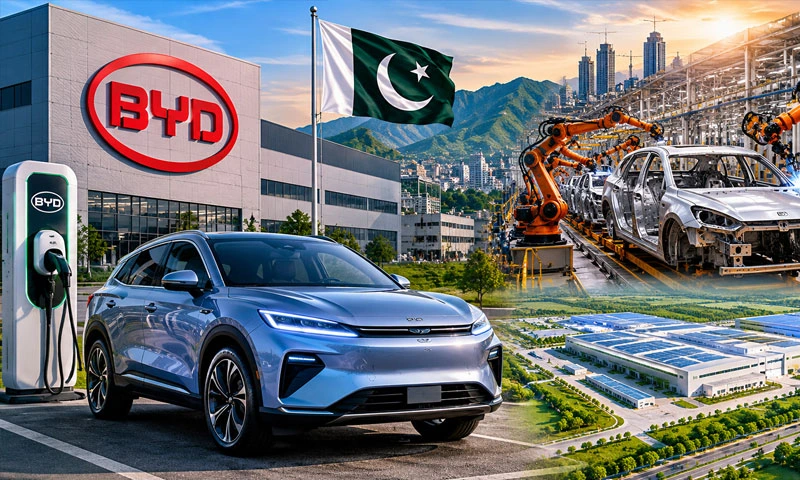
Chinese electric vehicle giant BYD has started developing a large-scale electric vehicle manufacturing hub in Pakistan, marking one of the most significant investments yet in the country’s emerging EV industry. The project will cover approximately 73 acres and is expected to support local vehicle assembly, battery-related production and the development of a broader electric mobility ecosystem. Industry experts view the investment as a major step toward strengthening Pakistan’s automotive sector and reducing reliance on imported fuel-powered vehicles. BYD has emerged as one of the world’s largest electric vehicle manufacturers and has increasingly expanded its international footprint. The company recently overtook Tesla in global EV sales and continues to grow across Asia, Europe, Latin America and the Middle East. The new facility in Pakistan reflects rising interest among international investors in the country’s long-term electric vehicle potential. Officials and industry stakeholders believe the project could help accelerate the transition toward cleaner transportation while supporting industrial growth and technology transfer. Pakistan Bets on Electric Mobility Pakistan has identified electric vehicles as a key component of its long-term energy and environmental strategy. Successive governments have introduced incentives aimed at encouraging EV adoption, including reduced duties on electric vehicles, charging infrastructure initiatives and support for local manufacturing. Rising fuel prices and growing environmental concerns have also increased public interest in electric mobility. The proposed BYD facility is expected to contribute to local assembly operations and may eventually support battery-related manufacturing activities, a critical component of the global EV supply chain. Analysts say local production could help reduce vehicle costs, improve accessibility and encourage wider adoption of electric vehicles in Pakistan. The investment could also strengthen Pakistan’s position in regional automotive manufacturing, particularly as countries across South Asia increase efforts to develop domestic EV industries. Jobs, Technology and Investment Opportunities Industry observers expect the project to create substantial employment opportunities during both the construction and operational phases. The facility may generate jobs in manufacturing, engineering, logistics, maintenance and technical services. Experts also highlight the potential for technology transfer through partnerships with local suppliers and automotive companies. The expansion comes as BYD continues to strengthen its global manufacturing network. The company has invested heavily in battery technology and electric vehicle production facilities worldwide. Pakistan’s automotive sector has traditionally relied on conventional vehicles assembled by local and international manufacturers. However, the rapid global shift toward electrification is creating new opportunities for investment and innovation. Stakeholders believe the BYD project could encourage other international EV manufacturers to consider Pakistan as a production and distribution hub. If completed as planned, the manufacturing complex would represent a significant milestone for Pakistan’s clean transportation ambitions and could help accelerate the development of a modern electric vehicle ecosystem. The project also aligns with broader efforts to attract foreign direct investment into high-value manufacturing sectors while supporting sustainable economic growth.

Iran Conflict Triggers $100 Billion Shock for Global Airlines
The global airline industry faces a sharp rise in fuel expenses this year after the conflict involving Iran triggered turbulence in energy markets, pushing jet fuel prices significantly higher and squeezing already thin profit margins. The International Air Transport Association (IATA) estimates that airlines will spend an additional $100 billion on jet fuel in 2026, a development that could cut industry profits nearly in half despite strong passenger demand. According to IATA, global airline net profits are expected to fall from $43 billion in 2025 to $23 billion this year. Average profit margins could drop from 4.2% to just 2%, underscoring the financial pressure confronting carriers worldwide. IATA Director-General Willie Walsh said the industry remains vulnerable to external shocks because airlines operate on “wafer-thin margins.” The warning comes as aviation companies continue to recover from the financial damage caused by the Covid-19 pandemic while also coping with supply chain disruptions and aircraft delivery delays. Fuel Price Surge Hits Airlines The latest challenge emerged after the Iran conflict disrupted global energy markets and intensified concerns about the security of the Strait of Hormuz, one of the world’s most important oil shipping routes. Brent crude oil prices climbed sharply during the conflict. Market benchmarks rose from just above $70 per barrel to as high as $120 before retreating to around $93. The volatility had a direct impact on aviation fuel. Industry data cited by IATA showed that jet fuel prices doubled during the initial phase of the crisis before easing later in the year. Even after the correction, average fuel prices remain around 70% higher than earlier levels. Fuel traditionally accounts for one of the largest expenses for airlines. Analysts estimate it can represent between 25% and 35% of total operating costs depending on market conditions and route networks. The higher costs have raised concerns about ticket prices, profitability and the pace of industry expansion. Despite the pressure, IATA said consumer demand for air travel remains relatively strong. Surveys indicate that many passengers expect airfare increases to reflect rising oil prices, while nearly half anticipate spending more on travel this year. Ageing Aircraft Add to Industry Burden Airlines also face mounting operational challenges because manufacturers continue to struggle with production delays. Walsh said the average age of the global airline fleet has now exceeded 15 years, the highest level on record. Aircraft manufacturers and engine suppliers face a backlog of approximately 18,000 orders, forcing many carriers to keep older aircraft in service longer than planned. According to IATA, ageing fleets increase fuel consumption, maintenance requirements and leasing expenses. Walsh estimated that older aircraft alone will add around $11 billion in fuel costs during 2025. He urged aircraft and engine manufacturers to improve reliability and accelerate deliveries, warning that continued production failures would be “unacceptable” for the industry’s long-term stability. While airlines remain profitable overall, the combination of higher fuel bills, ageing fleets and supply chain bottlenecks has created a challenging environment for an industry still rebuilding after years of disruption.

US Judge Blocks Trump’s $100,000 H-1B Visa Fee in Major Legal Defeat
A federal judge struck down US President Donald Trump’s controversial $100,000 H-1B visas fee on Monday. The ruling marks a major setback for the administration’s efforts to restrict legal immigration. US District Judge Leo Sorokin issued the decision in Boston. Twenty Democratic state attorneys general filed the lawsuit after Trump announced the fee in September. The H-1B programme allows US employers to hire highly skilled foreign workers. It offers 65,000 visas each year. Another 20,000 visas go to applicants with advanced degrees. Successful applicants can work in the United States for three to six years. Before Trump announced the policy, employers usually paid between $2,000 and $5,000 in fees. The new charge increased costs more than twentyfold. Businesses, universities and healthcare institutions quickly criticised the move. Sorokin rejected the administration’s argument that the fee was a lawful penalty under federal immigration law. He concluded that the payment functioned as a tax. “Here, the substance and application of the $100,000 payment reveal that it is a tax, regardless of what the payment is called,” Sorokin wrote. The judge said Congress never authorised the president to impose such a tax. He also cited recent Supreme Court decisions that limit executive authority when federal law does not clearly grant specific powers. States Said Fee Hurt Recruitment of Skilled Workers The Trump administration defended the policy in court. Officials argued that immigration law gives the president broad authority to restrict the entry of foreign nationals when their admission could harm US interests. The administration said the fee would encourage companies to hire and train American workers. Trump had previously argued that employers misuse the H-1B programme. He said the system “has been deliberately exploited to replace, rather than supplement, American workers with lower-paid, lower-skilled labor.” The coalition of states disagreed. They argued that the fee would make it harder to recruit doctors, engineers, teachers and other skilled professionals. California Attorney General Rob Bonta led the lawsuit. He welcomed the ruling and said the policy threatened key sectors of the economy. “This tax was an attack on America’s ability to attract and retain the high-skilled talent that strengthens our economy and helps us meet critical workforce needs,” Bonta said. The states also argued that hospitals, universities and research institutions rely heavily on foreign talent. They said the fee would increase labour shortages in several industries. Visa Demand Fell Sharply After Fee Announcement Court filings showed that the policy discouraged employers from seeking H-1B visas. As of February 15, US Citizenship and Immigration Services had received only 85 payments of the $100,000 fee. The figure highlighted the dramatic decline in demand after the policy took effect. The White House did not immediately respond to Reuters after the ruling. However, administration officials signalled that they would continue defending the policy. White House spokeswoman Taylor Rogers later criticised the decision. “President Trump has clear legal authority to restrict entry of any class of aliens he determines is not in America’s best interests, and that is exactly what he did,” Rogers said. The administration plans to appeal the ruling. The case could have far-reaching consequences for US immigration policy. It may also influence future efforts by presidents to impose financial restrictions without explicit approval from Congress. For now, employers that depend on highly skilled foreign workers have received a significant legal victory. The ruling removes one of the biggest barriers that the administration placed on the H-1B visa programme.
Trump Warns Netanyahu: ‘You Will Be on Your Own Very Soon’
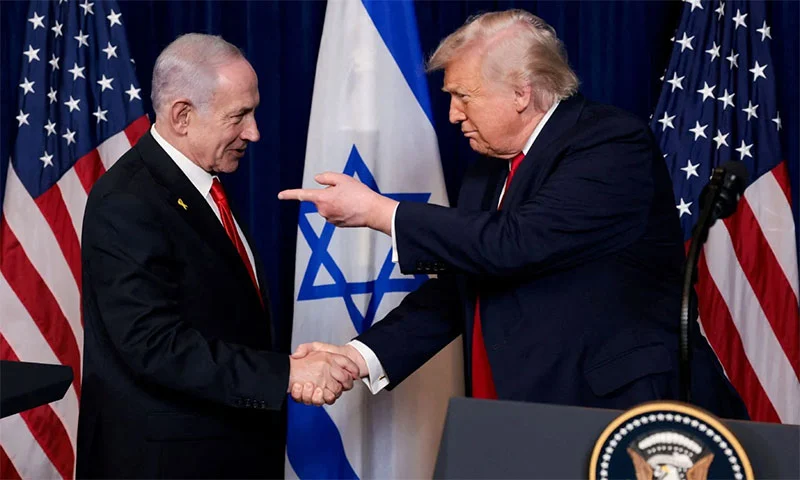
US President Donald Trump has warned Israeli Prime Minister Benjamin Netanyahu that Israel could find itself isolated if it resumes military operations against Iran, as both countries pause attacks following their most serious escalation since an April ceasefire halted weeks of warfare. The warning highlights growing pressure from Washington to prevent a wider regional conflict at a time when diplomatic efforts continue behind the scenes to secure a lasting agreement between Tehran and Washington. Speaking to Axios, Trump revealed details of a recent conversation with Netanyahu and suggested that US patience with renewed military escalation was wearing thin. “I said, ‘Bibi, you better be careful, or you will be on your own very soon’,” Trump said. The remarks came after a sharp exchange of attacks between Israel and Iran over the weekend. The latest flare-up began on Sunday after Israeli strikes hit Lebanon’s capital Beirut. Iran responded with a barrage of missiles targeting northern Israel. Trump publicly called on both sides to stop the violence. Writing on his Truth Social platform, he demanded that both countries stop “shooting” and said that “final negotiations” toward peace would continue, “subject to ignorance or stupidity getting in its way”. According to media reports, Trump also personally contacted Netanyahu on Sunday evening and urged him not to retaliate further. Fresh Escalation Raises Regional Tensions Despite Trump’s intervention, Israeli forces launched strikes early Monday targeting Iranian air defence systems and a petrochemical facility. Iran responded by striking a similar facility in Haifa and targeting two Israeli airbases. Israeli defence systems intercepted many incoming missiles over the occupied West Bank. No deaths were reported from the latest exchange. The escalation complicated Trump’s efforts to preserve the ceasefire announced on April 8 following a conflict that began on February 28. In a televised address, Netanyahu defended Israel’s actions and insisted the country would continue protecting itself. “Israel has a full right to self-defence, and we are exercising it as required,” Netanyahu said. He claimed that Iranian attacks had ceased after Israeli operations and warned that Israel would respond strongly if Tehran resumed hostilities. Meanwhile, Israel’s ambassador to Washington, Yechiel Leiter, sought to minimise reports of friction between Trump and Netanyahu. “Sometimes, lovers have a spat,” Leiter told Fox News. Diplomacy Continues Amid Ongoing Violence Iranian officials blamed Washington for failing to prevent the escalation. “The US is directly responsible,” Iranian Foreign Ministry spokesman Esmaeil Baghaei said. Iran’s First Vice President Mohammad Reza Aref described Tehran’s military response as evidence of “a new level of deterrence from mighty Iran”. At the same time, diplomatic contacts remain active. Iranian President Masoud Pezeshkian said Tehran remains “at the negotiating table”, while Iran’s ambassador to the United Nations, Amir Saeid Iravani, confirmed that Pakistan continues to facilitate communication between Tehran and Washington. Iravani told The Associated Press that both sides are “presenting and exchanging views” and expressed hope that they would reach “a conclusion” soon. Pakistan’s Prime Minister Shehbaz Sharif also urged restraint and said efforts to secure a peaceful settlement continue “earnestly and painstakingly”. The fragile ceasefire faces additional pressure from other regional conflicts. Yemen’s Houthi movement has announced a complete ban on Israeli maritime navigation in the Red Sea, while Israeli strikes in southern Lebanon killed several people on Monday, according to Lebanese health authorities. Analysts say the coming days may determine whether diplomacy prevails or the region slides back toward a broader conflict.
