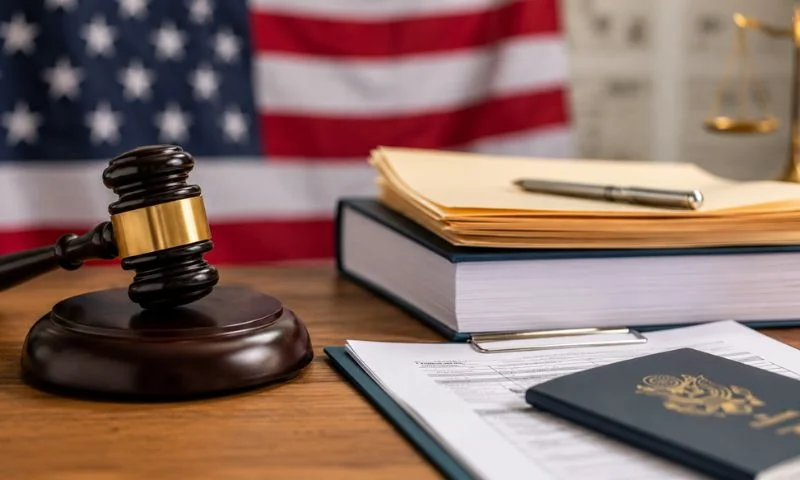
A federal judge struck down US President Donald Trump’s controversial $100,000 H-1B visas fee on Monday. The ruling marks a major setback for the administration’s efforts to restrict legal immigration.
US District Judge Leo Sorokin issued the decision in Boston. Twenty Democratic state attorneys general filed the lawsuit after Trump announced the fee in September. The H-1B programme allows US employers to hire highly skilled foreign workers. It offers 65,000 visas each year. Another 20,000 visas go to applicants with advanced degrees. Successful applicants can work in the United States for three to six years.
Before Trump announced the policy, employers usually paid between $2,000 and $5,000 in fees. The new charge increased costs more than twentyfold. Businesses, universities and healthcare institutions quickly criticised the move. Sorokin rejected the administration’s argument that the fee was a lawful penalty under federal immigration law. He concluded that the payment functioned as a tax.
“Here, the substance and application of the $100,000 payment reveal that it is a tax, regardless of what the payment is called,” Sorokin wrote.
The judge said Congress never authorised the president to impose such a tax. He also cited recent Supreme Court decisions that limit executive authority when federal law does not clearly grant specific powers.
States Said Fee Hurt Recruitment of Skilled Workers
The Trump administration defended the policy in court. Officials argued that immigration law gives the president broad authority to restrict the entry of foreign nationals when their admission could harm US interests.
The administration said the fee would encourage companies to hire and train American workers. Trump had previously argued that employers misuse the H-1B programme.
He said the system “has been deliberately exploited to replace, rather than supplement, American workers with lower-paid, lower-skilled labor.”
The coalition of states disagreed. They argued that the fee would make it harder to recruit doctors, engineers, teachers and other skilled professionals. California Attorney General Rob Bonta led the lawsuit. He welcomed the ruling and said the policy threatened key sectors of the economy.
“This tax was an attack on America’s ability to attract and retain the high-skilled talent that strengthens our economy and helps us meet critical workforce needs,” Bonta said.
The states also argued that hospitals, universities and research institutions rely heavily on foreign talent. They said the fee would increase labour shortages in several industries.
Visa Demand Fell Sharply After Fee Announcement
Court filings showed that the policy discouraged employers from seeking H-1B visas. As of February 15, US Citizenship and Immigration Services had received only 85 payments of the $100,000 fee. The figure highlighted the dramatic decline in demand after the policy took effect.
The White House did not immediately respond to Reuters after the ruling. However, administration officials signalled that they would continue defending the policy. White House spokeswoman Taylor Rogers later criticised the decision.
“President Trump has clear legal authority to restrict entry of any class of aliens he determines is not in America’s best interests, and that is exactly what he did,” Rogers said.
The administration plans to appeal the ruling. The case could have far-reaching consequences for US immigration policy. It may also influence future efforts by presidents to impose financial restrictions without explicit approval from Congress.
For now, employers that depend on highly skilled foreign workers have received a significant legal victory. The ruling removes one of the biggest barriers that the administration placed on the H-1B visa programme.