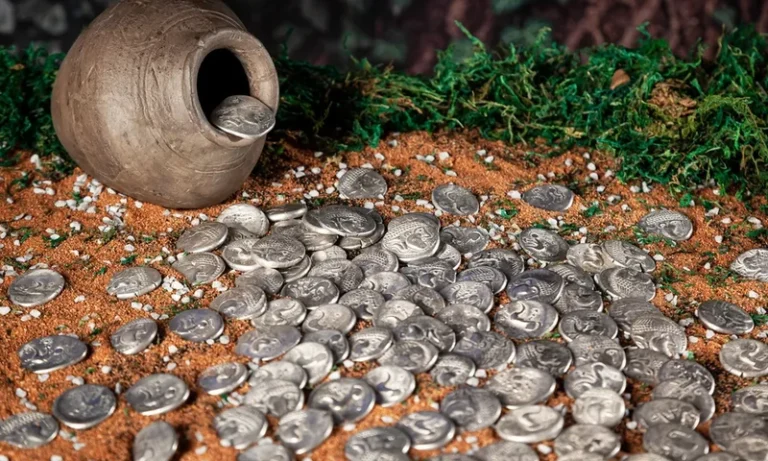


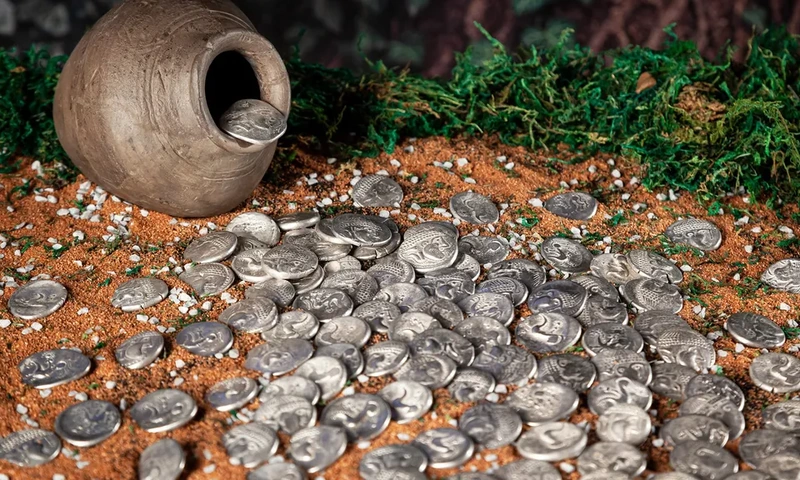
Archaeologists preparing an electricity substation site in western Hungary discovered more than 200 Celtic silver coins in a small ceramic pot. The hoard lay just 30 to 40 centimeters below ground near Szombathely. It is among Hungary’s largest Celtic coin finds in more than half a century.
Hungary’s National Archaeological Institute investigated the site between 2023 and 2025 ahead of construction for power company E.ON. Plowing on the former farmland had turned up individual coins over several decades. When archaeologists found a few more during the dig, they swept the area with metal detectors and located the pot. A local report put the count at 208.
The roughly two-kilogram cache dates from the late second century to the early first century BC. E.ON put the raw silver value at more than $2,000, with the hoard’s rarity adding historical value well beyond that figure. “This is a rarity in Europe,” said Eszter Kreiter of Hungary’s National Archaeological Institute. She said Hungary’s last comparable find came in the late 1960s.
What the Celtic silver coins reveal
The coins follow Greek tetradrachms, large silver pieces worth four drachmas that first appeared in the late sixth century BC. Archaeologists call this local version the Velem type. It takes its name from Velem-Szent Vid, a fortified Celtic hilltop settlement about 15 kilometers west, where researchers found similar coins. One side shows a stylized head, probably the Greek god Apollo. A helmeted rider on horseback appears on the reverse.
Oxford coin specialist Christopher Howgego has linked Celtic minting in the Carpathian Basin to mercenaries who encountered Greek coins while serving in Hellenistic armies in Greece and Macedonia. Celtic mints adapted classical portraits and added local designs. The high-value coins rarely changed hands for everyday purchases. People stockpiled them as wealth or buried them as ritual offerings. The reason someone buried the Szombathely hoard remains unclear.
The dig uncovered traces of 7,000 years of history
The excavation also yielded a nearly 7,000-year-old polished stone woodworking tool. Archaeologists found a glass bead with a peacock-eye pattern, likely from jewelry dating to the seventh or sixth century BC.
Centuries after someone hid the pot, a Roman villa went up on the site without disturbing the silver. Although the villa no longer stands, archaeologists pieced together its floor plan and identified its underfloor heating system. They also recovered a Roman brick that preserved a dog’s paw print. The Savaria Museum in Szombathely plans to exhibit selected finds, including coins from the hoard.