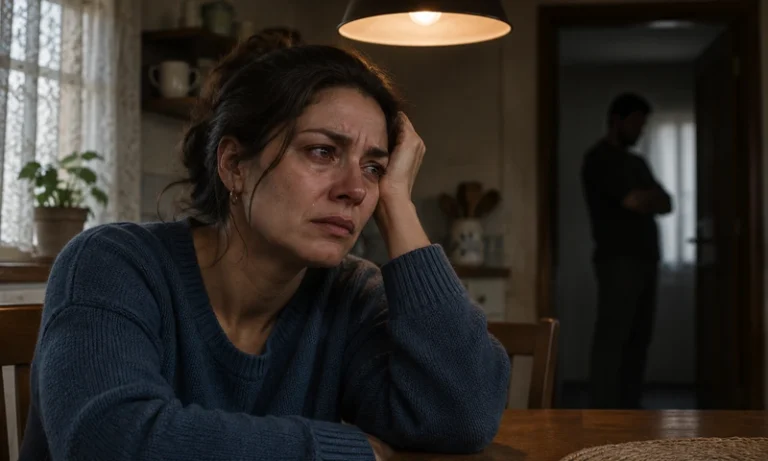


Intimate partners and family members killed an estimated 47,000 women and girls worldwide in 2025, according to a United Nations report. That amounts to 129 deaths a day, or about five every hour. The toll remains broadly in line with recent years. UN Women and the UN Office on Drugs and Crime published their 2026 Femicide Brief on November 24. The release came a day before the International Day for the Elimination of Violence against Women. Researchers drew on data from 122 countries and territories to estimate the global toll.
Read More: Heatwaves Trigger Rise in Domestic Violence Against Women
Worldwide, 78,000 women and girls died as a result of intentional homicide in 2025. Intimate partners or relatives accounted for about 60% of those deaths. Women and girls made up 19% of all homicide victims worldwide. Among male homicide victims, 11% died at the hands of a partner or relative.
Annual estimates for killings by partners or relatives have ranged from 45,000 to 51,000 over the past several years. The agencies put the 2024 toll at 50,000. They attributed most of the difference between the two years to better country-level data. That makes it difficult to tell from the totals alone whether fewer women and girls died.
Africa recorded the highest femicide toll and rate
Africa had the highest estimated toll at 22,100, followed by Asia at 15,100 and the Americas at 7,400. Europe recorded an estimated 2,100 deaths, while Oceania recorded 300. The UN found cases in every region.
Africa also had the highest rate, at 2.9 victims per 100,000 women and girls. The Americas followed at 1.4, then Oceania at 1.1, Asia at 0.6 and Europe at 0.5. Oceania had the smallest estimated toll, but its population-adjusted rate exceeded those of Asia and Europe.
Global homicide rates have fallen faster than femicide rates. From 2010 to 2025, homicide rates fell nearly twice as fast as femicide rates in the Americas. In Europe, they fell about 1.5 times as fast.
UN calls for earlier action on domestic violence
The UN stressed the “urgency of ensuring that the prevention of domestic violence addresses intimate relationships, as well as relationships in wider family structures”. The brief notes that fatal violence often follows a pattern of abuse, threats or coercive control. It highlights measures such as police risk assessments, enforcement of protection orders and limits on access to firearms.
Read More: Virginia Man Accused of Taping Wife to Chair to Watch Football
The report also calls for better data on gender-related killings outside intimate and family relationships. Gaps in those records make it difficult to estimate the full scale of femicide worldwide. At UN headquarters in New York, UN Women installed 129 orange flags. Each flag represented one woman or girl in the estimated daily toll from partner or family violence.