The federal government has ended its fuel subsidy programme for motorcyclists, small farmers, and public and goods transport operators after a sharp fall in global and local fuel prices.
The decision came during a meeting of the National Steering Committee on Fuel Subsidy chaired by Deputy Prime Minister and Foreign Minister Ishaq Dar on Monday.
The committee reviewed the programme’s implementation across the provinces, Gilgit-Baltistan, and Azad Jammu and Kashmir (AJK). After the review, members agreed to withdraw the subsidy scheme. Prime Minister Shehbaz Sharif approved the decision.
Officials said lower global oil prices had already provided relief to consumers through reduced petroleum rates.
“The Committee noted that global fuel prices have declined sharply, the benefit of which has already been passed on to the consumers, and agreed to discontinue the subsidy with the approval of the Prime Minister,” Dar said.
Relief Scheme Introduced During Fuel Crisis
The government launched the subsidy programme earlier this year when fuel prices surged after the closure of the Strait of Hormuz during the US-Iran conflict.
The disruption shook global energy markets and pushed oil prices higher. Pakistan, which relies heavily on imported fuel, felt the impact quickly.
Petrol prices reached a record Rs458.40 per litre in April. High-speed diesel climbed to Rs520.35 per litre.
Deputy Prime Minister & Foreign Minister Senator Mohammad Ishaq Dar @MIshaqDar50 chaired the 7th meeting of the National Steering Committee on Fuel Subsidy.
The Committee reviewed the rollout of fuel subsidy for motorcyclists, small farmers, public transport & goods transport in… pic.twitter.com/I4X55tPKNV
— Ishaq Dar (@MIshaqDar50) June 22, 2026
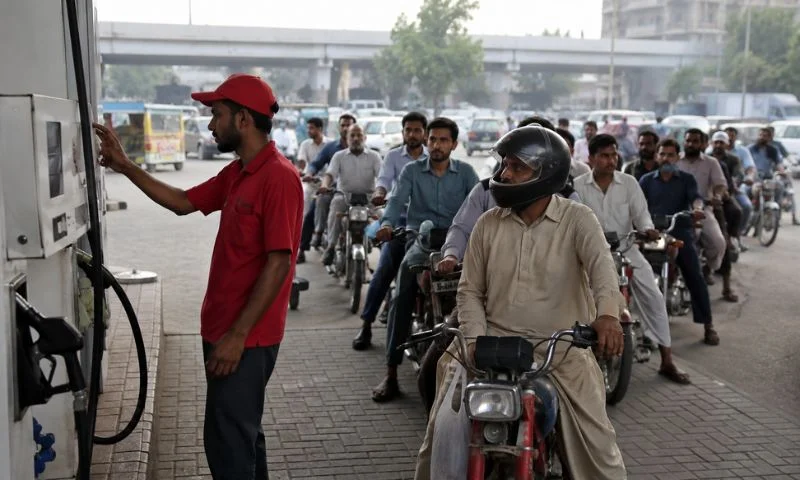
To ease the burden on low-income groups, the government introduced targeted subsidies. Motorcycle, rickshaw and 800cc vehicle owners received between Rs50 and Rs100 per litre in support.
Small farmers received a diesel subsidy of Rs100 per litre.
The government also provided monthly financial assistance to public and goods transport operators. Payments ranged from Rs70,000 to Rs100,000 per month. Officials hoped the support would help control transport fares and freight costs.
Lower Fuel Prices Drive Policy Change
The government announced the move days after a major reduction in fuel prices.
Last week, authorities cut petrol prices by Rs74.28 per litre and diesel prices by Rs67.31 per litre. The reductions brought petrol prices down to Rs299.50 per litre and diesel prices to Rs311.47 per litre.
The cuts followed a peace agreement between the United States and Iran. The agreement led to the reopening of the Strait of Hormuz, one of the world’s most important oil shipping routes.
During Monday’s meeting, Dar praised cooperation between federal and provincial authorities. He said officials should use lessons from the programme to improve data systems and strengthen future public service initiatives.
He also directed authorities to address weaknesses in data collection and delivery mechanisms.
The meeting included Special Assistant to the Prime Minister Tariq Bajwa, the secretaries of petroleum and information technology, the governor of the State Bank of Pakistan, and senior representatives from the provinces, Gilgit-Baltistan, and AJK.
Although the subsidy programme has ended, the government believes lower fuel prices will continue to provide relief to households, farmers, transport operators, and businesses across the country.