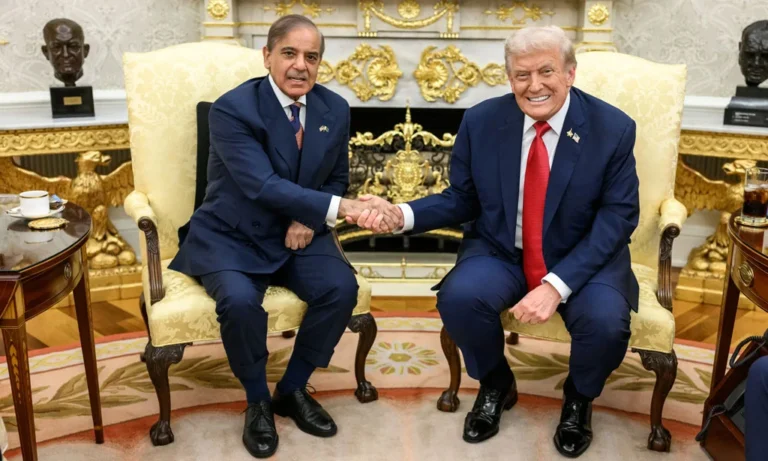
Prime Minister Shehbaz Sharif on Sunday expressed hope that Pakistan would host the next round of negotiations between the United States and Iran “very soon” as diplomatic efforts intensified to secure a broader regional peace agreement.
In a post on X, the prime minister praised Donald Trump for what he called “extraordinary efforts to pursue peace” during ongoing negotiations involving several Middle Eastern countries.
Sharif said Trump held a “very useful and productive” telephone call with leaders from Saudi Arabia, Qatar, Turkiye, Egypt, the UAE, Jordan and Pakistan.
According to the prime minister, Chief of Army Staff and Chief of Defence Forces Asim Munir represented Pakistan during the discussions.
“The discussions provided a useful opportunity to exchange views on the current regional situation and how to move the ongoing peace efforts forward to bring lasting peace in the region,” Sharif wrote.
“Pakistan will continue its peace efforts with utmost sincerity and we hope to host the next round of talks very soon,” he added.
Trump says agreement with Iran close to finalisation
Sharif’s remarks came hours after Trump claimed negotiations involving Iran and several regional countries had made major progress.
In a post on Truth Social, Trump said he held a “very good call” with regional leaders regarding Iran and a proposed memorandum of understanding linked to peace efforts.
“An Agreement has been largely negotiated, subject to finalisation between the United States of America, the Islamic Republic of Iran, and the various other Countries, as listed,” Trump wrote.
He added that final details were still under discussion and claimed “the Strait of Hormuz will be opened”.
However, Iranian news agency Fars disputed Trump’s statement regarding the strategic waterway.
According to the report, the proposed arrangement would still allow Iran to manage the Strait of Hormuz and Trump’s comments were “inconsistent with reality”.
Trump also revealed that he separately spoke with Benjamin Netanyahu and described the conversation as positive.
The latest diplomatic contacts emerged under growing pressure from Washington and regional allies.
Earlier this week, Trump warned that the US could resume strikes if negotiators failed to secure an agreement with Tehran.
Pakistan intensifies mediation role in regional crisis
Pakistan has expanded mediation efforts since fighting erupted after US and Israeli attacks on Iran on February 28.
Tehran later retaliated with missile strikes and temporarily closed the Strait of Hormuz, disrupting global oil markets and increasing regional tensions.
Islamabad previously brokered a two-week ceasefire between Washington and Tehran on April 8.
Pakistan later hosted direct talks between the two sides on April 11 and 12, although negotiators failed to secure a permanent agreement.
Field Marshal Munir recently travelled to Tehran for meetings with Iranian President Masoud Pezeshkian, Parliament Speaker Mohammad Bagher Ghalibaf, Foreign Minister Abbas Araghchi and Interior Minister Eskandar Momeni.
According to the Inter-Services Public Relations, the meetings took place in a “positive and constructive environment”.
“The intensive negotiations over the last 24 hours have resulted in encouraging progress towards a final understanding,” the ISPR said earlier.
Diplomatic sources say Pakistan continues working through backchannel contacts to narrow differences between Washington and Tehran as efforts for a broader settlement continue.