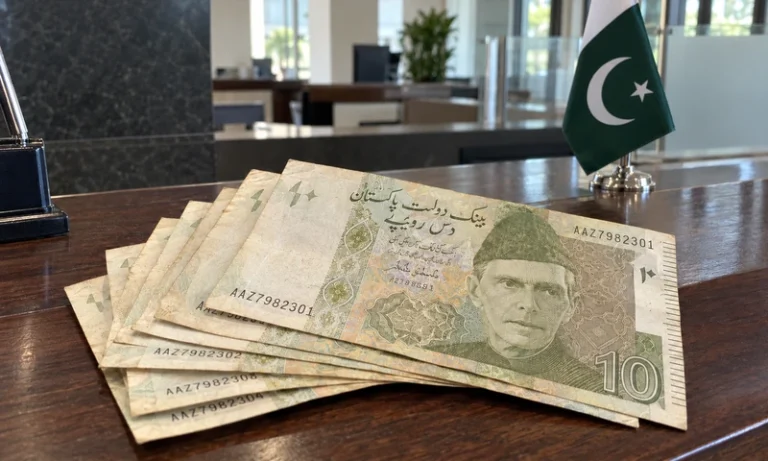
Pakistan’s trade deficit crossed $4 billion in April 2026, marking the highest monthly gap in 46 months, as rising imports outpaced export growth, official data showed.
Figures released by the Pakistan Bureau of Statistics showed the deficit stood at $4.07 billion in April. This reflects a nearly 4% increase from $3.92 billion recorded in April 2025.
Read More: Pakistan’s Tax Shortfall Hits Rs683 Billion as Fuel Prices Rise
Exports reached $2.48 billion during the month, up 14% from $2.17 billion a year earlier. However, imports rose to $6.55 billion, showing a 7.5% increase compared to $6.1 billion in the same period last year.
The widening gap highlights continued pressure on Pakistan’s external account as import demand remains strong.
Monthly surge driven by sharp import growth
On a monthly basis, the trade deficit jumped 43.5% from $2.84 billion recorded in March 2026. The spike came as imports surged by more than 28% within a single month.
Exports grew at a slower pace of 9.5% during the same period, which failed to offset the rising import bill.
Economists say Pakistan often sees import spikes due to higher energy purchases, industrial raw materials, and machinery. These trends tend to widen the trade gap when export growth slows.
The country has struggled to maintain export momentum despite policy incentives in recent years. Textile shipments, which form a major share of exports, remain sensitive to global demand fluctuations.
Deficit widens sharply in FY26 so far
The broader trend also points to a worsening imbalance. Pakistan’s trade deficit increased by 20.3% to $31.98 billion during the first ten months of the current fiscal year.
Read More: Pakistan Could Hit $50 Billion Remittances With Crypto Legalisation
This compares with a deficit of $26.59 billion recorded in the same period of the previous fiscal year.
Exports during July to April FY26 stood at $25.21 billion, showing a decline of more than 6% compared to $26.89 billion in the same period last year.
Meanwhile, imports reached $57.19 billion, rising 7% from $53.48 billion recorded a year earlier.
Analysts note that rising import volumes, coupled with declining exports, continue to drive the deficit higher.
External pressures remain a key concern
A widening trade deficit puts pressure on Pakistan’s foreign exchange reserves and currency stability. Policymakers often rely on remittances and external financing to manage the gap.
Read More: Pakistan Could Hit $50 Billion Remittances With Crypto Legalisation
Global factors such as oil prices, interest rates, and demand in key export markets also influence Pakistan’s trade balance.
The latest data signals ongoing challenges for economic managers as they attempt to stabilise the external sector while supporting growth.
Authorities may need to introduce targeted measures to control imports and boost exports in the coming months.