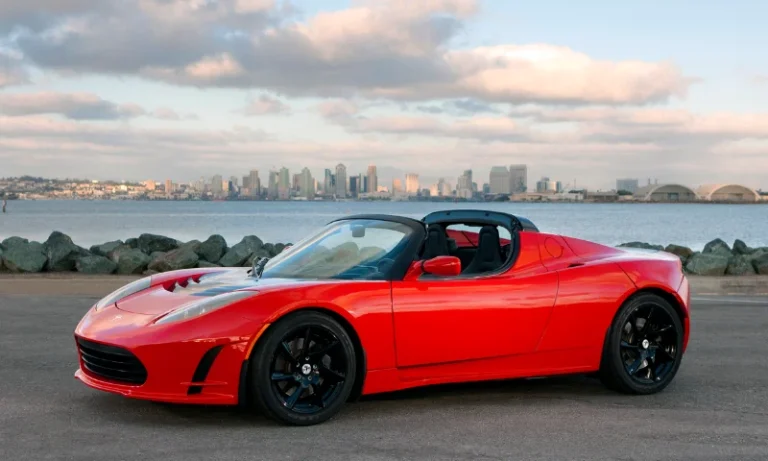
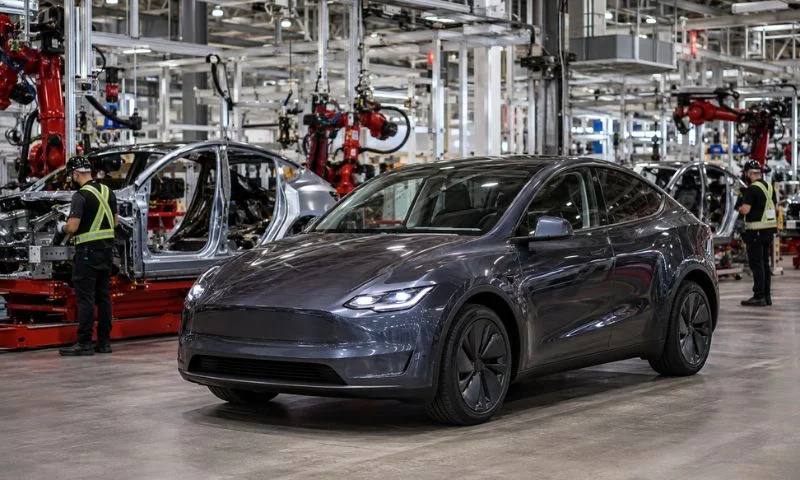
Tesla has produced its 10 millionth fully electric vehicle, 18 years after the original Roadster entered production in 2008. A black Model Y became the milestone vehicle at Tesla’s Fremont factory in California in late July.
The achievement makes Tesla the first automaker to reach 10 million battery-only vehicles. BYD crossed 10 million new-energy vehicles earlier, but that total included plug-in hybrids alongside fully electric models.
Tesla needed about 12 years to reach its first million vehicles in March 2020. The pace then changed sharply. It reached two million around 18 months later and three million about 11 months after that. The four-million mark followed roughly seven months later.
Production crossed five million in September 2023 and doubled to 10 million by July 2026. Tesla therefore added its second five million vehicles in less than three years.
In 2025 alone, the company produced 1,654,667 vehicles and delivered 1,636,129.
Scale, Software and Charging Built Tesla’s Advantage
Tesla’s lead rests on more than the cars themselves. Its factories cover over 2.8 million square metres. The company employs more than 70,000 people across three continents.
Tesla also built expertise in batteries, electric powertrains, thermal management and power electronics. It has pursued vertical integration while localising supply chains and cutting manufacturing costs.
Software created another major difference. Tesla designed vehicles around central computing and over-the-air updates instead of treating software as an accessory. That approach lets it change features after delivery. It also links cars with navigation, charging and paid digital services.
Its charging network strengthened that ecosystem. Tesla says more than 80,000 Supercharger stalls delivered 6.7 terawatt-hours of electricity in 2025.
AlixPartners warned in April that Western manufacturers were losing ground in software-defined vehicles. Himanshu Khandelwal said, “Software-defined vehicles are the very future of the global auto industry.”
BYD and Chinese Rivals Turn Up the Pressure
Tesla’s milestone does not guarantee future dominance. BYD sold 2.26 million battery-electric vehicles in 2025, ahead of Tesla’s 1.64 million deliveries. Global electric-car sales exceeded 20 million and reached one-quarter of all new cars sold.
Chinese manufacturers now compete on price, batteries, software, design, production speed and supply-chain control. A Gulf News analysis captured Tesla’s changing position: “The disruptor eventually becomes the incumbent.”
Traditional automakers have paid heavily for misjudging the shift. Reuters initially counted about $55 billion in EV-related writedowns. It later raised the total above $70 billion after further industry resets.
Stellantis booked €22.2 billion, or $26.5 billion, while Ford recorded $19.5 billion. GM took a $6 billion charge. Porsche’s overhaul cost Volkswagen about $6 billion.
Tesla now wants another transformation. It is investing in Full Self-Driving, robotaxis, AI, Optimus robots and energy storage. The company deployed 46.7 GWh of storage products in 2025.
The wider lesson remains clear: “Technology doesn’t need permission from an incumbent industry to redefine it.” Tesla’s 10 millionth vehicle shows that electric cars have moved from experiment to mass production. Its next challenge is proving it can lead the software, autonomy and robotics era too.