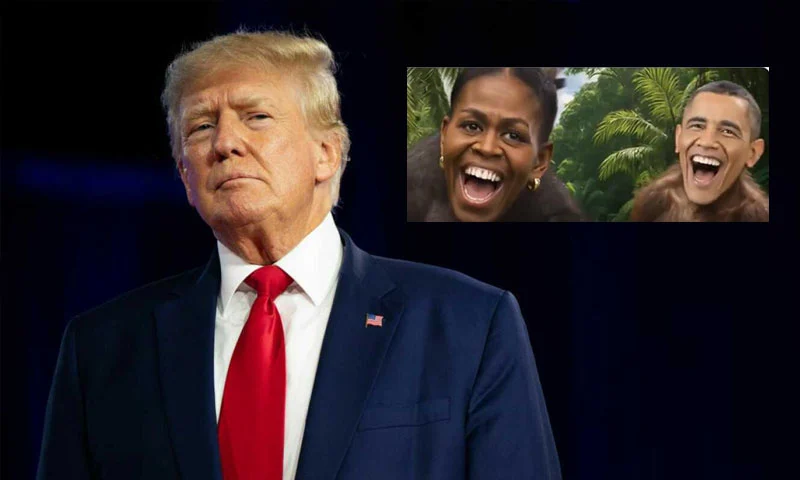
U.S. President Donald Trump is facing fierce criticism from across the political spectrum after a racist video showing former President Barack Obama and former First Lady Michelle Obama was briefly posted on his social media platform and later deleted. Trump admitted he didn’t watch the full clip before it was shared and refused to apologize for the incident.
The video was posted Thursday on Truth Social, a platform closely associated with Trump, and included a segment comparing the Obamas to apes — a long-standing racist trope that immediately drew widespread condemnation. The post was removed about 12 hours later after intense backlash.
Read More: US President Donald Trump Talks Missiles, Vigilance and Why He Refuses to Sleep on Flights
Speaking with reporters on Friday, Trump claimed he had only seen the beginning of the video, which focused on baseless claims of voter fraud in the 2020 election, and had asked unnamed staffers to post it. “I looked at it … I saw it — and I just looked at the first part,” Trump said, adding that he did not catch the offensive imagery.
Despite the uproar, Trump maintained he “didn’t make a mistake” and refused to offer an apology for the post. The White House initially dismissed criticism as “fake outrage” through Press Secretary Karoline Leavitt, who described the video as a harmless internet meme. However, the White House later acknowledged that the video should not have gone out and attributed the post to a staffer error.
The racist imagery was widely criticized as offensive and dehumanizing. Republican Senator Tim Scott, one of the few Black lawmakers in his party, called the video “the most racist thing I’ve seen” from the White House and urged its removal. Other Republican voices, including Senator Roger Wicker, described the clip as unacceptable and called for accountability. Democratic lawmakers and civil rights groups likewise condemned the video, saying it reflected a toxic climate at the White House.
Read More: Inside the Epstein Files: Key Disclosures, Unanswered Questions, and Global Impact
The controversy adds to growing scrutiny over Trump’s use of social media to disseminate controversial content. In past cases, Trump posted or shared AI-generated or manipulated videos of political rivals, including one depicting Obama being arrested in the Oval Office — footage widely debunked as fake and misleading.
Critics argue that posting racially charged imagery — even unintentionally — has serious implications in a country still grappling with racial tensions. Some analysts believe this episode will intensify the debate over social media use by public officials and the responsibilities of political leaders in shaping national discourse.