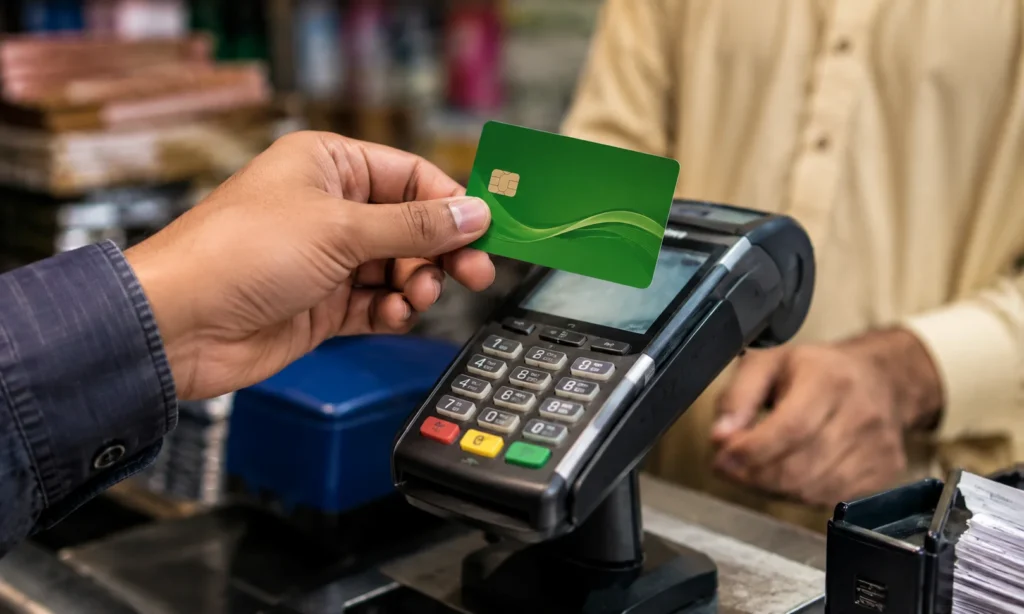
1LINK has proposed mandatory PayPak cards for government salary accounts, subsidies and public sector payment programmes. The plan seeks to reduce Pakistan’s dependence on international card networks, including Visa and Mastercard.
The proposal would cover government employees, subsidy recipients and beneficiaries of social safety-net programmes. It would also extend PayPak use to mass-transit payment systems, according to details shared by the State Bank of Pakistan.
PayPak Push Targets Government Services
1LINK wants tax relief for PayPak purchases made through point-of-sale terminals and e-commerce platforms. It has also recommended financial incentives to encourage consumers and merchants to use the domestic card scheme.
The company proposed PayPak-compatible terminals at all major public-facing government offices. These would include NADRA centres, Excise departments and Passport Offices.
The plan also recommends discounts, cashback and loyalty rewards on selected PayPak transactions. It specifically identifies utility bills, fuel purchases, public transport fares and other government payments.
Read More: Pakistan Records Mysterious 6x Surge in Credit Card ATM Use
1LINK operates Pakistan’s largest banking payment switch and manages PayPak, the country’s domestic card scheme. The company introduced PayPak to route more local transactions through national infrastructure and reduce reliance on foreign networks.
The proposal has not yet become mandatory government policy. However, it supports the central bank’s wider effort to expand domestic digital payment channels.
SBP Expands PayPak and Raast Ecosystem
The SBP has introduced several measures to strengthen PayPak’s reach and functionality. These include co-badged cards, wider e-commerce acceptance, promotional incentives and public awareness campaigns.
Faysal Bank launched Pakistan’s first PayPak-Mastercard co-badged debit card in December 2025. The product allows customers to use PayPak locally while accessing Mastercard’s international network abroad.
The central bank says these measures have increased merchant acceptance and transaction volumes. It has also accelerated the expansion of Raast Person-to-Merchant payments.
Read More: Faysal Bank Introduces Pakistan’s First Cardless ATM Withdrawal via Mobile
Raast allows individuals, businesses and government bodies to make real-time digital payments. The government allocated Rs3.5 billion for a Raast QR-code subsidy during the 2025-26 financial year.
The SBP set the subsidy at 0.5 percent of each eligible transaction or Rs100, whichever was lower. The programme covered transactions from September 1, 2025, until June 30, 2026.
Daily Raast P2M transactions climbed from about 60,000 in June 2025 to nearly 1.1 million by June 2026. The increase highlights the rapid adoption of QR-based payments across Pakistan.
The SBP plans to keep onboarding merchants and expanding QR payments. It also wants more transactions to move through PayPak and Raast instead of international payment rails.
For consumers, mandatory PayPak issuance could offer wider local acceptance and lower-cost digital payments. Its success, however, will depend on reliable service, strong merchant coverage and meaningful rewards.