
As the 2026 Milan-Cortina Winter Olympics get underway, the value of Olympic medals especially gold has reached record highs due to soaring precious-metal prices worldwide. Analysts say this Games will feature the most valuable medals in Olympic history when measured by raw material worth.
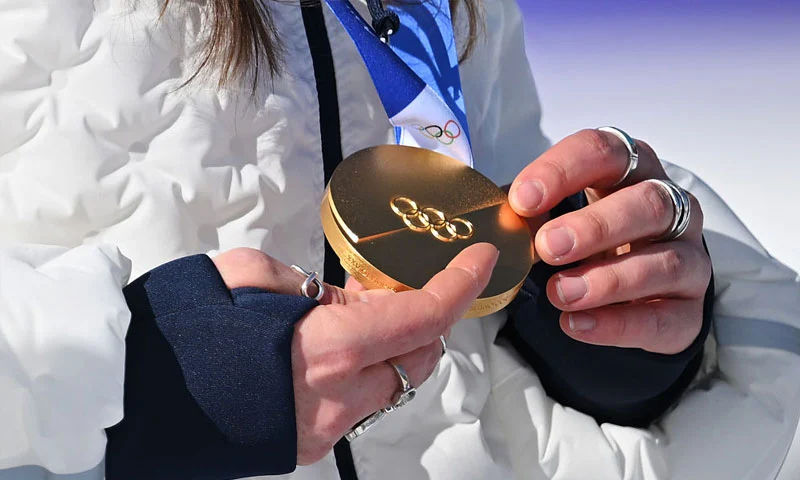
Each gold medal awarded in 2026 contains about 506 grams of metal: roughly 500 grams of sterling silver and a thin layer of about six grams of pure gold plating, a tradition that dates back to the early 20th century when medals stopped being made from solid gold. ([turn0search1]; [turn0search50]) With global markets pushing gold prices toward more than $5,000 an ounce and silver also at multi-year highs, the intrinsic metal value of a Winter Olympics gold medal now exceeds $2,200–$2,400, more than double its worth at the 2024 Summer Games in Paris.
Silver medals, made entirely of silver, are also significantly more valuable. At current prices, each silver medal contains about 500 grams of pure silver, giving it a raw metal value close to $1,400. Bronze medals, composed largely of copper, remain comparatively modest in value — typically worth less than $10 in raw materials but their symbolic worth to athletes remains immense.
Cash Bonuses Add Financial Incentive
While medal material value has surged, many national Olympic committees also offer generous cash bonuses to their medal winners — often far exceeding raw metal worth. According to Forbes, at least 37 countries have confirmed financial rewards for 2026 medalists. Thirteen nations will offer $100,000 or more for an individual gold medal, with Singapore’s payout approaching $800,000.
Incentives vary dramatically by country. Some nations, like New Zealand, provide more modest bonuses closer to a few thousand dollars, reflecting different funding priorities and sports support systems worldwide. ([turn0news0]; [turn0search51]) These bonuses can boost the financial impact of winning significantly, encouraging athletes and raising the stakes of competition.
Meaning Beyond Metal and Money
Experts stress that the true value of an Olympic medal goes far beyond its raw materials or cash bonuses. Olympic medals represent years of training, sacrifice, and peak performance on the world stage. Many former champions have seen medals sell for six or seven figures at auctions, especially icons like Jesse Owens, whose 1936 gold medals fetched more than $1.4 million each.
The design of the 2026 medals also reflects artistic and symbolic choices. Crafted by the Italian State Mint using recycled metals and renewable energy, the medals feature interlocking halves symbolizing the two host cities of Milan and Cortina d’Ampezzo.
Fans and athletes alike are following these value trends with interest as the Winter Games progress. With 245 gold, 245 silver and 245 bronze medals scheduled for competition winners, the combined metal value of all medals could exceed $1.3 million.
This year’s Milan-Cortina Olympics may well be remembered not just for athletic triumphs, but for the unprecedented economic worth of the medals themselves.