One of the biggest talking points at the 2026 FIFA World Cup has not been a controversial referee decision or a spectacular goal. Instead, it has been the mandatory hydration breaks that now take place twice during every match.
Critics argue the interruptions disrupt the flow of games and provide broadcasters with extra advertising opportunities. Some fans also question their necessity, particularly in air-conditioned stadiums.
Yet behind the debate lies a much larger global trend. As climate change drives more frequent and intense heatwaves, hydration has become a growing public health concern. Researchers, health authorities and technology companies are increasingly focusing on how people can monitor their fluid intake and avoid dehydration.
“Hydration is a key issue,” said Andreas Flouris, a researcher at the University of Thessaly in Greece. “We definitely see it, from a scientific point of view, gaining more and more attention.”
The concern is supported by research. A 2023 study found that one in four adults aged 65 or older in the United Kingdom suffered from dehydration because they did not consume enough fluids. Earlier research led by Flouris assessed 139 workers across Europe and found that 70% were dehydrated at levels that could negatively affect cognitive performance and movement control.
Can Technology Tell You When to Drink?
The rising focus on hydration has fueled a wave of consumer technology products. Companies now offer devices that monitor sweat, track water consumption and even analyze urine to estimate hydration levels.
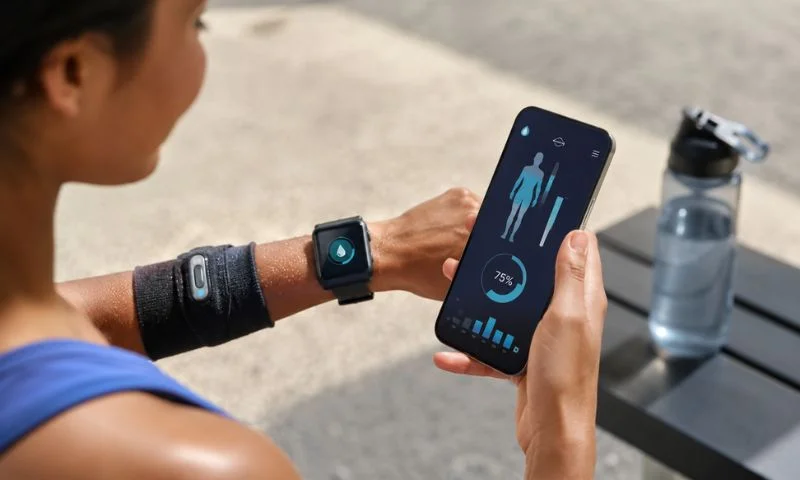
US-based Epicore Biosystems is among the companies leading the trend. Its wearable sweat sensors measure sweat rate, sodium content and skin temperature. The company’s latest products also calculate a user’s “sweat score” and hydration readiness.
“With this new generation of our wearables, we could figure out what type of risk profile you have based on your sweat score,” said Roozbeh Ghaffari, the company’s co-founder and chief executive.
Some devices vibrate to remind users when it is time to drink water. Epicore says construction workers, airport ground staff, oil and gas employees and athletes use the technology in high-temperature environments.
However, not all scientists are convinced.
“Most of these products that we’ve tested do not show the level of accuracy that you would expect,” Flouris said, referring to several sweat-monitoring devices his team has evaluated.
He argued that sweat sensors perform better during continuous physical activity such as marathon running but often struggle during sports involving frequent changes in intensity.
Ghaffari acknowledged that sweat analysis over short periods “can be challenging” but pointed to peer-reviewed studies supporting the effectiveness of his company’s devices during workouts lasting at least 30 minutes.
Smart Bottles and Toilet Sensors Enter the Market
Hydration technology extends far beyond wearable patches.
Companies such as WaterH sell smart water bottles equipped with sensors that monitor drinking behavior and flash reminders when users need to hydrate.
“We try to make it fun,” said Cem Bakiş, WaterH’s head of business development. “You can add friends, you can earn points.”
Meanwhile, health technology firm Vivoo has developed a toilet-mounted urine analyzer that estimates hydration levels by measuring urine density through optical sensors.
Experts say urine analysis remains one of the most reliable methods for assessing hydration, although changes may not appear immediately after dehydration begins.
Tamara Hew-Butler, a researcher at Wayne State University, sees potential benefits in hydration tracking but warns against becoming overly dependent on health metrics.
“It’s added some information – but it’s also, I think, added a bit of an emotional burden,” she said.
Hew-Butler believes hydration monitoring may prove especially valuable in elite sports, where coaches can identify athletes who are becoming dehydrated before performance suffers.
“What technology does is it gives us this immediate result,” she said.
As temperatures continue to rise worldwide, the market for hydration technology appears set to expand. The challenge for consumers may be deciding whether they trust their thirst, their smartwatch, or even their toilet.