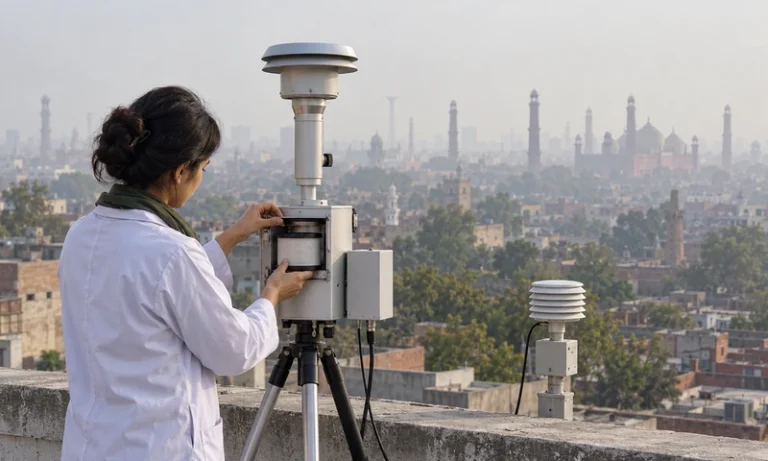
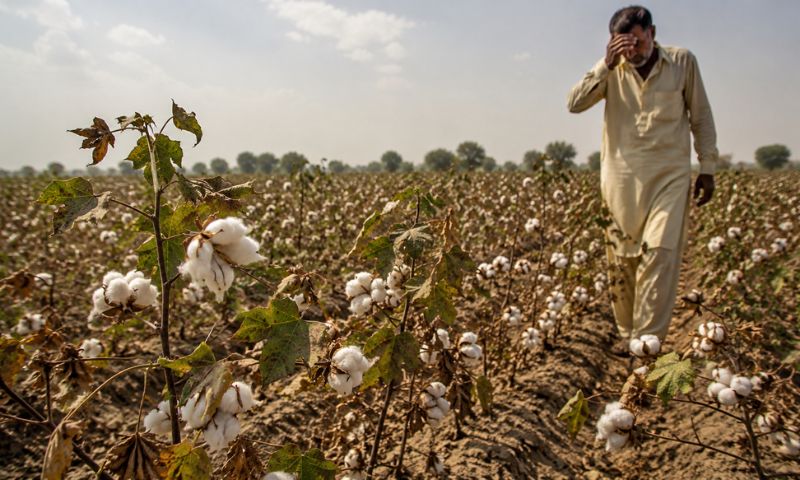
Pakistan’s cotton sector faces mounting pressure from climate change as rising temperatures, water shortages and erratic rainfall continue to reduce production, threatening one of the country’s most important export industries.
Experts warn that temperatures in major cotton growing regions could remain 2 to 4 degrees Celsius above normal during May and June this season. Some areas may even record temperatures of up to 52°C during severe heatwaves, increasing the risk of flower drop, boll shedding and lower crop yields.
Cotton remains the backbone of Pakistan’s textile industry, which contributes around 60 percent of the country’s exports. However, climate related challenges have significantly weakened production in recent years, raising concerns for farmers, exporters and policymakers.
Cotton output falls sharply as extreme weather intensifies
According to agricultural experts, Pakistan produced about 5.6 million cotton bales during the 2025 to 2026 season, almost 45 percent below the official target of 10.2 million bales.
South Punjab suffered some of the worst conditions. Temperatures climbed above 45°C, while irregular rainfall created ideal conditions for boll shedding, pest attacks and disease outbreaks. Farmers also reported higher pressure from Cotton Leaf Curl Virus, which further reduced yields.
The latest projections show above normal temperatures across key cotton producing districts, including Multan, Bahawalpur, Rajanpur, Dera Ghazi Khan, Rahim Yar Khan, Sukkur, Khairpur, Nawabshah, Hyderabad, Badin, Tando Allah Yar, Tando Adam, Jacobabad, Shikarpur, Larkana, Quetta’s surrounding agricultural areas, Nasirabad, Jaffarabad and Sohbatpur.
Experts explain that cotton responds differently to heat stress during each stage of growth. Temperatures above 45°C can damage pollen development, reduce seed formation and cause flowers and young bolls to fall before maturity. High night temperatures also reduce plant energy, while drought limits fibre quality and boll development. Excessive rainfall and flooding create separate risks by increasing boll rot, crop lodging and viral diseases.
The Food and Agriculture Organization has repeatedly warned that climate change poses one of the greatest long term threats to agricultural production in South Asia, particularly in water stressed countries such as Pakistan.
Scientists promote climate smart farming
Researchers say farmers can reduce climate related losses through better crop management and climate smart farming techniques.
Studies show that split application of 150 to 200 kilograms of urea per acre, or fertiliser use guided by leaf colour charts, can reduce nitrous oxide emissions by 30 to 65 percent without causing major yield losses.
Scientists at the Central Cotton Research Institute (CCRI) in Multan also tested deficit irrigation methods. Their research found that cotton variety BTCIM 678 achieved water use efficiency between 0.55 and 0.64 kilograms per hectare per millimetre of water when supplied with only 50 percent of available irrigation water. The method reduced yields by just 7 to 9 percent while saving nearly 37 centimetres of irrigation water.
The institute continues to evaluate heat tolerant cotton varieties, including BTCIM 663, BTCIM 785, BTCIM 343, BTCIM 678, BT Cyto 535, BT Cyto 537, BTCIM 775, BT Cyto 511 and the newly approved BTCIM 990. Researchers say these varieties perform better under high temperatures, limited water supplies and viral disease pressure.
CCRI has also introduced its Low Expenditure and Environment Friendly (LEEF) Technology, which aims to increase cotton productivity while lowering production costs.
Call for coordinated action
Experts recommend timely sowing, drip irrigation, balanced fertiliser use, reduced tillage and integrated pest management to strengthen cotton’s resilience against climate change.
They stress that Pakistan must move quickly from reactive policies to long term adaptation strategies. Strong coordination between the government, researchers and farmers will remain essential to protect cotton production, textile exports and rural livelihoods from worsening climate risks.