
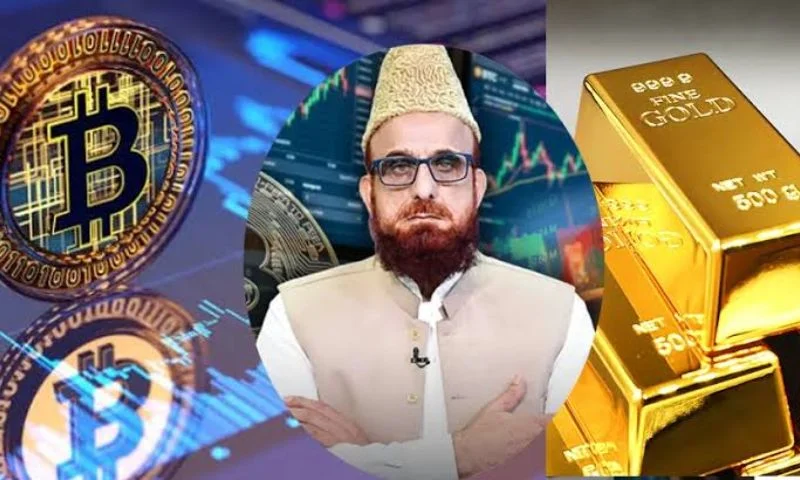
Pakistan’s debate over cryptocurrency and Islamic finance has entered a new phase after senior religious scholar Mufti Muneeb-ur-Rehman clarified that he has not issued a final ruling declaring cryptocurrency either permissible or impermissible. His remarks have resurfaced as policymakers, scholars and investors continue discussing the future of digital assets in the country.
During a recent interview on Islamic investments, Mufti Muneeb advised Muslims to invest only in businesses that comply with Shariah principles. He urged people to avoid investments linked to alcohol, pork, narcotics and other prohibited sectors.
The scholar explained that today’s financial markets are highly complex. Therefore, Islamic scholars use Shariah screening criteria to determine whether an investment complies with Islamic principles.
Mufti Muneeb explains his position
Mufti Muneeb also addressed gold trading. He said certain forms of gold trading practiced today are not permissible under Islamic teachings.
At the same time, he clarified that he has not issued a definitive religious verdict on cryptocurrency.
Instead, he believes the subject requires detailed technical and Shariah examination before scholars reach a final conclusion. His comments have added another perspective to Pakistan’s ongoing debate over digital assets.
Mufti Taqi Usmani’s fatwa shapes discussion
The conversation intensified after renowned Islamic scholar Mufti Muhammad Taqi Usmani issued a detailed fatwa on cryptocurrency.
The fatwa declared cryptocurrency trading, crypto tokens and stablecoins impermissible in their current form. It stated that these digital assets do not meet the Shariah definition of “maal” or wealth. For that reason, their trading and use for payments remain impermissible under Islamic law. Darul Ifta at Darul Uloom Karachi issued the ruling.
Read More: Pakistan Could Hit $50 Billion Remittances With Crypto Legalisation
The fatwa generated widespread discussion among investors, technology experts and policymakers. Some welcomed the religious guidance. Others argued that blockchain technology covers many different types of digital assets that require separate analysis.
Regulator calls for separate evaluations
Following the fatwa, Pakistan Virtual Assets Regulatory Authority Chairman Bilal Bin Saqib met Mufti Taqi Usmani to discuss digital assets.
After the meeting, Bilal said blockchain based assets should not all receive the same treatment. He argued that cryptocurrencies, stablecoins and tokenised real world assets deserve separate technical and Shariah evaluations instead of a blanket ruling.
Bilal also stressed the importance of continued dialogue between religious scholars, regulators and industry experts. He said cooperation would help Pakistan develop a regulatory framework that protects investors while remaining consistent with Islamic principles.
Mufti Muneeb’s remarks have now added another important voice to the national discussion. Pakistan continues working on its digital asset framework through the Pakistan Virtual Assets Regulatory Authority. At the same time, scholars continue examining the religious status of emerging financial technologies. The debate remains open as regulators and Islamic experts seek greater clarity on the role of non fiat digital assets.