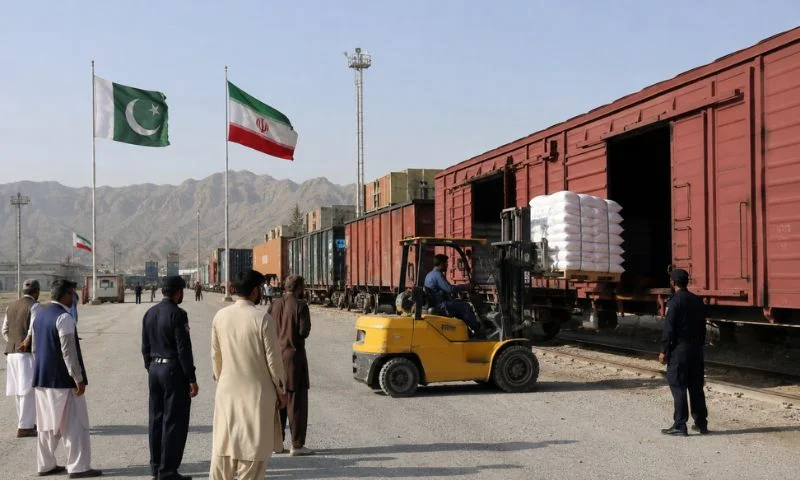
The Federal Board of Revenue (FBR) has declared the Taftan border railway station a Land Customs Station for import and export operations. The decision marks a major step towards expanding formal rail trade between Pakistan and Iran.
The new facility covers 11.75 hectares at the border crossing. It can now handle loading, unloading, customs clearance and the processing of imported and exported goods. The FBR has also defined the station’s geographical boundaries and integrated it into Pakistan’s customs network.
The decision followed a phone conversation between the heads of Pakistan Railways and the Islamic Republic of Iran Railways. Officials later exchanged correspondence seeking the activation of the Taftan railway crossing. The move aims to speed up rail cargo movement and improve bilateral trade. It also supports lower transport costs and smoother customs procedures. According to the FBR notification, the station can handle “loading, unloading, customs clearance and processing of imported and exported goods.” Reliable reports indicate that both countries coordinated closely before taking the step.
Taftan serves as Pakistan’s main land crossing with Iran. Despite its strategic location, the station has operated below its potential for years. Limited infrastructure and the absence of a dedicated railway customs facility slowed cargo movement and discouraged rail based trade.
Faster rail trade expected to reduce costs
Trade experts believe the new customs station will encourage businesses to shift more cargo to rail transport. They say faster customs clearance and organised cargo handling will reduce transport costs and shorten delivery times.
Officials also expect the facility to curb smuggling and undocumented trade. Stronger inspections and better documentation should encourage traders to use formal channels. The station will also strengthen customs oversight and improve revenue collection.
The notification comes under the Customs Act, 1969. It formally recognises Taftan Railway Station as a Land Customs Station for rail freight operations. The decision supports Pakistan’s wider efforts to modernise border trade infrastructure and improve trade facilitation.
Pakistan and Iran continue push for $5 billion trade target
The announcement comes as Pakistan and Iran continue efforts to raise bilateral trade to $5 billion. Leaders from both countries have repeated that goal during recent high level meetings. However, banking restrictions, border infrastructure gaps and logistical challenges have slowed progress.
Officials believe the new customs station will help remove some of those barriers. They expect rail transport to play a bigger role in moving agricultural products, minerals, petroleum products and other commercial goods. Better border facilities should also improve supply chain efficiency and reduce business costs.
The Taftan initiative reflects growing cooperation between Islamabad and Tehran on trade and connectivity. Analysts say stronger rail links and modern customs facilities can increase formal commerce while reducing dependence on informal trade routes. They also believe the project will unlock more economic potential at one of Pakistan’s most important border crossings.