Saudi Arabia’s Delta Energy Saudi has signed an agreement with Pakistan’s Inter State Gas Systems (ISGS) to study energy projects that could involve about $30 billion in investment. The companies announced the agreement on Tuesday, November 17. It sets out how they will evaluate the projects and leaves financing and construction decisions for later.
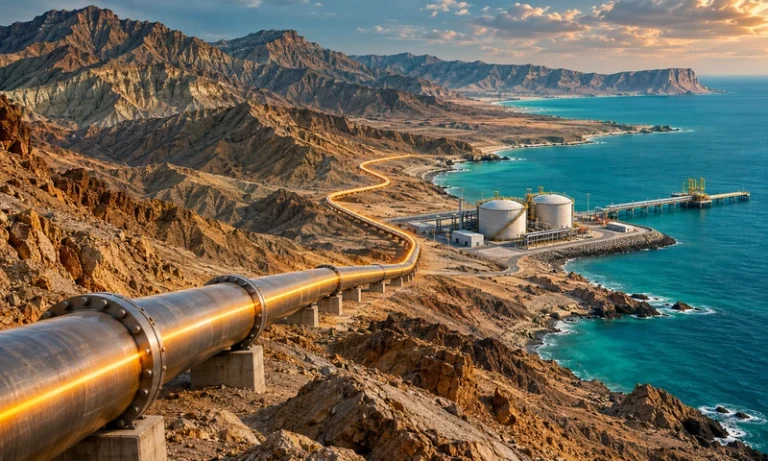
The programme would assess a natural gas pipeline entering Pakistan through its western border and running towards Gwadar. The port sits on the Arabian Sea in southwestern Balochistan. The companies would also examine a possible extension to Pakistan’s eastern border. The study would cover liquefied natural gas (LNG) facilities, gas processing, storage infrastructure and export terminals.
Proposed gas pipeline from Chaman to Fazilka
The programme also envisages a pipeline from Chaman, on Pakistan’s border with Afghanistan, across the country towards the Indian border near Fazilka. Delta Energy called the route a “core strategic commitment”. Taking it forward would require formal engagement and agreements with authorities in both Pakistan and India.
Delta Energy named Afghanistan’s Kashk gas concession and other Afghan resources as potential sources of supply. The company said the programme was separate from the Turkmenistan-Afghanistan-Pakistan-India (TAPI) pipeline and did not depend on Turkmenistan.
Read More: Saudi Arabia’s Vision 2030 Gains Global Attention at the UN
Pakistan’s government outlined a different supply route in its account of the signing. It said the memorandum of understanding would assess a pipeline carrying gas from Turkmenistan through Afghanistan into Pakistan near Chaman. From there, the proposed line would cross Balochistan to Gwadar. The government’s outline includes an LNG terminal at the port and possible expansion to other locations.
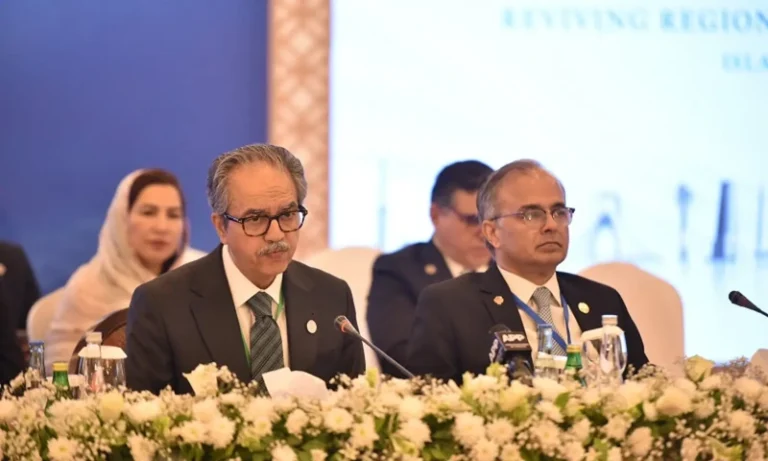
The government put the estimated investment at $25 billion to $30 billion. The Special Investment Facilitation Council hosted the signing, which drew senior officials from the council, the Petroleum Division and both companies. ISGS is a state-owned company under the Petroleum Division, while Delta Energy Saudi is part of Delta International Group.
Pakistan’s other cross-border gas projects
Pakistan has faced years of delays on other cross-border pipelines intended to bring gas into the country. The Asian Development Bank says the separate TAPI project aims to carry up to 33 billion cubic metres of gas annually. Under that plan, a roughly 1,800-kilometre pipeline would carry gas from Turkmenistan to Afghanistan, Pakistan and India.
Read More: Profit Soars 148% as Wafi Energy Confirms Major Board Decision
Gwadar also features in the separate Iran-Pakistan gas pipeline project. In February 2024, Pakistan’s Cabinet Committee on Energy approved work on an initial 80-kilometre section from the Iranian border to Gwadar. The government named ISGS to carry out that work and identified the Gas Infrastructure Development Cess as its funding source.
For the Delta Energy proposal, the source of gas and the scope of any eastward extension remain open. The agreement gives the companies a framework to assess the routes and related facilities. It carries no final investment decision or commitment from either company to finance or build the infrastructure.