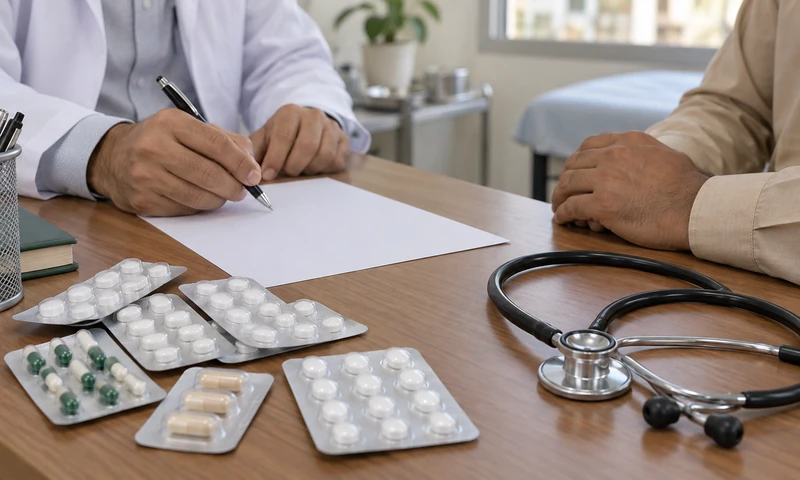
Doctors across healthcare facilities studied in Pakistan prescribed an average of 4.2 medicines per prescription, more than twice the WHO/INRUD benchmark. A new review also found excessive antibiotic use and low generic prescribing.
Health Services Academy (HSA), Islamabad, researchers examined 15 studies published between 2013 and 2024. They covered Punjab, Khyber Pakhtunkhwa, Sindh, Balochistan and Islamabad.
Discover Public Health published the review on September 11. Its averages give each study equal weight, regardless of sample size, rather than representing a nationwide patient survey.
Prescriptions exceed recommended benchmarks
The review compared the 4.2 average with an optimal range of 1.6 to 1.8 medicines. These indicators assess prescribing patterns; individual patients’ treatment needs vary.
A Peshawar tertiary hospital recorded 10.56 medicines per prescription, nearly six times the benchmark’s upper end. Even the lowest figure, from a Bahawalpur emergency department, exceeded the range.
Read More: Doctors Are Secretly Turning to AI Chatbots, But Should Patients Worry?
Doctors prescribed about 25% of medicines by generic name against a 100% target. Some hospitals recorded almost zero, while only two studies exceeded 50%.
Antibiotics appeared in 45% of prescriptions, against a 20% to 26.8% benchmark. Injection prescribing exceeded 27%, compared with 13.4% to 24.1%, and ranged from zero to 98% across facilities.
Only 72% of prescribed medicines came from Pakistan’s essential medicines list, against a 100% target.
Patient pressure and antibiotic misuse
HSA Vice Chancellor Prof Shahzad Ali Khan, a study author, said the pattern stretched from primary clinics to teaching hospitals.
“This is not the problem of one hospital or one city. It is happening across the country, at every level of healthcare,” Prof Khan said.
He said doctors sometimes prescribed antibiotics and injections without appropriate testing.
Read More: Doctors Say Heart Attacks Give Silent Warnings We Often Ignore
“Patients think an injection or an antibiotic will cure them quickly. Doctors, under pressure and short of time, often give in,” he said.
Pakistan has introduced a National Priority Pathogen List to guide action against resistant infections. WHO has cited projections of more than 262,000 resistance-associated deaths by 2050.
DRAP previously directed sellers to require prescriptions from registered doctors for antibiotics. Reports cited Rs135 billion in antibiotic consumption during 2022, with 70% to 80% unnecessary use.
Researchers demand enforcement
Khan linked low generic prescribing to pharmaceutical marketing and perceptions that generic medicines were inferior, a belief he disputed.
“The problem is not a lack of policy. The problem is that the policy is never followed on the ground,” he said.
The review recommends prescription audits, feedback and action against repeat violations. It calls for cooperation among government, drug companies, hospitals and doctors’ associations.
Read More: Doctors Say Many Cancers Are Preventable: New Global Data Explains Why
Khan urged the federal health ministry, provincial departments and medical profession to act together.
“Until this happens, patients will keep taking more medicines than they need, and antibiotics will keep losing their effect against disease,” he said.