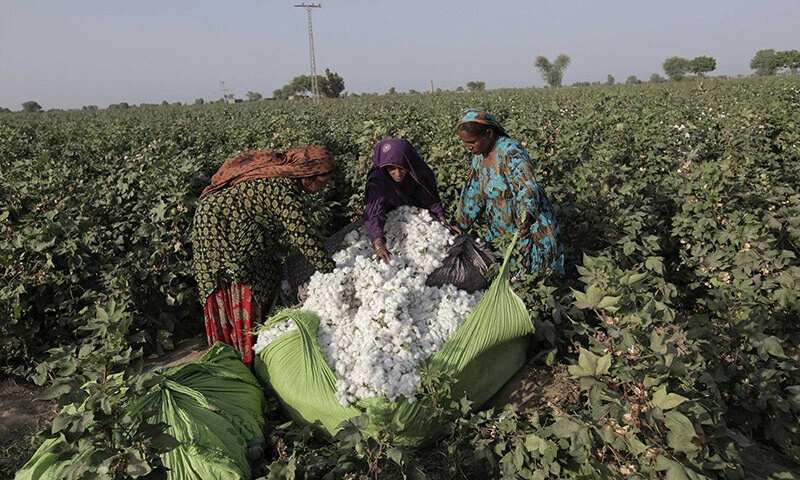
Pakistan’s seed-cotton arrivals rose 32.33% year-on-year to 785,822 bales by July 31, signalling a stronger start to the 2026-27 season. The Pakistan Cotton Ginners Association recorded 593,821 bales during the same period last year. The association released the report on Monday.
The PCGA describes itself as the only body providing “Cotton Arrival Figures in Pakistan on Fortnightly basis.” Its latest report showed sharply different provincial trends, with Sindh driving growth while Punjab posted a slight decline.
Read More: Pakistanis to Face Rs15 per Kg Hike in Ghee and Cooking Oil Prices
Sindh Surge Offsets Punjab Decline
Sindh’s arrivals jumped 66.82% to 487,672 bales despite recent monsoon rains. Punjab received 298,150 bales, down 1.1% from last year. Balochistan recorded 22,900 bales, an increase of 52.67%.
Sanghar alone delivered 398,000 bales. That represented 82% of Sindh’s arrivals and 51% of Pakistan’s total. Farmers in Sindh’s coastal districts planted cotton during February and March, allowing their crop to reach ginning factories earlier.
Cotton Ginners Forum Chairman Ihsanul Haq raised questions about conflicting Punjab estimates. The PCGA placed provincial arrivals at about 298,000 bales by July 31. Punjab’s Crop Reporting Service claimed nearly 435,000 bales by July 30, around 32% above the PCGA figure.
Haq urged authorities to clarify the difference. He also highlighted a steep decline in Bahawalpur Division, once Pakistan’s leading cotton belt. Crop Reporting Service data showed production of only about 17,000 bales there.
Read More: The Climate Threat That Could Shake Pakistan’s Textile Industry
Haq linked the decline to expanding sugarcane cultivation and the concentration of sugar mills. He said this shift had turned traditional cotton areas into a sugarcane belt and weakened domestic supply.
Pest Risks Could Test Early Recovery
Textile mills bought 704,000 bales, while exporters purchased 3,400. Ginning factories held 78,044 unsold bales.
Across Pakistan, 231 ginning factories operated, including 108 in Punjab and 123 in Sindh. Financial and commercial pressures forced some units to reduce or suspend operations.
Haq warned that shrinking cotton acreage was increasing reliance on imported cotton and edible oil. He urged federal and provincial authorities to restrict sugarcane cultivation in designated cotton zones.
Pakistan imported 3.482 million tonnes of palm oil worth $3.785 billion in 2025-26. A year earlier, imports stood at 3.214 million tonnes worth about $3.40 billion.
Read More: The Best Flowers and Vegetables to Plant in July
Sajid Mahmood of the Central Cotton Research Institute said timely sowing, harvesting and better crop management supported Sindh’s performance. However, August and September would offer a clearer picture of final production, he cautioned.
Mahmood warned that prolonged rain and humidity could increase whitefly, pink bollworm and crop diseases. These threats could damage lint quality and reduce yields. He advised growers to improve drainage, monitor pests and consult agricultural extension officials before applying protection measures.
The early increase offers relief after years of weak cotton output. However, experts say weather, pests, acreage losses and conflicting estimates could still reshape the season.