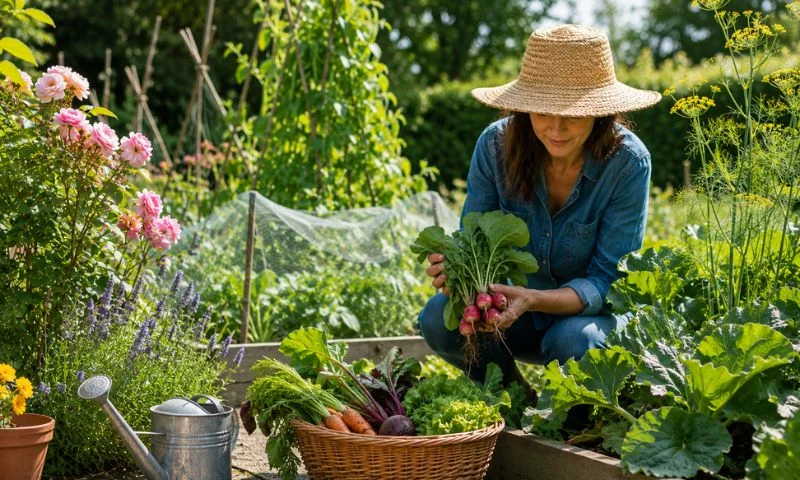
July offers gardeners one of the busiest and most rewarding months of the year, with flower beds bursting into color and vegetable patches producing abundant harvests. Gardening experts say the month is also ideal for sowing new crops, caring for flowering plants and preparing gardens for autumn, while avoiding one common mistake that could weaken next year’s rhubarb harvest.
With long daylight hours and warm soil temperatures, July provides excellent conditions for growing both ornamental plants and vegetables. Experts say gardeners should focus on watering, feeding, weeding and pest control to keep plants healthy during the summer heat.
Flowers and vegetables that thrive in July
Gardener and writer Sarah Raven says July is an excellent time to propagate tender perennials.
“Take cuttings of tender perennials, such as pelargoniums and salvias. They’ll be growing at full tilt and will root very quickly to provide wonderful windowsill plants all winter,” she said.
She also recommends sowing fast growing annuals, including sunflowers, marigolds, nasturtiums and zinnias, while there is still enough time to enjoy flowers later this year.
Sarah advises gardeners to support taller perennials before late summer weather arrives.
“Dahlias are best supported in a triangle of canes, while chrysanthemums perform best when tied in and supported,” she said.
She also recommends cutting back long flowering geraniums after their first bloom to encourage fresh flowers and foliage. Gardeners should deadhead roses after their first flush, feed them with rose fertilizer or well rotted manure and plant salvias or nepetas nearby to help reduce diseases such as black spot.
In the vegetable garden, Emma O’Neill, head gardener at Garden Organic, says July remains one of the best months for sowing crops.
“July is an excellent time to sow some additional vegetables, as well as plant out crops you’ve sown earlier in the year,” she said.
She added, “Both the soil and air temperature are warm, and light levels have increased and extended, which provides great conditions for germination.”
Emma recommends planting beetroot, carrots, radishes, lettuce, turnips, chicory, chard, winter cabbage, leeks, kale, spinach and mustard greens. Gardeners can also continue sowing climbing French beans and peas until the middle of July.
Watering and rhubarb care take priority
Experts say watering should top every gardener’s checklist during July.
Hayden Salt, garden centre manager at Jacksons Nurseries, warned, “Preventing your plants from drying out in the summer heat should be the first item on your agenda in July.”
He encourages gardeners to water deeply rather than frequently to help roots grow stronger and improve drought tolerance.
Hayden also recommends regular deadheading to encourage repeat flowering, feeding hanging baskets daily and checking plants frequently for aphids and other pests. He advises topping up bird baths and garden ponds with fresh water during hot weather.
One important warning concerns rhubarb. Gardeners should stop harvesting stems during July and allow the remaining leaves to stay on the plant.
Leaving the foliage untouched enables rhubarb to store energy for next year’s crop. Continuing to harvest late into summer can weaken the plant and reduce future yields.
The Royal Horticultural Society also advises gardeners to stop picking rhubarb by early to mid summer so crowns can rebuild their food reserves before winter. Combined with regular watering, feeding and careful maintenance, that simple step helps ensure healthier and more productive plants in the following growing season.