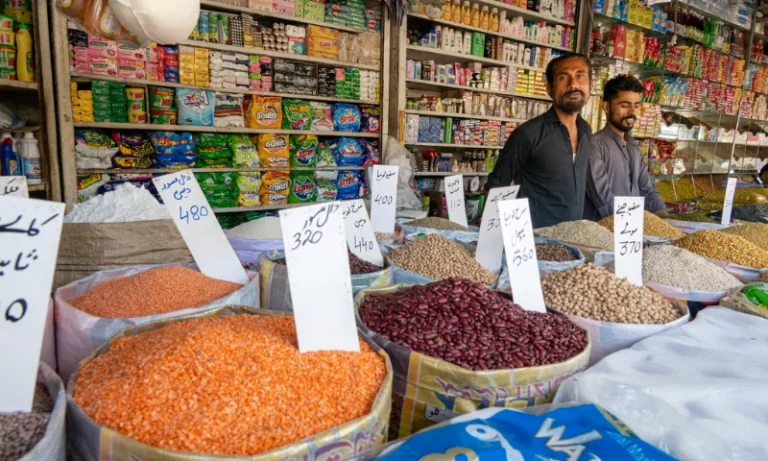
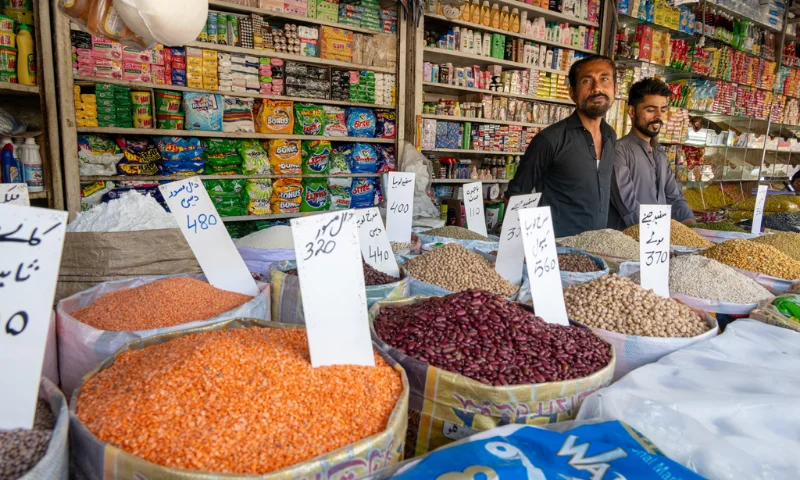
Sunday bazaars established at 16 locations across Rawalpindi in 1980 have lost their official status, leaving vendors and shoppers without government oversight, sanitation or security.
Authorities originally established the weekly markets to provide affordable food and essential items. However, traders now allegedly sell rotten produce amid weak enforcement of standard operating procedures.
Committee Chowk Bazaar Faces Sanitation Crisis
Conditions appear particularly alarming at Committee Chowk, the city’s largest and most central Sunday bazaar. Stagnant sewage, foul-smelling garbage and rainwater cover much of the market ground.
A large drain near the site frequently overflows, while the market has almost no functional drainage. Residents report mosquitoes and suspected dengue larvae around pools of stagnant water.
Read More: Ramadan Retail Boom in Pakistan: Why Markets Explode Every Year
Garbage lies in large piles across the market. Vendors spread sacks, cloth and tarpaulins over the waste before placing vegetables and fruit on top. Other hawkers put stones and sacks in sewage water to create makeshift selling spaces.
The produce often remains exposed to dirty water. Despite these conditions, low-income families and poorly paid workers continue shopping there because the items cost less.
Security and Price Monitoring Withdrawn
The bazaars previously operated under detailed SOPs. Authorities installed entrance barriers and police checkposts. Price magistrates, the price control committee and the assistant commissioner’s office also maintained a presence.
The district withdrew the official status of all Sunday and Friday bazaars in 2025. This decision removed security barriers, police pickets, price monitoring offices and sanitation services.
According to the report, these markets have operated without effective control for around two years. The district administration and sanitation company maintain that cleaning and security no longer fall under their responsibility because the bazaar lacks official status.
The crisis follows earlier waste-management problems at the same location. In June 2026, the Rawalpindi Waste Management Company temporarily shifted waste-transfer operations to Committee Chowk Sunday Bazaar. The company said the arrangement would last seven to 10 days and promised to restore the site as a clean, pollution-free zone.
Families Collect Discarded Food at Night
After trading ends, stallholders leave unsold vegetables and fruit behind. Several families, including women observing purdah, wait until 10pm or 11pm before collecting the discarded food.
By Monday, goats, cows, rats, cats and mongooses feed on the remaining garbage, rotten produce, chicken remains and fish waste. The refuse can remain there for three to four days before decomposing.
Read More: Pakistan Advises Nationals to Avoid Travel to Iran Amid Nationwide Protests
Local residents Sharif Qureshi, Chaudhry Imran and Khawar Iqbal demanded that authorities restore the complete SOPs or close the market. They also called for thorough cleaning after every Sunday bazaar.
Residents blamed the pollution for nose, ear, throat and eye inflammation, as well as tuberculosis, hepatitis, jaundice, malaria, cholera, dengue and cancer. These remain residents’ claims and the report cited no medical assessment establishing those links.
Public-health officials have separately warned that stagnant water provides a major breeding ground for dengue mosquitoes and requires immediate drainage after rainfall.