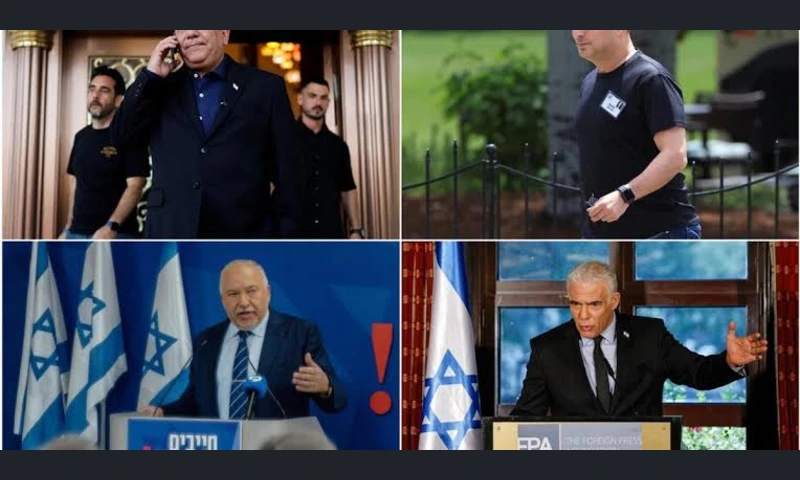
Israeli President Isaac Herzog will announce on Sunday, November 8, whom he will ask to form Israel’s next government. Opposition leader Gadi Eisenkot secured recommendations from 67 lawmakers, against 46 for Prime Minister Benjamin Netanyahu. Seven abstained.
Herzog wrapped up two days of consultations on Thursday. Neither camp won a majority in the 120-seat Knesset on October 27. Netanyahu, a polarising right-wing leader, has led Israel through three years of war. Eisenkot, a former military chief, has promised to restore national unity. Presidents traditionally favour the candidate with more recommendations, but Herzog said rival parties’ vetoes complicate the choice.
“The results of the consultations may appear clear, but the authority vested in me by law is to determine who has the ability to form a government, and that is not entirely clear, given the mutual vetoes between the blocs and within the blocs themselves,” Herzog said.
“I will try to determine this directly and quickly, in personal talks with some of the party leaders.”
Arab parties give Eisenkot the edge
Eisenkot’s Yashar party said “the citizens of Israel have chosen change and expressed a complete lack of confidence in outgoing Prime Minister Netanyahu and his government”. It called for the “immediate establishment of a national emergency government that will begin working for all citizens of Israel”.
The United Arab List and Joint List won a record 19 seats and both backed Eisenkot on Thursday. His bloc holds 48 seats without them. Netanyahu’s bloc counts 53, including United Torah Judaism.
Read More: Trump Prepares Sweeping ICC Sanctions Over Netanyahu Warrant
Israel Beiteinu, part of Eisenkot’s camp, opposes joining a government that depends on Arab parties. Its leader, former Netanyahu ally Avigdor Liberman, cited their refusal to explicitly label Hamas a “terror group”. Both lists have repeatedly condemned the October 7, 2023 attack.
The Arab lists gained seats amid anger at Netanyahu’s government and longstanding complaints of racism and discrimination. Netanyahu has attacked the opposition over possible cooperation with Arab lawmakers. On Wednesday, he alleged “serious suspicions” of foreign election funding and questioned Arab citizens’ loyalty.
Military exemptions complicate coalition talks
United Torah Judaism backed Netanyahu after the previous five elections. This time, the seven-seat party told Herzog “that it has decided not to recommend any member of Knesset to form a government”.
The party and Shas want to preserve military exemptions for religious students. Netanyahu maintained the exemption without putting it into law. Repeated reserve tours in Gaza, Lebanon and Iran have fuelled resentment. Eisenkot wants to end the exemptions. Some allies argue that the arrangement burdens the state. Ultra-Orthodox Israelis make up about 14 percent of the population and have higher birthrates than secular Israelis.
“In whatever government is next formed, our immediate item is sorting out the status of Torah students,” United Torah Judaism lawmaker Isaac Pindrus said.
Observers see the abstention as a warning to Netanyahu and say the party could still join his government. Herzog’s nominee gets 28 days to form a coalition. The president can grant up to 14 more days and turn to another lawmaker if the first attempt fails.