The Pakistan Cricket Board (PCB) has announced sweeping changes to its central contracts system, replacing its long-standing “one system for all” policy with a format-specific model that will assess players on fitness, domestic performances and the unique demands of different formats.
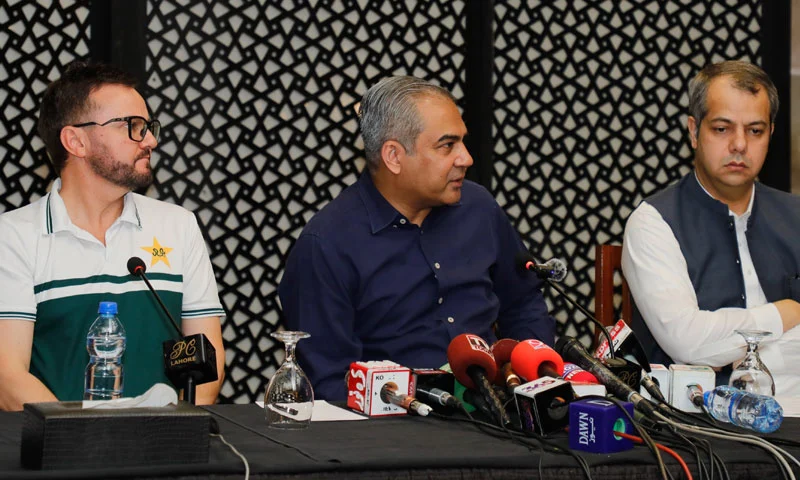
PCB Chairman Mohsin Naqvi unveiled the new framework during a press conference in Lahore on Monday, describing it as a step towards greater transparency and accountability in Pakistan cricket.
The move comes as the board seeks to address concerns over player evaluations and improve the national team’s performances in major international tournaments.
Speaking to reporters, Naqvi said the selection committee faced a significant task in reshaping Pakistan cricket and ensuring contracts reflected merit and performance.
“If this work had been going on for 70 years, then it was not in my knowledge,” Naqvi said when discussing the previous contracts system.
He added that the PCB was reviewing performances over the past five years, including Test and domestic cricket records, to create a more balanced assessment process.
The chairman stressed that the board was not relying on artificial intelligence but rather on objective data and measurable indicators.
“The new model should not be confused with artificial intelligence; instead, it should be appreciated,” he said.
Domestic Cricket and Performance Data to Play Bigger Role
Naqvi acknowledged that Pakistan’s performances in major tournaments remained a concern despite stronger displays in bilateral series.
“It is absolutely our responsibility to improve cricket. Our cricket team’s performance is better in series, but in tournaments, our team collapses. Work is now being done on this,” he said.
The PCB chief revealed that domestic cricket data would become a key component of the contracts process.
He said previous contracts often triggered debates over why certain players received higher categories than others.
“Earlier, there used to be debate on central contracts over why someone got B and why someone got C,” Naqvi said.
“Now, 85% of the central contract has gone into the hands of the computer.”
According to Naqvi, the system will use performance metrics, fitness standards and domestic records to support decision-making and reduce subjectivity.
He also confirmed that the PCB remained in contact with former cricketers, including Younis Khan, as part of broader consultations on improving the game.
Format-Specific Model Reflects Modern Cricket
In an official statement, the PCB said the changes reflected the realities of modern cricket, where Test specialists and T20 players often follow entirely different career paths.
“Under the leadership of Chairman Mohsin Naqvi, the PCB has announced the introduction of a new and unique structure by making significant changes to its players’ central contracts system,” the board said.
The PCB argued that the previous model no longer suited an era where players specialise in specific formats and face different workloads.
According to the board, Test cricket, One-Day Internationals and T20 cricket require different skill sets, physical demands and professional priorities.
“While most cricket boards around the world still place all players in the same categorisation and pit a Test specialist against a T20 franchise player for the same grade, the PCB, under the oversight of Chairman Naqvi, has decided to introduce a model that acknowledges the distinct identity and priorities of each format,” the statement added.
Cricket observers say the reform could become one of the PCB’s most significant administrative changes in recent years, particularly as international cricket continues to evolve and player specialisation becomes increasingly common.