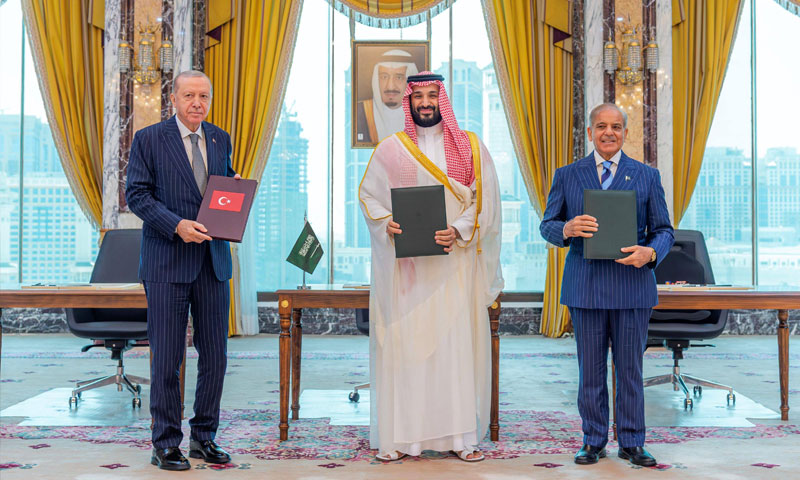
Saudi Arabia, Turkiye and Pakistan have created a formidable new defence grouping after their leaders signed the Mecca Joint Defence Agreement on August 7.
Saudi Crown Prince Mohammed bin Salman, Turkish President Recep Tayyip Erdogan and Prime Minister Shehbaz Sharif signed the pact in Mecca. It pledges collective deterrence and treats an armed attack on one member as an attack on all three.
Pakistan has stressed that the agreement is “purely defensive in nature” and is not directed against any particular country. Turkiye has made a similar clarification amid heightened tensions involving Iran and Israel.
Read More: Pakistan, Saudi Arabia and Turkiye Sign Historic Defence Pact
The three states bring very different strategic strengths. Saudi Arabia offers financial resources and regional influence. Turkiye has NATO’s second-largest military, while Pakistan is the only nuclear-armed Muslim country.
Combined Military Strength Tops 1.4 Million Personnel
According to the 2026 Global Firepower Index, the three countries have about 1.39 million active military personnel combined.
Pakistan leads with 660,000 active personnel. Turkiye has 481,000 and Saudi Arabia has 247,000.
Their air forces operate 3,415 aircraft in total. Pakistan has 1,397 aircraft, Turkiye 1,101 and Saudi Arabia 917.
The three militaries also field about 6,046 tanks and more than 179,000 armoured vehicles. Pakistan has 2,677 tanks, followed by Turkiye with 2,284 and Saudi Arabia with 1,085. Their combined naval strength stands at 344 assets, including 33 frigates, 24 corvettes and 22 submarines.
Combined defence spending reaches roughly $124.4 billion. Saudi Arabia accounts for about $63.99 billion, Turkiye $51.4 billion and Pakistan $9.1 billion, according to Global Firepower.
Security analyst Andreas Krieg said their capabilities could complement each other.
Read More: Turkiye to Begin Offshore Drilling in Pakistan for Oil and Gas
“Saudi Arabia contributes capital, geography, infrastructure and political convening power. Turkiye contributes an increasingly sophisticated defence-industrial base, drones, missiles, sensors, electronic warfare, naval systems and NATO-derived military expertise,” he said.
Pakistan, meanwhile, contributes manpower, operational experience, defence production and nuclear capability.
Pact Could Expand Beyond Three Countries
The agreement also creates opportunities for deeper defence-industrial cooperation. Saudi Arabia could gain alternative suppliers, while Pakistani and Turkish manufacturers could gain greater access to Saudi investment.
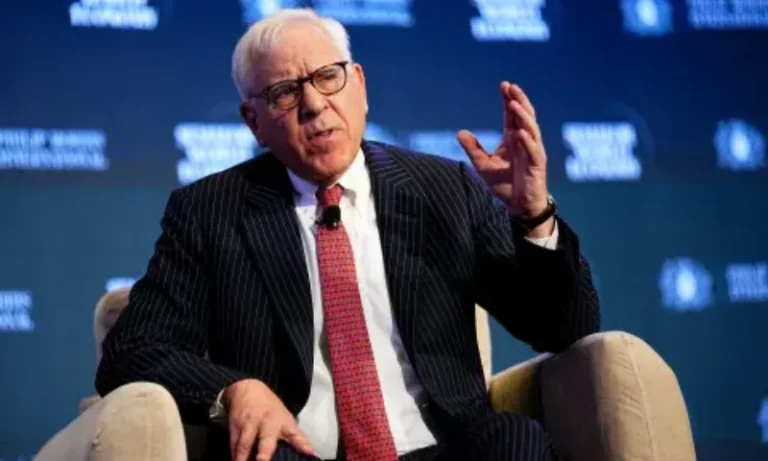
Zaid M Belbagi of Hardcastle Advisory said: “Pakistan is a recipient of US aid, Saudi Arabia is the largest foreign buyer of US military equipment, and Turkiye is NATO’s second-largest army after the United States – so the spectre of the US within this agreement is quite interesting.”
Krieg described the wider trend as a move towards stronger links among regional powers. “The old model was overwhelmingly hub-and-spokes, with Washington at the centre and individual states looking primarily to the United States for security. What is emerging now is horizontal connectivity between regional powers,” he said.
Read More: Saudi Arabia Introduces One-Stop Tourist Visa for Seven Countries
The pact may also expand. Turkish Foreign Minister Hakan Fidan has identified Egypt as a potential member once technical issues are resolved. Reuters reported that the agreement will establish a ministerial committee and a general secretariat in Saudi Arabia.
However, analysts say Cairo may seek safeguards for its existing alliances. Karim Elgendy of Chatham House said Egypt could join only if the arrangement protects its ties with Washington and preserves its freedom over military decisions.