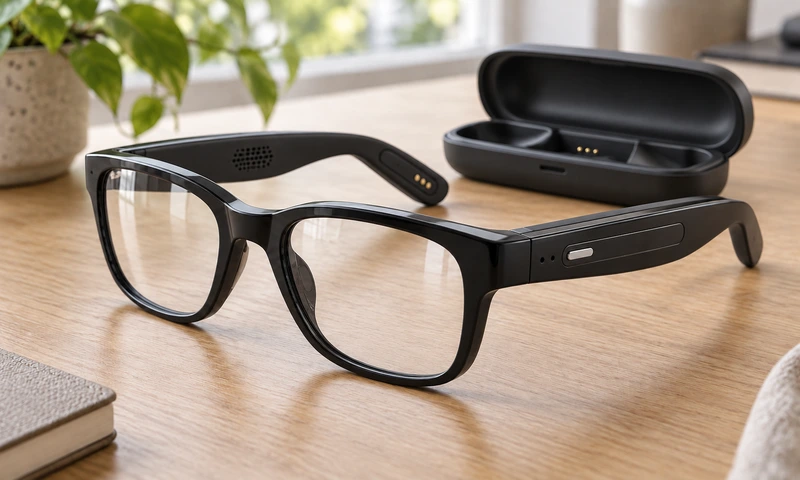
Meta reportedly plans to unveil camera-free smart glasses at Connect 2026, offering an alternative as concerns about covert recording trigger restrictions.
The glasses would retain microphones and speakers, allowing users to access Meta AI and the company’s recently launched Muse AI agent. A button that activates recording on existing models would instead start an AI conversation.
Removing cameras could allow slimmer temples, greater comfort and a lower price. However, the assistant would lose the ability to see the wearer’s surroundings and answer questions about visible objects.
The reported launch plans remain unconfirmed.
Recording safeguards face scrutiny
Meta’s existing camera-equipped glasses feature a white capture LED that flashes for photographs and pulses during video recording. Models after the original 2021 Ray-Ban Stories use a sensor to detect attempts to cover the indicator and block capture.
However, bystanders may overlook the light outdoors or not realise the glasses contain cameras. Reports of filming without consent have fuelled criticism, including the labels “pervert glasses” and “creep glasses”.
A market for physically disabling the LED has also emerged. Meta has introduced firmware updates that disable cameras when the glasses detect tampering, although attempts to bypass safeguards continue.
Meta says fewer than 0.1% of its sold glasses have undergone tampering. Against sales exceeding 10 million with partner EssilorLuxottica, 0.1% represents roughly 10,000 devices, although the actual number remains unspecified.
The company also removes advertisements for tampering services and says it can ban accounts or pursue legal action.
Restrictions spread across venues
Some gyms, including Planet Fitness, prohibit smart glasses even when users are not recording.
Bars and clubs across the United States, Britain and Canada have introduced restrictions. New York’s BASEMENT also prohibits carrying them in bags. Wetherspoons allows people to wear them but bars recording customers or staff without permission.
Royal Caribbean and Carnival allow the devices aboard but restrict use in casinos, toilets, changing rooms and other sensitive locations. MSC prohibits them throughout ships’ public areas.
Courts in England and Wales, alongside US court systems including New York’s, require visitors to surrender the glasses. New York’s rules explicitly cover prescription pairs.
Restrictions also extend to DEF CON, the Body Movements festival and Oslo schools. SAT rules prohibit smart glasses during tests and breaks, subject to approved accommodations. The US Air Force prohibits wearing them in uniform.
Meta promotes awareness as backlash continues
Meta has launched videos and posters explaining the recording indicator. The campaign addresses both unfamiliarity with the light and the misconception that its glasses record continuously. Battery and heat constraints prevent continuous, all-day recording on current models.
The controversy does not establish that most owners misuse the devices. Users also rely on them for music, calls, hands-free photography and AI assistance.
Camera-free models could appeal to buyers seeking those functions without the social concerns surrounding wearable cameras.
Separately, Meta could demonstrate its next-generation headset with full-body Codec Avatars at Connect. That potential demonstration also remains a reported plan.