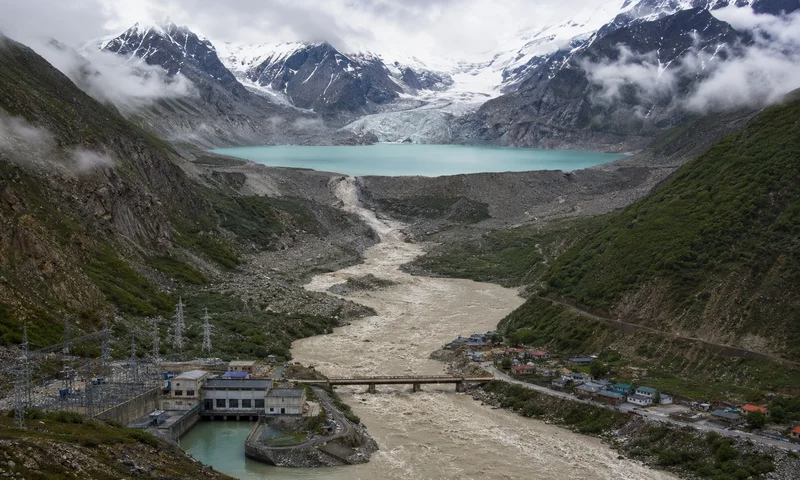
The Himalayan region faces escalating glacial flood risks that could endanger millions, damage hydropower networks and make heavily populated riverbanks uninhabitable, a senior United Nations official has warned.
The warning followed a devastating flood in Nepal last week that killed more than 1,000 people. Parts of a glacier near the Langtang Lirung mountain peak collapsed onto the valley floor. The impact triggered a landslide and sent a destructive flood wave down the Trishuli River.
Millions exposed as glacial lakes expand
“Technology cannot move fast enough to prevent loss along these massive river systems that catch the overflow of the glacier lakes,” Kanni Wignaraja, a UN assistant secretary-general, told Reuters.
Wignaraja, who also leads the United Nations Development Programme in Asia and the Pacific, said the population at risk “goes into the millions”. She based that assessment on updated data compiled by UNDP and partner organisations in June.
Researchers identified 47 potentially dangerous glacial lakes across Nepal, China and India in 2020. A joint UNDP and International Centre for Integrated Mountain Development inventory located 25 in China, 21 in Nepal and one in India. It placed 42 lakes in the Koshi basin, three in Gandaki and two in Karnali. Experts now estimate the actual number is significantly higher.
Climate change raises flood danger
A glacial lake outburst flood, or GLOF, occurs when meltwater collects behind ice, rock or moraine. Rising pressure can break or overflow that natural barrier, releasing water and debris downstream with little warning.
That process differs from the glacier collapse behind the latest Nepal disaster. However, UN officials say both dangers are rising. Climate change is accelerating glacier melt, loosening rock and adding pressure to unstable lake barriers.
The Himalayas are also geologically young and prone to tectonic movement, Wignaraja said. Such shifts can suddenly destabilise glaciers or breach lake barriers.
ICIMOD reported in 2023 that roughly 200 glacial lakes across the wider Hindu Kush Himalayan region were considered dangerous. It warned that the region’s glaciers could lose up to 80 percent of their current volume by 2100 under existing emissions trajectories.
Nepal faces difficult choices
Nepal depends heavily on glacier-fed water and hydropower income. Wignaraja said the country now faces “some very, very hard choices”, because many riverbank residents cannot afford to relocate uphill.
UNDP said the latest flood destroyed 15 major hydropower stations under construction, alongside operating facilities. Engineers can strengthen electrical grids and power stations, but extreme events may overwhelm available protection.
Wignaraja described the disaster as a “mud and ice tidal wave”. “There’s no construction that could have stopped this,” she said.
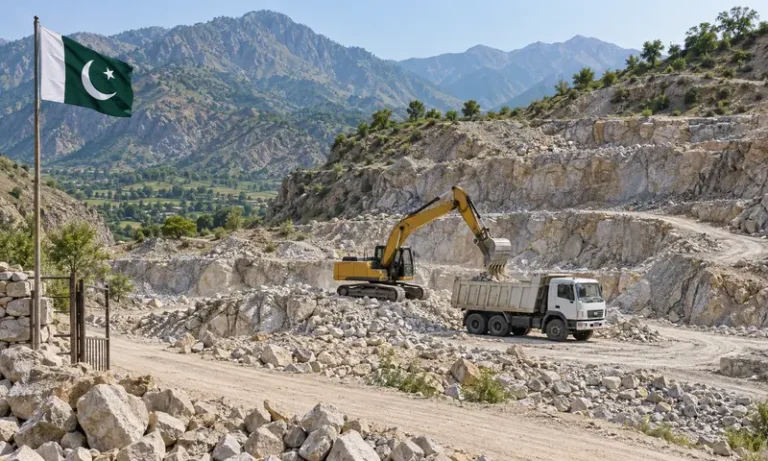
The wider threat also reaches Pakistan. UNDP says nearly 3,000 glacial lakes have formed in the country’s north, while 33 are considered extremely dangerous. The findings underline the need for cross-border monitoring, early warning systems and climate adaptation funding across the Hindu Kush Himalaya.