
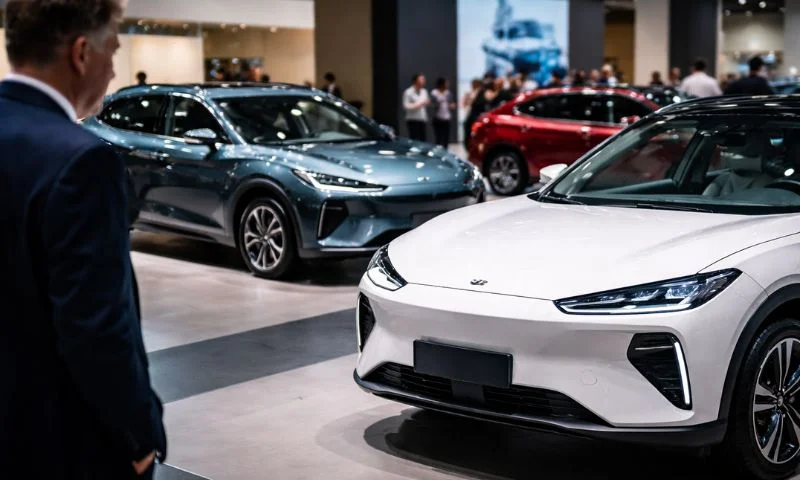
Ford Motor Company’s chief executive Jim Farley has issued a stark warning over the growing dominance of Chinese electric vehicle makers, saying their rapid expansion and cost advantage could severely damage the United States’ automotive industry.
Speaking in a recent interview, Farley urged policymakers to block Chinese-made electric vehicles from entering the US market, arguing that the stakes go beyond competition and touch on jobs, manufacturing strength and national security.
“We should not let them into our country,” he said. “Manufacturing is the heart and soul of our country, and for us to lose that to those exports would be devastating.”
Cost gap fuels growing concern
Farley’s warning reflects a widening gap between US and Chinese electric vehicle production. American-made EVs are often significantly more expensive due to higher labour costs, stricter environmental standards and complex regulatory requirements.
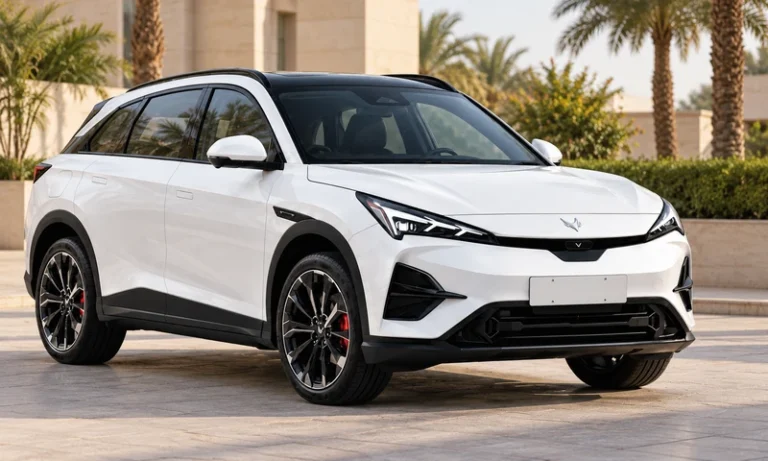
In contrast, Chinese automakers benefit from substantial state backing. Government subsidies, low-cost financing and large-scale industrial support allow companies such as BYD and Nio to produce vehicles at much lower prices.
This disparity has enabled Chinese brands to offer feature-rich electric cars at a fraction of the cost seen in Western markets. Some models in China are priced under $10,000, while comparable US vehicles often exceed $40,000.
Farley stressed that “there is no way this is a fair fight,” pointing to structural disadvantages faced by American manufacturers.
Global expansion of Chinese EV makers
Chinese carmakers have rapidly expanded their footprint beyond domestic markets, gaining ground in Europe, South America and parts of Asia. Industry data shows China has become the world’s largest exporter of vehicles, driven largely by its EV sector.
Farley has previously warned that China’s manufacturing capacity alone could supply the entire North American market, raising fears of widespread disruption to US-based production.
Analysts say this expansion is not only about cost but also technology. Chinese EVs are increasingly competitive in areas such as battery efficiency, digital interfaces and fast charging, putting pressure on legacy automakers to adapt.
National security and data concerns
Beyond economic competition, Farley also highlighted potential security risks associated with connected vehicles. He noted that modern EVs are equipped with multiple cameras and sensors that could collect sensitive data.
These concerns have become part of a broader geopolitical debate over technology, data privacy and supply chain dependence, particularly as tensions between the United States and China continue to shape trade policy.
Industry at a crossroads
The warning comes at a critical moment for the global auto industry, as companies race to transition from internal combustion engines to electric mobility.
US automakers have invested billions in EV development but continue to face profitability challenges, supply chain constraints and uncertain consumer demand. Meanwhile, Chinese firms have scaled production rapidly, supported by strong domestic demand and government policy.
Experts say the outcome of this competition could reshape the global automotive landscape, determining where future manufacturing jobs are located and which countries dominate next-generation transport technologies.
For policymakers, the debate now centres on whether to protect domestic industries through tariffs and restrictions or allow market competition to play out.
Farley’s remarks underscore the urgency of that decision, warning that the consequences could be long-lasting for America’s industrial base.