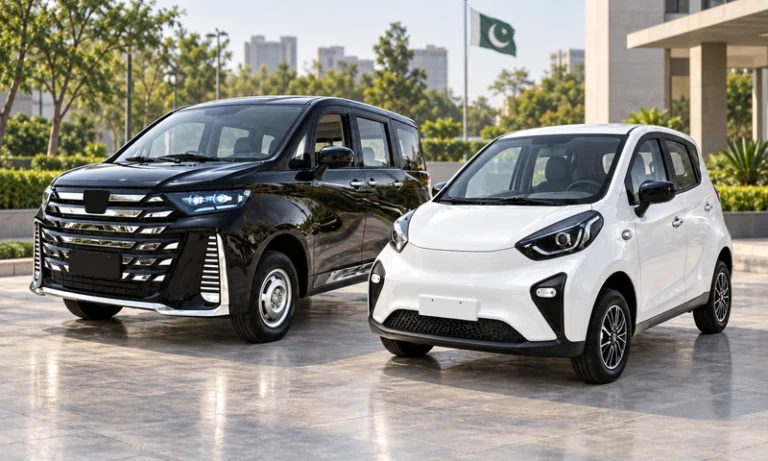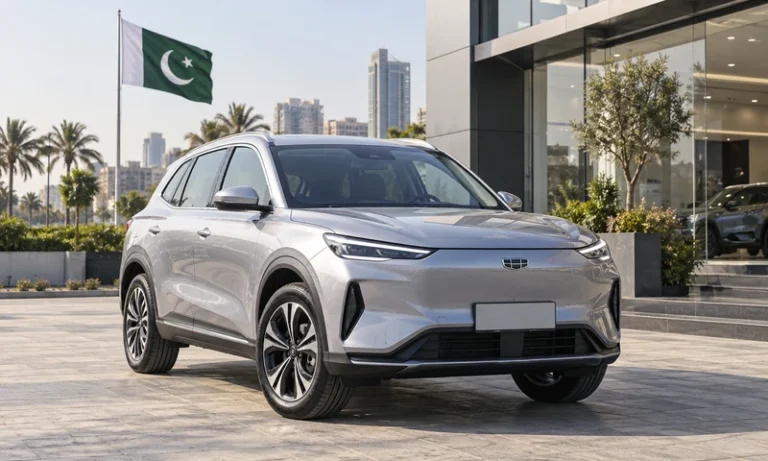

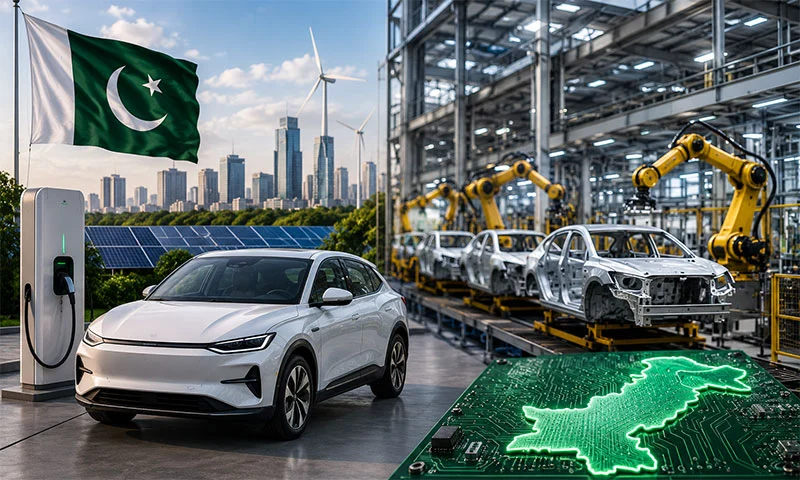
Pakistan’s push towards electric mobility gained momentum as Finance Minister Muhammad Aurangzeb reaffirmed government support for electric vehicle manufacturing and localisation during a meeting with senior executives from Chinese automotive giant BYD and its local partner, Mega Motor Company (MMC).
The meeting comes as BYD accelerates work on its first manufacturing facility in Pakistan and expands plans for electric vehicle production, charging infrastructure and technology transfer in one of South Asia’s fastest-growing automotive markets.
According to the Ministry of Finance, the delegation included Liu Xueliang, General Manager of BYD Asia Pacific Auto Sales Division, and Aly Khan, Chief Executive Officer of Mega Motor Company (Private) Limited.
Aurangzeb welcomed the delegation and “appreciated BYD’s growing footprint in Pakistan, underscoring the importance of strengthening business-to-business collaboration as a key pillar of the evolving Pakistan-China economic partnership”.
The minister said, “Pakistan attached high priority to attracting technology-driven investments and expressed confidence that the BYD-MMC joint venture would contribute to industrial development, technology transfer, job creation and export growth”.
Local Manufacturing Project Progressing
The meeting highlighted progress on BYD’s local manufacturing project, which was announced in 2024 when the world’s largest electric vehicle producer entered Pakistan through a partnership with MMC, a subsidiary of Hub Power Holdings.
Liu briefed the minister on BYD’s operations and future plans in Pakistan. According to the ministry, he highlighted progress in introducing new energy vehicle technologies to the local market through the partnership with MMC.
He also appreciated government support for the EV sector and informed the meeting that construction of the company’s manufacturing facility was progressing according to schedule.
The delegation outlined plans to expand BYD’s product portfolio, increase localisation, introduce advanced charging technologies and strengthen Pakistan’s EV ecosystem through investment, technology transfer and capacity building.
Pakistan’s EV market remains small compared with regional competitors, but industry analysts expect rapid growth as vehicle manufacturers expand offerings and the government pushes cleaner transportation policies. According to the International Energy Agency, global EV sales exceeded 17 million units in 2024, reflecting strong momentum in the shift towards electric mobility.
Pakistan Eyes Regional EV Hub Status
The delegation told the minister that “Pakistan had growing potential as a market for new energy vehicles and outlined a long-term vision of positioning the country as a regional hub for EV manufacturing and exports”.
Aly Khan said Pakistan occupied a strategic position in BYD’s global expansion plans and reiterated the joint venture’s commitment to long-term investment.
He briefed the meeting on the manufacturing project and outlined a phased localisation roadmap aimed at increasing local content through engagement with domestic vendors and suppliers.
Aurangzeb said global trends pointed towards an accelerating transition to electric mobility and reiterated the government’s commitment to facilitating investments that support technological advancement, sustainable industrialisation and energy efficiency.
He added that Pakistan’s improving macroeconomic fundamentals and stronger external sector position had created a conducive environment for productive investment and industrial expansion.
The finance minister encouraged the delegation to accelerate efforts towards local assembly, manufacturing and charging infrastructure development, stressing that a robust charging network would play a critical role in speeding up electric vehicle adoption across the country.
Participants also discussed the future role of electric vehicles and plug-in hybrid electric vehicles (PHEVs) in Pakistan. The BYD delegation shared international experience on EV market development and highlighted the complementary role of PHEVs during the transition phase, particularly in countries where charging infrastructure is still developing.
The meeting also explored opportunities created by Pakistan’s rising adoption of solar energy and potential synergies between renewable power and electric mobility.
Both sides reaffirmed their commitment to strengthening collaboration in electric mobility, local manufacturing, technology transfer, skills development and sustainable transportation, with the shared objective of positioning Pakistan as a leading regional destination for new energy vehicle production and innovation.