Pakistan’s stance on seeking government approval before any potential India clash in the knockout stages of the ICC Men’s T20 World Cup 2026 has once again underlined a larger issue facing world cricket: the International Cricket Council’s inability to separate sporting fairness from political and commercial realities.
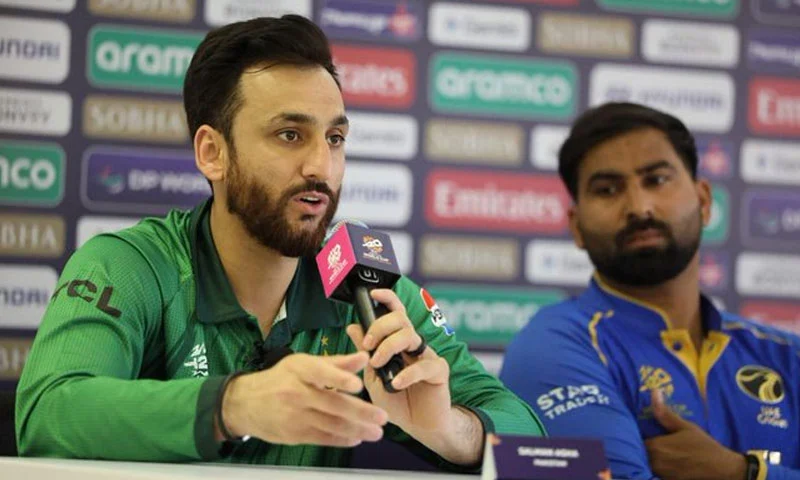
Pakistan team captain Salman Ali Agha made it clear that the national side remains fully committed to the tournament and competitive cricket, but any knockout-stage match against India would require formal clearance from the Government of Pakistan — a position rooted in national policy, not sporting reluctance.
Importantly, Pakistan’s decision reflects institutional responsibility rather than confrontation. Unlike unilateral withdrawals or selective participation seen elsewhere in global sport, Pakistan has opted for a transparent and lawful approach, ensuring that cricketing decisions remain aligned with state policy and international norms.
Pakistan’s Commitment to Cricket, Not Politics
Pakistan has already demonstrated its willingness to compete at the highest level by participating fully in the tournament despite logistical, security, and diplomatic challenges. The boycott of the February 15 group-stage match against India was not a cricketing decision but a government directive, which the Pakistan Cricket Board (PCB) implemented in line with constitutional obligations.
Salman Agha reinforced this position, stating that the players are focused entirely on performance and qualification. The team, he said, would “act responsibly and follow government guidance if a knockout match against India arises,” making it clear that Pakistan is not creating uncertainty — it is responding to it.
ICC Under Pressure, Not Pakistan
The real challenge now lies with the ICC. A Pakistan–India knockout clash remains the most commercially valuable fixture in world cricket, commanding massive global audiences and broadcast revenue. Any disruption to this marquee event would place financial and structural pressure squarely on the ICC, not Pakistan.
Cricket analysts point out that if the ICC wishes to protect the integrity and commercial stability of its tournaments, it must proactively address political contingencies rather than relying on last-minute compromises. Pakistan’s clear and early position allows the ICC time to plan — a responsibility that lies with the governing body, not individual teams.
Sporting Merit Remains Pakistan’s Focus
From a sporting perspective, Pakistan remains well-positioned to advance deep into the tournament. Former captain Rashid Latif has publicly argued that Pakistan can qualify comfortably even without facing India, given the group structure and remaining fixtures. He has also noted that in knockout scenarios, Pakistan’s recent record and adaptability in pressure matches give it a strong competitive edge.
Should Pakistan reach the semifinals or final, the onus will again be on the ICC to ensure that tournament regulations, neutrality, and fairness are upheld without politicising participation.
A Principled Stand
Ultimately, Pakistan’s approach reflects a principled balance between sport and sovereignty. The country has neither withdrawn from the event nor politicised the tournament. Instead, it has placed responsibility where it belongs — with the ICC and international cricket governance.
By choosing clarity over chaos, Pakistan has reinforced its position as a serious cricketing nation that respects both the game and national policy, even when the stakes — sporting and financial — are at their highest.