


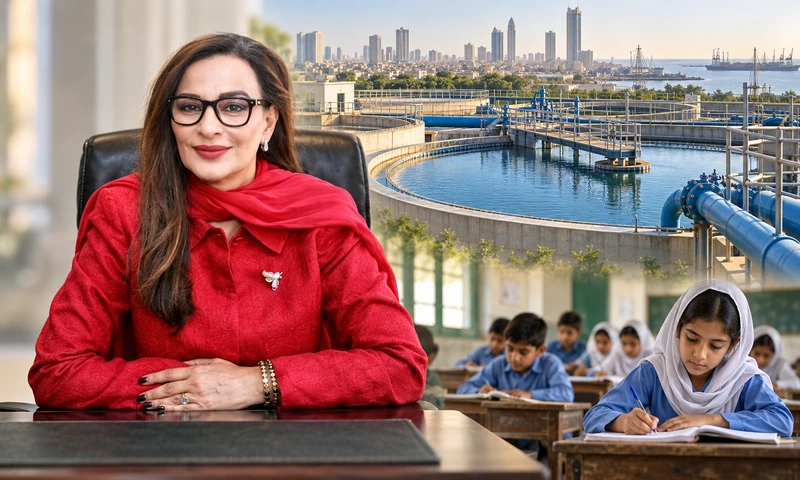
Senator Sherry Rehman on Tuesday urged Pakistan to turn its Sustainable Development Goals commitments into investments that improve everyday lives.
Addressing the National SDGs Investment Fair 2026, she called for measurable progress on education, poverty, water security and climate resilience.
“When we talk about the SDGs or development, too often they are seen as a box to tick off.”
Rehman cited 26 million out-of-school children, 39.5 percent multidimensional poverty and 55 percent of the population lacking safe drinking water. She put Pakistan’s population above 259 million, making it the world’s fifth-most populous country.
She also cited 17.7 percent acute malnutrition, above the WHO emergency threshold, and stunting among around 40 percent of under-fives. These figures underscored the urgency of investment, she said.
Pakistan ranks 106th among 123 countries in the 2025 Global Hunger Index, which classifies its hunger level as serious.
Rehman thanked UNDP for connecting investors with development projects across jurisdictions. She said Pakistan needed institutional, regulatory and financial structures that could turn priorities into viable investments.
UNDP’s SDGs Plus Programme reports developing a $7.9 billion investment pipeline for climate and development sectors. Its work includes provincial partnerships and innovative financing.
Rehman identified public-private partnerships as a major implementation route amid pressure on government resources. She said the finance minister had recognised Sindh’s approach to bringing both sectors together.
Highlighting Sindh’s new Karachi wastewater treatment and reuse plant, she urged investment in recovering water for productive use. Such projects could strengthen water security and urban resilience while sharing risks.
She urged businesses to apply environmental, social and governance standards alongside corporate social responsibility.
“This is not simply about creating a bridge for one project; it is about creating the plumbing for future projects and future PPPs.”
Rehman said governments must provide policy certainty, credible regulation and financial planning as climate risks unsettle investors.
The 2022 floods caused more than $30 billion in combined damage and economic losses, according to the post-disaster assessment. This included $14.9 billion in damage and $15.2 billion in losses.
She also urged investors to support smaller projects without allowing trials to continue indefinitely.
“Pilots are essential, but they have to have a pathway to scale.”
Projects needed plans for revenue, maintenance, climate resilience and social benefits five or ten years after initial funding, she said. Institutional support, political ownership and financial credibility would determine whether announcements produced lasting results.
Rehman linked poverty, hunger, education, water, waste, energy and employment, urging investment strategies that address these connections.
She cited estimates that narrowing the gender participation gap could increase Pakistan’s GDP by up to 60 percent.
“If we invest in water, we protect health. If we invest in education, we build human capital. If we invest in women, we expand the economy. If we invest in resilience, we protect future growth. That is what the SDGs should mean in practice.”

























