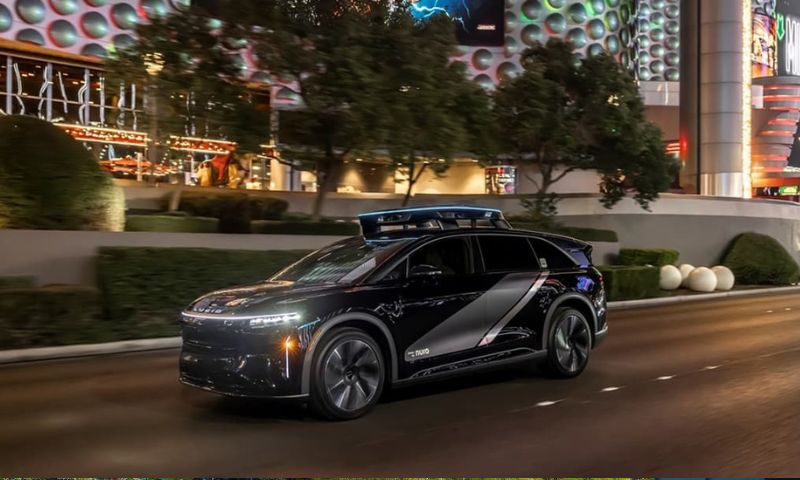
A major shift in autonomous transportation took center stage at CES 2026 in Las Vegas, where Uber, Lucid Motors, and Nuro revealed a new electric robotaxi designed to bring driverless rides to cities later this year. This collaboration aims to combine premium EV design, advanced autonomy, and ride-hailing reach in one package — positioning itself directly against competitors like Tesla’s Cybercab and Waymo.
The robotaxi is built on Lucid’s Gravity SUV platform, a spacious electric vehicle that can seat up to six passengers with room for luggage. Uber has crafted a user-friendly in-cab experience, including interactive screens for controlling climate, music, and viewing trip progress.
Unlike traditional ride-hail cars, this robotaxi uses Level 4 autonomous technology powered by Nuro’s self-driving system and Nvidia’s Drive AGX Thor compute platform. Cameras, lidar and radar sensors mounted throughout the vehicle — including a distinctive roof “halo” array — help the car perceive its surroundings and plan safe routes.
Testing is already underway. Prototypes have been running on public roads in the San Francisco Bay Area since December 2025, supervised by trained operators as part of validation before commercial launch. Uber plans to begin rolling out the service in the Bay Area later in 2026.
One of the biggest differences between this new system and rivals lies in design and strategy. Uber’s robotaxi emphasizes interior comfort and user interaction, whereas many competitors focus primarily on scalability. For example, Tesla’s Cybercab — a fully autonomous taxi concept — prioritizes efficiency and high production potential but carries fewer passengers and lacks in-cab user control.
Meanwhile, Waymo’s service has been operating fully driverless in several U.S. cities, building a reputation for safety with lidar-based perception systems and a growing rider network. This experience gives Waymo a lead in real-world autonomous operations, but Uber’s approach could appeal to users who value comfort and brand familiarity.
Uber’s plan could also impact the broader ride-hailing market. By integrating robotaxis into its platform, the company hopes to reduce operational costs, lower ride prices over time, and offer a scalable alternative to traditional driver-dependent services. The partners have spoken about deploying tens of thousands of vehicles globally once full production begins.
As the robotaxi race heats up, passengers may soon see fully autonomous rides in major cities, and the experience will extend far beyond simple point-to-point travel. With safety monitoring, advanced sensors, and connected interfaces, users may feel confident stepping into a future where cars drive themselves.