
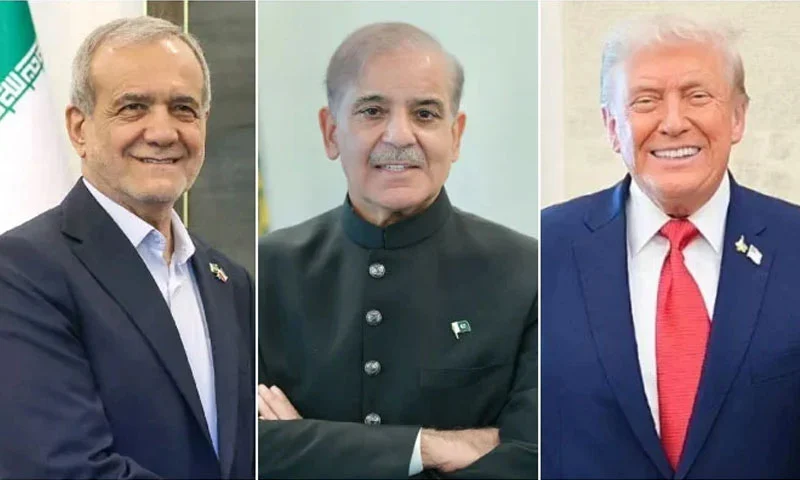
Prime Minister Shehbaz Sharif announced on Monday that the United States and Iran had reached a peace agreement following months of diplomatic engagement, marking a major breakthrough in efforts to end a conflict that has destabilised the Middle East and disrupted global energy markets.
In a post on X, the prime minister said both sides had agreed to the “immediate and permanent termination of military operations on all fronts, including Lebanon”, with an official signing ceremony scheduled to take place in Switzerland on June 19.
The announcement came hours after US President Donald Trump declared that negotiations had concluded successfully.
“The Deal with the Islamic Republic of Iran is now complete,” Trump wrote on Truth Social around 5:30pm ET on Sunday.
Pakistan played a key mediation role during the negotiations. Shehbaz thanked Qatar for facilitating dialogue and helping create conditions that led to the agreement.
The premier also praised Saudi Arabia and Turkiye for what he described as their “immense contributions” to the diplomatic effort.
He said mediators would now oversee a series of meetings aimed at preparing for technical discussions and the formal signing ceremony in Switzerland.
The agreement follows an Israeli strike on Lebanon on Sunday that drew criticism from both Iran and Trump and threatened to complicate ongoing negotiations.
Strait of Hormuz to Reopen as Ceasefire Begins
A major element of the agreement involves the reopening of the Strait of Hormuz, one of the world’s most important energy shipping routes.
The waterway has faced severe disruptions for months as tensions escalated between Washington and Tehran.
Trump said the strait would reopen on Friday following the signing of the agreement and announced that the United States would end its blockade of Iranian ports.
“Ships of the World, start your engines. Let the oil flow!” Trump wrote.
In another post, Trump described the accord as a “great deal” that would bring peace and security to the wider region.
He also claimed that previous US administrations had failed to achieve a similar breakthrough and said regional leaders had finally found a US president capable of helping secure lasting peace.
According to Iranian Deputy Foreign Minister Kazem Gharibabadi, negotiators will use a 60-day ceasefire period to pursue a broader agreement.
Those talks are expected to focus on sanctions relief, regional security issues and the future of Iran’s nuclear programme.
Sources familiar with negotiations previously told Reuters that Tehran’s nuclear activities would form a key part of follow-up discussions.
Regional Leaders Welcome Agreement
Qatari Prime Minister Sheikh Mohammed bin Abdulrahman bin Jassim Al Thani welcomed the agreement and thanked Pakistan and other regional partners for helping facilitate progress.
In a statement posted on X, he said Qatar hoped all parties would engage in future negotiations in a “positive and constructive spirit”.
He also reaffirmed Doha’s commitment to promoting regional security through dialogue and peaceful diplomacy.
British Prime Minister Keir Starmer also welcomed the development.
“We are clear that toll-free freedom of navigation must now be restored in the Strait of Hormuz,” Starmer said, while reiterating that “Iran must never have a nuclear weapon.”
The conflict began after US and Israeli forces launched attacks on Iran on February 28. Since then, thousands of people have died, mainly in Iran and Lebanon.
The fighting triggered major disruptions to regional trade and energy supplies. Iran restricted movement through the Strait of Hormuz, while US forces responded by blocking Iranian ports.
Although the agreement represents a significant diplomatic breakthrough, Israel has stated that it is not a party to the proposed deal.
Analysts say successful implementation could ease tensions across the Middle East, restore energy flows and reduce pressure on global oil markets after months of uncertainty.