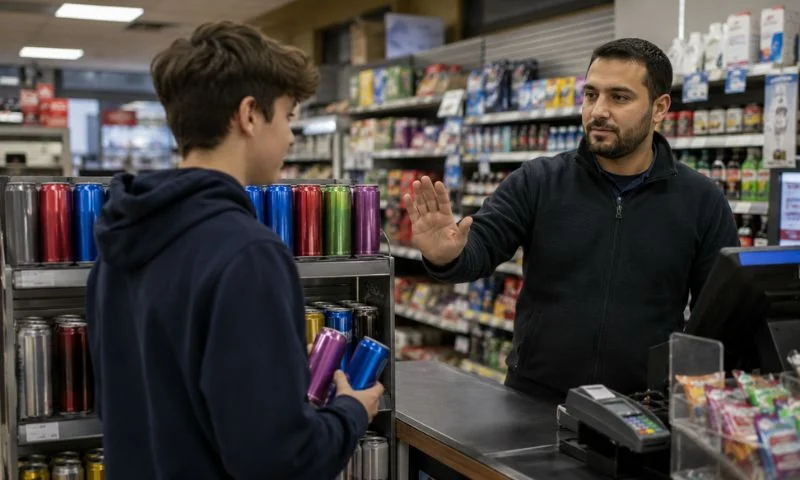
England will ban the sale of high-caffeine energy drinks to children under 16 from April 2027, subject to parliamentary approval.
The restriction will cover drinks containing more than 150 milligrams of caffeine per litre. It will apply to shops, online retailers and vending machines, while tea and coffee will remain outside the rules.
Government figures suggest around 100,000 children in England consume these drinks every day. Ministers cite links with disrupted sleep, anxiety, headaches, poor concentration and weaker educational outcomes.
Why England Is Introducing the Ban
Public Health Minister Sharon Hodgson said: “High-caffeine energy drinks have no place in children’s hands. We know thousands of kids in England consume them daily but the evidence is clear that this can cause anxiety, affect their sleep and concentration and can have a detrimental impact on their education.”
She added: “This ban will reduce children’s opportunity to buy drinks that are harmful to their health and wellbeing, and demonstrates our firm commitment to creating the healthiest generation of children ever.”
Read More: Why WHO Wants Tougher Social Media Rules for Children
Children may respond more strongly to caffeine because of their lower body weight and developing brains. Some energy drinks contain more caffeine than two cups of coffee or several cans of cola. Many also contain large amounts of sugar, adding obesity and dental risks.
Current rules require affected products to carry the warning: “High caffeine content. Not recommended for children or pregnant or breast-feeding women.”
How Shops and Online Sellers Will Face Penalties
The government plans secondary legislation under the Food Safety Act 1990. Local authorities, usually through trading standards teams, will enforce the restriction.
Retailers must prevent underage purchases in stores and online. Vending machines will also fall under the ban, with responsibility placed on the person controlling the premises.
Read More: New Parental Controls Could Change How Kids Use WhatsApp
Fixed penalties will reach £1,500 for individuals, microbusinesses and small businesses. Medium and large businesses could face fines of £2,500. Authorities may pursue criminal prosecution for deliberate or repeated breaches.
The government received 1,095 consultation responses, with 90% supporting an age-based ban. Many large supermarkets already apply voluntary restrictions, but officials say some sellers still supply children.
Industry Questions Need for New Law
The British Soft Drinks Association criticised the planned ban as “unnecessary.” It said members already avoid marketing or promoting energy drinks to under-16s and place warning labels on high-caffeine products.
Health campaigners welcomed the decision. Katharine Jenner, executive director of the Obesity Health Alliance, called restricting sales during childhood “common-sense.”
“This is a hugely popular policy, backed by parents, health professionals and the public, and a vital step towards protecting children’s health,” Jenner said.
England’s decision forms part of wider government action on children’s health, including planned online safety measures. Scotland previously decided against a statutory ban after consultation, while voluntary retail restrictions remain common across the UK.