


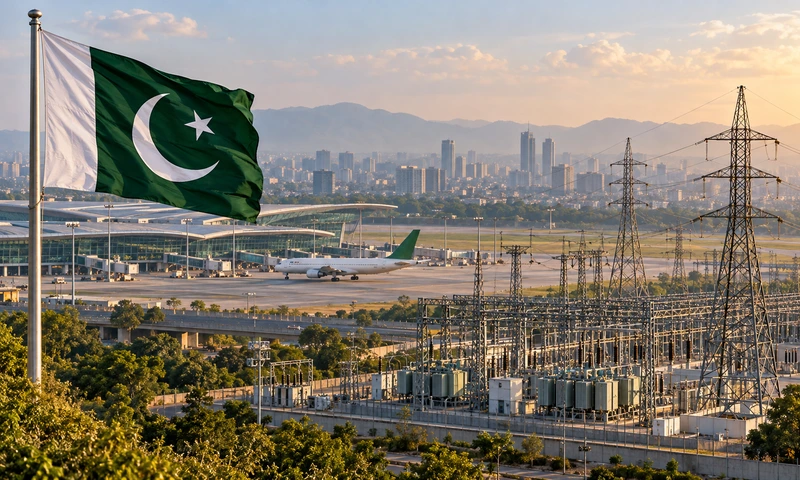
Pakistan aims to raise more than $1 billion by privatising five to six entities this fiscal year, Finance Minister Muhammad Aurangzeb said. He also forecast economic growth above 4% despite elevated oil prices.
Speaking to Reuters in Bangkok on Monday, October 12, Aurangzeb outlined plans to expand private ownership while pursuing additional external financing. He attended the annual meetings of the International Monetary Fund and World Bank.
Privatisation pipeline includes power companies
Following last year’s privatisation of Pakistan International Airlines, the government has around another dozen entities in its pipeline. These include state-owned power distribution companies and the outsourcing of airport operations.
“I expect about five or six of these to go through during this fiscal year,” Aurangzeb said. He estimated potential proceeds at more than $1 billion.
Privatisation remains a key test of Pakistan’s reform commitments to the IMF. Officials have warned that retaining loss-making state firms could renew pressure on public finances.
“We are quite clear that we want the private sector to lead the country,” said Aurangzeb. “So our role is to help support, assist any way we can in terms of the ecosystem.”
The IMF’s programme also prioritises state-enterprise restructuring, stronger governance and measures to reduce energy-sector costs.
Pakistan continues $10bn US financing talks
Meanwhile, Pakistan continues negotiations with the United States over a proposed $10 billion exchange stabilisation facility. Aurangzeb gave no deadline for concluding discussions.
“If it comes through, this will be a great help for us,” he said.
“If it doesn’t come through, this does not, you know, create any problem for us in terms of access to market.”
The proposed facility would supplement ongoing talks with the Export-Import Bank of the United States and the US International Development Finance Corporation.
Separately, Pakistan reached a staff-level agreement with the IMF last week that could unlock approximately $1.21 billion. The financing covers the Extended Fund Facility and a climate programme, with disbursement subject to IMF Executive Board approval.
Growth outlook faces oil-price pressure
Aurangzeb said Pakistan had secured sufficient fuel supplies and avoided shortages. Agriculture and other critical sectors continued to hold up.
“So I’m still quite clear that we should clock north of 4%,” he said, referring to FY2027.
“And on the inflation side, obviously, we are keeping a very close eye because it does have a knock-on impact in terms of the commodity prices.”
The country of 255 million depends heavily on Gulf energy supplies, remittances and financial support. It also needs external financing to strengthen foreign-exchange reserves and meet debt repayments.
The US-Israeli-led war with Iran has entered its eighth month, intensifying inflation and hardship. Those pressures dominate the Bangkok meetings, which return outside Washington after three years.
Pakistan’s recovery follows severe economic turmoil aggravated by COVID-19. A $7 billion, 37-month IMF programme agreed in 2024 supports stabilisation, alongside difficult reforms including higher tax collection from agricultural income.

























